World Cup 2026 Group I: France, Senegal, Norway, Iraq
This is the group where Didier Deschamps says goodbye, Erling Haaland plays his first World Cup, and Iraq turn up for the first time in 40 years. France sit at FIFA #1 and they should win it. They also open against Senegal — the same Senegal that beat France 1-0 in the 2002 opener in Seoul. Ten days later in Foxborough, it's probably Mbappé vs Haaland for top spot.
- Top FIFA rank: France (#1)
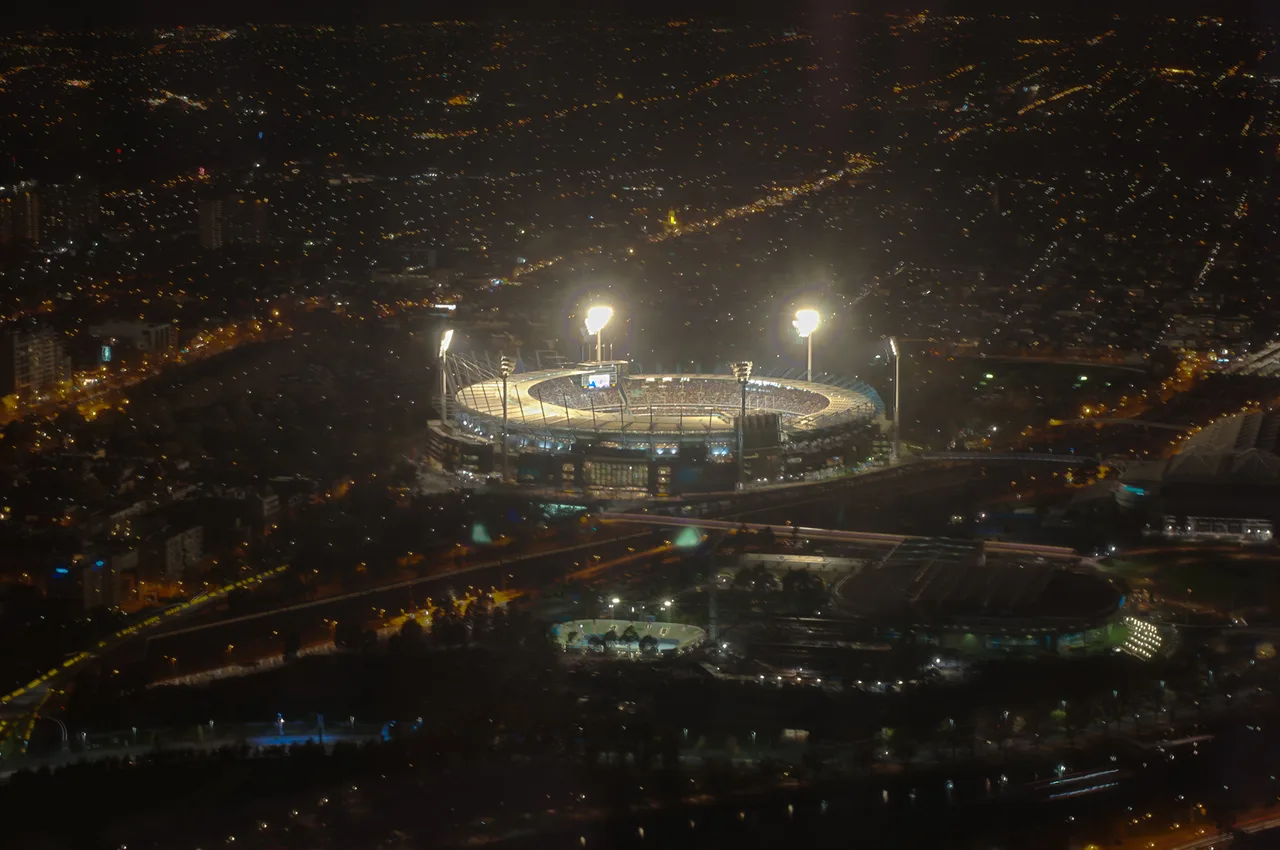
- Defining match: Norway vs France, Friday June 26 at Gillette Stadium, Foxborough (15:00 ET)
- Headline storyline: Deschamps' farewell tournament + Haaland's first World Cup + Iraq's 40-year return
- Predicted top two: France then Senegal, with Norway as the credible upset path
- Best-third candidate: Norway, with the Haaland-Ødegaard attacking ceiling to back it
Is France in the World Cup 2026 — and Which Group?
Yes. France qualified for the 2026 World Cup as one of UEFA's automatic qualifiers and were drawn into Group I alongside Senegal, Norway and Iraq. The four teams sorted by FIFA April 2026 ranking:
- 🇫🇷 France — Pot 1, FIFA #1, head coach Didier Deschamps, captain Kylian Mbappé. 4-2-3-1 with a 4-3-3 when Mbappé drifts wide. 17th World Cup, champions 1998 and 2018.
- 🇸🇳 Senegal — Pot 2, FIFA #14, head coach Pape Thiaw, captain Kalidou Koulibaly. 4-3-3 with a 4-2-3-1 in tighter games. 4th World Cup — quarter-finals at Korea/Japan 2002 (beating France 1-0 in the opener), Round of 16 at Qatar 2022.
- 🇳🇴 Norway — Pot 2, FIFA #31, head coach Ståle Solbakken, captain Martin Ødegaard. 4-2-3-1 with a 4-3-3 in overload phases. 4th World Cup — first since France 1998 (a 28-year absence).
- 🇮🇶 Iraq — Pot 4, FIFA #57, head coach Graham Arnold, captain Aymen Hussein. 4-3-3 with a 4-4-2 in compact defending. 2nd World Cup — first since Mexico 1986 (a 40-year absence).
France got the second-easiest Pot 1 draw, after Argentina. Senegal at #14 are the real threat — but the drop from Senegal to Norway and Iraq is steep, which means France's goal differential cushion is among the cleanest at the tournament. The catch is Norway. On Pot 2 ranking they look ordinary; on attacking ceiling they're the only Pot 2 side carrying a Pot 1-level front line. A nation that hasn't been to a World Cup since 1998 has nothing to defend and everything to prove — and the two players carrying them are Haaland and Ødegaard.
Why Are France Group I Favourites in Deschamps' Final Tournament?
Deschamps took the France job in July 2012, fresh off the Euro 2012 quarter-final under Laurent Blanc. Fourteen years and one World Cup title later, he's leaving. He told L'Équipe in January 2024 that 2026 would be his last tournament; July 19 is his last day in the job regardless of result, with Zidane the worst-kept-secret successor. What he's left behind is a squad spine that went to back-to-back finals — 2018 winners, 2022 runners-up — and one generational upgrade since:
- Spine: Mike Maignan (AC Milan, GK) · William Saliba (Arsenal) and Dayot Upamecano (Bayern Munich) at centre-back · Aurélien Tchouaméni (Real Madrid) at the deep pivot · Eduardo Camavinga (Real Madrid) and Adrien Rabiot (Marseille) ahead of him · Ousmane Dembélé (PSG) on the right · Kylian Mbappé (Real Madrid) on the left or at No. 9 · Antoine Griezmann (Atlético Madrid) as the No. 10.
- Tactical identity: A 4-2-3-1 in possession that compresses to a 4-4-2 mid-block out of it. Mbappé at 27 plays as the cutting-in left-sided forward who drifts into the half-space; Dembélé attacks the right-back from the outside; Tchouaméni shields the back four; Camavinga–Rabiot rotate as the second pivot. Deschamps' pressing tone is mid-block, not high — France's squad has the running profile to press higher than Argentina's, but the system is built around transition speed, not territorial dominance.
- Pot 1 advantage: France are the only Pot 1 side in Group I. The next-strongest seed is Senegal at FIFA #14, ranked thirteen places lower. Goal-differential cushion against Iraq should put France in firm control of group head-to-head before matchday 3.
For the full first-choice 11 and Deschamps' transition-football setup, see our France tactical preview. Mbappé's World Cup 2026 is widely expected to be the captain's first as France's unambiguous tactical focal point — no reported fitness concerns at Real Madrid as of mid-May 2026. France's final 26-man squad announcement is expected in late May ahead of the FIFA deadline — see our squad deadline tracker for the bubble names and timeline.
Can Senegal's Pape Thiaw Era Open Group I With a Shock at MetLife?
Senegal at #14 are the toughest Pot 2 draw France could have got outside Argentina's group. The team is in transition: Aliou Cissé got the sack after the 2024 AFCON last-16 exit to Ivory Coast, and Pape Thiaw — long-time U-23 boss — took the senior job in August 2024. The 2022 AFCON-winning core is still here. The attacking pattern is sharper, more vertical:
- Kalidou Koulibaly (Al-Hilal, 35) — captain and the centre-back the system runs through. The Saudi Pro League move in 2023 has not dimmed his international form; Koulibaly's positional reads remain the squad's tactical anchor.
- Sadio Mané (Al-Nassr, 34) — the left-sided forward and senior leader. Mané's club role at Al-Nassr alongside Cristiano Ronaldo has compressed his minutes per match but kept him at the high end of physical condition heading into a third World Cup.
- Idrissa Gueye (Everton, 36) — the deep midfield organiser. Gueye's defensive coverage is the press-resistance pillar that lets the wide forwards play higher.
- Nicolas Jackson (Chelsea, 25) — the No. 9. Jackson's 2025-26 Premier League season has been the clearest argument for him over Boulaye Dia in the central role, with the off-ball running that suits Thiaw's vertical transition pattern.
Senegal vs France on Tuesday June 16 at MetLife Stadium is the matchday 1 fixture that decides whether Senegal's Group I ceiling is "top two locked in by matchday 2" or "third-place tiebreaker watch" — and the rematch of the 2002 World Cup opener at Korea/Japan, when an underdog Senegal beat the reigning world champions 1-0 in Seoul. Thiaw's plan is to absorb the first 20 minutes of France's tempo, force Tchouaméni into early decisions on a heavy summer-evening MetLife pitch, and counter through Mané and Jackson on the second-phase break. The middle fixture against Norway at MetLife on the matchday 2 overnight slot (kickoff 20:00 ET Sunday June 21 / 01:00 BST Monday June 22 / 00:00 UTC Monday June 22) is the squad-rotation game in name only — Norway's Haaland-Ødegaard ceiling makes it Senegal's most physically demanding fixture of the group. The matchday 3 closer against Iraq in Toronto on June 26 should be a six-point bank-on for goal differential before the Round of 32.
What Does Norway's First World Cup Since 1998 Look Like with Haaland and Ødegaard?
The last time Norway played at a World Cup, Egil Olsen's side made the Round of 16 in France '98 and went out 1-0 to Italy on a Vieri header. Twenty-eight years of qualification near-misses followed. That ended in March 2026 via the UEFA play-off route — second in their qualifying group, then through the semi-final and final to grab one of the last European spots. The Tore André Flo era is finally behind them. The 2026 squad is built around a tier of European clubs no other Pot 2 side can match:
- Erling Haaland (Manchester City, 25) — the headline No. 9 and Premier League's all-time single-season goal-record holder. Pep Guardiola's late-season rotation has kept Haaland's minutes manageable through the City Champions League campaign; the body is fresh enough to credibly threaten a five-goal group stage if Senegal and Iraq leave the channels behind their centre-backs.
- Martin Ødegaard (Arsenal, 27) — captain and the No. 10 the system runs through. Ødegaard's 2025-26 Premier League form has been Arsenal's central creative axis; the international captaincy weight has matured his on-pitch leadership in a way that the 2022 cycle hadn't yet revealed.
- Sander Berge (Fulham, 28) — the deep midfield pivot. Less heralded than Haaland or Ødegaard but the press-resistance organiser the 4-2-3-1 needs against France's mid-block.
- Antonio Nusa (RB Leipzig, 21) — the breakout left-side forward, the squad's tactical wildcard. Nusa's progressive carrying gives Norway a second transition outlet beyond the Haaland-Ødegaard axis.
The realistic Group I ceiling for Norway is second place — most plausibly by beating Iraq comfortably on matchday 1 (June 16 vs Iraq at Gillette Stadium in Foxborough), securing a draw or shock win against Senegal in matchday 2 (overnight ET June 21 → UTC June 22 at MetLife), then taking points off a France side that may have already locked top spot. The matchday 3 closer at Gillette on June 26 — Norway vs France, 15:00 ET / 20:00 BST — is the group-defining fixture if both nations enter with six points. Haaland against Saliba-Upamecano is the centre-back matchup of the tournament; Ødegaard against the Tchouaméni-Camavinga shield is the midfield duel that decides whether Norway can sustain second-phase pressure for 60 minutes.
How Did Iraq Return to the World Cup After 40 Years Under Graham Arnold?
Iraq's one previous World Cup was Mexico 1986. Group B with Paraguay, Belgium and Mexico, three narrow defeats (0-1, 1-2, 0-1), out at the group stage. That was the squad playing in regional isolation under sanctions. Forty years on, the rebuild has taken its time. Graham Arnold — fired by Australia in September 2024 after a rough start to 2026 qualifying — picked up the Iraq job two months later and dragged them through the AFC third round and play-off to get here. The squad spine sits in the Gulf leagues and, oddly, in Sweden:
- Aymen Hussein (Al-Najmah, 30) — captain and the lone striker. Hussein's headed goal threat is the squad's primary chance-conversion route; his 2024-25 Iraq Stars League season at Al-Najmah established him as the spine's tactical leader.
- Mohanad Ali (Al-Wakrah, 25) — the second striker / inside-right forward. The 2023 AFC qualifying breakout name; Ali's combination with Hussein is the source of most of Iraq's open-play chance creation.
- Amir Al-Ammari (Halmstads BK, 28) — the press-resistance pivot in midfield, the squad's only Allsvenskan-based outfield starter and the bridge between the AFC-based defenders and the attacking trio.
- Ali Adnan (free agent, 32) — the experienced left-back. Adnan's veteran reading of cover positioning is the deep-block stabiliser the system needs against France and Senegal's wide overloads.
The realistic Group I ceiling for Iraq is one draw — most plausibly against either Senegal in matchday 3 (June 26 at BMO Field in Toronto) or in a shock matchday 2 result against a rotated France side in Philadelphia (June 22 at Lincoln Financial Field, 17:00 ET / 22:00 BST). FIFA #57 is the lowest of any Pot 4 side in Groups H, I, J or K, and the structural gap between Iraq and Norway at #31 is the widest of any Pot 2 vs Pot 4 pairing in this set. But Arnold's tournament experience — a 2018 World Cup playing run with Australia, a 2022 Round of 16 against Argentina — makes Iraq tactically better-prepared than most first-return entrants. Whatever happens, Iraq's first World Cup goal in 40 years — whoever scores it, whenever it comes — will be one of the tournament's signature moments.
What Are the Predicted Group I Standings?
The WTK desk read on Group I, based on April 2026 form, FIFA ranking, qualifying records and 2025-26 friendlies. As always — pre-tournament, before the squad lock — treat the points ranges as ranges, not point estimates:
- 1st — France. 7-9 points. Win vs Iraq, beat or draw Senegal in the opener, the Norway closer goes either way. Top spot likely sealed before matchday 3 if both opening matches go cleanly. Goal differential should run +4 or higher given the Iraq fixture.
- 2nd — Senegal. 5-7 points. Win vs Iraq, beat or draw Norway, the France result decides whether Senegal win Group I or finish second. Knockout stage entry via the Round of 32 is near-certain; a Round of 16 ceiling is realistic given the squad's AFCON pedigree.
- 3rd — Norway. 3-5 points. Realistic ceiling is one win (vs Iraq in matchday 1) plus a draw against Senegal or France. Best-third tiebreaker is genuinely live with goal differential at zero or better — FIFA #31 ranks Norway above several Pot 3 sides in Groups B, C and D, and the Haaland-Ødegaard attacking ceiling is the strongest argument for a Pot 2 best-third path at the tournament.
- 4th — Iraq. 0-3 points. The 40-year-returning entrant ceiling is realistically one draw — most plausibly against Norway in matchday 1 if Arnold's deep block holds in Foxborough heat. The expanded 48-team format gives Iraq a wider best-third window than the 32-team bracket would have allowed, but the FIFA ranking gap and the Pot 4 draw position make Group I a structurally tough return group.
Matchday 1 update: both favourites delivered — France beat Senegal 3-1 with a Mbappé double, and Norway beat Iraq 4-1 with a Haaland double, leaving France and Norway level on points at the top.
For sister-group breakdowns, see Group A, Group B, Group C, Group D, Group E, Group F, Group G, Group H, Group J, Group K, and Group L. For the live Group I hub with standings updates as the tournament progresses. For the full UK and US viewing guide: UK TV broadcast guide and US TV broadcast guide.
Frequently Asked Questions
What group is France in at World Cup 2026?
France is in Group I at World Cup 2026, alongside Senegal, Norway and Iraq. France open Group I on Tuesday June 16 vs Senegal at MetLife Stadium (FIFA tournament name: New York New Jersey Stadium) in East Rutherford, New Jersey — kickoff 15:00 ET / 20:00 BST / 19:00 UTC. The second match is Monday June 22 vs Iraq at Lincoln Financial Field (FIFA name: Philadelphia Stadium) in Philadelphia (17:00 ET / 22:00 BST). The third is Friday June 26 vs Norway at Gillette Stadium (FIFA name: Boston Stadium) in Foxborough (15:00 ET / 20:00 BST). Didier Deschamps' side are FIFA #1 and heavy favourites to top Group I on squad depth and the most navigable Pot 4 draw of any Pot 1 side after Argentina.
When does France play in World Cup 2026 Group I?
Three group matches across 10 days, all on the US East Coast or Toronto. June 16 vs Senegal at MetLife Stadium in East Rutherford — 15:00 ET / 20:00 BST / 19:00 UTC (Tuesday afternoon US, prime-time UK). June 22 vs Iraq at Lincoln Financial Field in Philadelphia — 17:00 ET / 22:00 BST / 21:00 UTC. June 26 vs Norway at Gillette Stadium in Foxborough — 15:00 ET / 20:00 BST / 19:00 UTC. All three France Group I kickoffs are in UK evening BST windows — the cleanest possible TF1/M6 and BBC/ITV viewing slot of any Pot 1 nation.
Is this Didier Deschamps' last tournament with France?
Yes. Deschamps announced in January 2024 that he would step down as France head coach after the 2026 World Cup — a 14-year run that began in July 2012 and includes the 2018 World Cup title, the 2022 final and the 2016 Euro final. Zinedine Zidane is the widely reported successor for the post-2026 cycle, with the FFF expected to confirm the appointment after the tournament ends on July 19. For 2026 Deschamps keeps the 4-2-3-1 around Mbappé's pace, with Tchouaméni at the deep pivot and Dembélé on the right wing. See our France tactical preview for the projected first-choice 11.
Will Kylian Mbappé be France captain at the 2026 World Cup?
Yes — confirmed in Deschamps' final 26-name squad announced May 14, 2026. Mbappé has been France captain since March 2023 — appointed by Deschamps after Hugo Lloris's international retirement following Qatar 2022. At 27, the 2026 tournament is his third World Cup and his first as the unambiguous tactical focal point: Deschamps builds the 4-3-3 around Mbappé drifting from the left into the half-space, with Dembélé on the right and Tchouaméni shielding the back four. Real Madrid's 2025-26 season has been mixed for Mbappé in the No. 9 role; Deschamps' France configuration restores him to the left-side cutting-in profile that produced the 2022 final hat-trick. See our France squad announcement for the full 26-name list.
How did Norway qualify for their first World Cup in 28 years?
Through the UEFA play-off route in March 2026. Norway finished second in their UEFA qualifying group behind a higher-ranked European side and then beat the play-off semi-final and final opponents to confirm their first World Cup since France 1998 — a 28-year absence. Ståle Solbakken's 4-2-3-1 runs through Manchester City's Erling Haaland at No. 9 and Arsenal captain Martin Ødegaard at the No. 10. Sander Berge anchors midfield as the deep pivot; Antonio Nusa (RB Leipzig, 21) is the breakout left-side forward. The squad's Premier League and Bundesliga concentration is the highest of any Pot 2 side at the tournament — Haaland-Ødegaard alone account for the kind of attacking pedigree only Pot 1 nations typically carry.
When did Iraq last play at the World Cup?
Mexico 1986. Iraq's only previous World Cup appearance came as Group B at the 1986 tournament — three group-stage losses (Paraguay 0-1, Belgium 1-2, Mexico 0-1) and an early exit, but a credible competitive showing against established opposition for a debut nation under exceptional political circumstances. The 2026 tournament marks a 40-year gap. Graham Arnold — appointed in November 2024 after his Australia tenure — qualified the squad through the AFC third round and play-off route, with captain Aymen Hussein as the lone striker and Halmstads BK's Amir Al-Ammari as the press-resistance pivot in midfield.
What does the France World Cup 2026 jersey look like?
France's 2026 home kit retains the deep cobalt-blue shirt with white shorts and red socks — the classic Les Bleus colour code with the FFF rooster crest above the left chest and the two stars above for the 1998 and 2018 World Cup titles. Manufactured by Nike, the 2026 design features a subtle tonal woven pattern referencing the Marianne motif on the federation badge. The away kit is a deeper navy-and-white combination — a continuation of the 2024 Euros change palette. The official kits are sold through the FFF store and nike.com.
What are the predicted Group I standings?
France top with 7-9 points after sweeping Iraq, beating Senegal in the opener and managing the Norway closer for top spot. Senegal second with 5-7 points (beat Iraq and Norway, lose or draw to France). Norway third with 3-5 points — Solbakken's side likely beat Iraq comfortably and pick up a draw or shock win against either France or Senegal. Iraq fourth with 0-3 points. The best-third candidate for Group I is Norway at FIFA #31, ranked above several Pot 3 sides in Groups B, C and D — the third-place tiebreaker for Round of 32 access is genuinely live with goal differential at zero or better.
People Also Ask
Data sources
- FIFA World Cup 2026 — Group I draw and fixtures
- April 2026 FIFA Men's World Ranking
- UEFA — March 2026 European play-off results (Norway qualification path)
- AFC — Iraq World Cup 2026 qualification (third round + play-off, 2024-25)
- FFF — Deschamps January 2024 announcement and 2026 squad references — Editorial review by the WTK Sports desk. Squad and lineup details based on Deschamps' March 2026 international window selections; final 26-man squads confirm by the May 27 FIFA deadline.
Published: