Japan World Cup 2026 Squad: 26 Without Mitoma, Tomiyasu Back
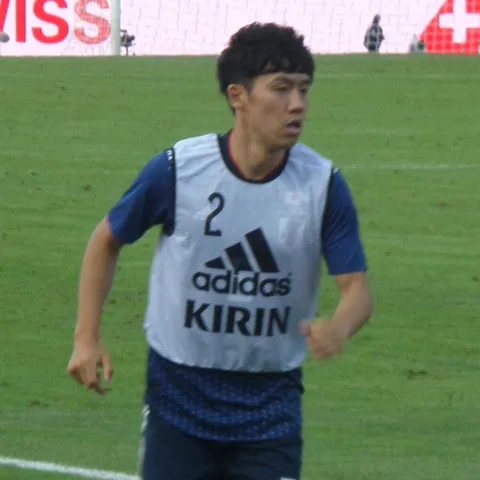
Japan's final 26-man squad for the 2026 FIFA World Cup is locked. Hajime Moriyasu confirmed the list on May 15 in Tokyo, the same press conference at which Kaoru Mitoma was ruled out with a hamstring injury. Wataru Endo wears the captain's armband — the first time the Liverpool midfielder leads Japan into a senior tournament as the team's named captain. Takehiro Tomiyasu returns to the squad after nearly two years of injury absence. The matchday 1 opener against the Netherlands at Dallas Stadium in Arlington kicks off in 24 days.
- Captain: Wataru Endo (Liverpool, 33)
- Squad size: 26 — three goalkeepers, eight defenders, eight midfielders, seven forwards
- Out: Kaoru Mitoma (hamstring, May 10) · Takumi Minamino (ACL, December 2025)
- Back: Takehiro Tomiyasu (Arsenal) returns after near-two-year injury absence
- Opener: Japan vs Netherlands, Sunday June 14 at Dallas Stadium, Arlington (16:00 ET / 05:00 JST Monday)
Is Mitoma in Japan's 2026 World Cup Squad?
No. Kaoru Mitoma is out of the 26-man final squad. The Brighton winger sustained a hamstring injury in Brighton's 3-0 home win over Wolves on Saturday May 10, was substituted in the second half, and the Premier League injury report confirmed the strain within 48 hours. Brighton's medical team and the Japanese national-team medical liaison communicated through the week, and Moriyasu's final call was announced at the JFA press conference in Tokyo on Thursday May 15 — five days after the injury and exactly 30 days before the Netherlands opener.
The full reasoning, the on-pitch consequences for the attacking shape, and the alternative options Moriyasu weighed before confirming the omission are in our dedicated piece — see Why Mitoma missed Japan's 2026 World Cup squad. The structural takeaway for the 26-man list: the planned left-side anchor of the attack is gone, Junya Itō (Stade de Reims) absorbs the wide minutes with a more vertical-runner profile, and the Kamada–Kubo combinations through the central channel become the squad's primary chance-creation route rather than the wide-pair geometry Moriyasu built across the cycle.
Takumi Minamino at Monaco is also unavailable — the December 2025 ACL tear ended his tournament chances five months before the squad announcement. The two attacking absences mean Japan's bench depth in the front six is the thinnest since the 2018 cycle. The honest cost is the rotation flexibility Moriyasu was banking on for matchday 2 against Tunisia and matchday 3 against Sweden.
Who Captains Japan at the 2026 World Cup?
Wataru Endo. The 33-year-old Liverpool defensive midfielder is Japan's named captain for the 2026 World Cup — the senior tournament debut of his captaincy at this level. Endo's 2025-26 Premier League season at Liverpool has been the deepest individual workload of his career: rotation through Liverpool's midfield three, regular Champions League minutes, and the squad-leadership role Jürgen Klopp's successor has built around him since the 2024 transition. The international captaincy is the natural extension of that club seniority.
The captaincy detail in context:
- 2022 cycle: Maya Yoshida wore the armband at Qatar 2022. Yoshida retired from senior international duty after the Croatia loss; the armband transitioned to Tomiyasu, then to Endo as Tomiyasu's injury absence stretched into 2024-25.
- 2026 cycle: Endo confirmed as captain at the May 15 squad announcement. The decision is not a surprise — he has worn the armband across the entire 2025-26 international window. The announcement formalises what the qualifying cycle had already decided.
- On-pitch role: Endo plays the deeper of the two pivots in Moriyasu's 4-2-3-1. The ball-winning, press-resistance, vertical-progression jobs all land on him. Morita (Sporting) is the more press-resistant carrier alongside; Endo is the structural anchor.
Endo's Premier League title-chase year at Liverpool gives Japan a captain entering the tournament at peak European-club workload. The honest counter-question — whether the 30+ Liverpool matchday minutes leave him physically exposed across seven World Cup fixtures in 33 days — is the Tomiyasu-fitness question's quieter cousin. For the full tactical setup with Endo–Morita as the spine, see our Japan tactical preview.
What's Japan's Starting XI Without Mitoma?
Moriyasu's most likely matchday 1 starting XI against the Netherlands at Dallas Stadium, in a 4-2-3-1 base shape that can compress into a 3-4-2-1 against Dutch possession:
- Goalkeeper: Zion Suzuki (Parma) — the cycle's settled No. 1 after the Gonda-era transition. Cleaner ball-playing profile, the strongest AFC shot-stopping record across qualifying.
- Right-back: Hiroki Sakai (Urawa Red Diamonds, 36) — the conservative defensive profile. Tomiyasu's fitness across the June friendlies decides whether he rotates in for matchday 1.
- Centre-backs: Ko Itakura (Mönchengladbach) and Hiroki Ito (Bayern). Itakura is the cleaner ball-player; Ito is the more aggressive front-foot defender. The pairing is the cycle's most settled defensive selection.
- Left-back: Yukinari Sugawara or a more attack-leaning option depending on fixture profile.
- Double pivot: Wataru Endo (Liverpool, captain) and Hidemasa Morita (Sporting). The structural anchor of every Moriyasu match.
- Right inside forward: Takefusa Kubo (Real Sociedad). Drifts centrally to combine with Kamada; lets Sakai overlap on the outside.
- No. 10: Daichi Kamada (Crystal Palace). Shifts higher in the Mitoma-out reshape — closer to Ueda, with more direct combination patterns through the central channel.
- Left wide: Junya Itō (Stade de Reims). Replaces Mitoma. More vertical runner and crosser; less 1v1 dribbling.
- No. 9: Ayase Ueda (Feyenoord). Penalty-box presence with the running profile that suits the Kubo supply line. Daizen Maeda (Celtic) rotates in against opponents who invite a high press.
Against the Netherlands' possession-dominant 4-3-3, Moriyasu's most-watched call is whether to start in the 4-2-3-1 and switch to the 3-4-2-1 mid-match, or open in the back-three shape from kickoff. The 3-4-2-1 variant drops Tomoki Iwata in as the third centre-back, pushes the full-backs to wing-back, and lets Endo–Morita stay narrow ahead of the line. Without Mitoma, the wide threat in the 3-4-2-1 comes from the wing-backs rather than the inside-forward pair — a different geometry from the one the cycle's earlier plans assumed.
Who Replaces Mitoma in the Squad?
Junya Itō (Stade de Reims) absorbs the left wide minutes. The profile contrast is the squad's defining tactical pivot:
- Mitoma's role (planned): Left-footed left winger, 1v1 dribbling-led play, Brighton Premier League volume the cleanest evidence of top-tier wide attacking. The cycle's signature attacking weapon.
- Itō's profile (actual): Right-footed left winger, vertical runs and crosses rather than 1v1 carrying. Stade de Reims 2025-26 Ligue 1 season produced cleaner final-third numbers than the cycle's earlier projections — the substitute role flexed into a starter-quality output.
The honest knock-on for the rest of the squad: Kamada plays higher and more centrally, Kubo's wider role becomes more important as the squad's primary 1v1 chance creator from the right side, and the bench depth in attacking positions becomes thinner. Ritsu Doan (Eintracht Frankfurt) rotates through the wide minutes. The next-generation wide options — including Yukinari Sugawara as a more attack-leaning left-back option and the U-23 contingent named to the broader pool — are squad insurance rather than starter-level cover.
The structural takeaway: the chance-creation rate stays competitive thanks to Kubo's central drift and Kamada's elevation, but the goal-conversion route narrows. Ueda and Maeda are competent finishers, not elite ones. Mitoma's 1v1 wide threat was the cycle's most reliable secondary chance generator after the Endo–Morita progression — that secondary route is now Itō's vertical runs, which produce a different chance profile.
Is Tomiyasu Back in Japan's Squad?
Yes. Takehiro Tomiyasu (Arsenal) is in the 26-man squad — his return after nearly two years of injury absence is the cycle's quietest good news. Tomiyasu's 2024 and most of 2025 were spent on the Arsenal medical room rotation; the 2025-26 second half saw him work through reserve fixtures, return to senior matchday squads, and earn the Japan callback across the March 2026 international window. The May 15 squad announcement confirmed his place.
What Tomiyasu adds to the squad:
- Right-back depth: Hiroki Sakai at 36 has been the cycle's settled starter but Sakai's recovery between matches across seven tournament fixtures in 33 days is a quiet concern. Tomiyasu is the squad's natural rotation partner — Premier League-trained physicality and the defensive profile that fits the 4-2-3-1's right-back brief.
- Versatility: Centre-back cover when the 3-4-2-1 needs an additional aerial body; full-back on either side; the rare squad player who can fill three back-line positions without a meaningful drop in quality.
- Senior leadership: Tomiyasu carried the armband in the post-Yoshida transition before injury removed him from selections. The on-pitch organisational weight reduces Endo's defensive workload.
The fitness caveat is real. Tomiyasu's Arsenal 2025-26 minutes are still well below a settled starter's volume — the early-June friendlies are the final tests before Moriyasu commits to a matchday 1 starting role. The realistic expectation is a rotation rather than a guaranteed start against the Netherlands, but the option exists for the first time since 2023. That depth was missing across the entire qualifying cycle.
Who's Japan's Number One Goalkeeper at the World Cup?
Zion Suzuki at Parma. The 23-year-old is Moriyasu's settled first-choice across the 2024-26 international window — a generational shift from the Shuichi Gonda era that defined the 2022 cycle. Suzuki's ball-playing profile fits the 4-2-3-1 build-up better than the longer-tenured options; his shot-stopping has been the cleanest in the AFC qualifying campaign; his Serie A workload at Parma in 2025-26 has confirmed the senior international call across every Moriyasu fixture.
The full goalkeeping picture:
- Zion Suzuki (Parma, 23) — first choice. The 2026 cycle's defining goalkeeping selection.
- Daniel Schmidt (Sint-Truiden, 33) — the experienced back-up. Eight-year senior international tenure; the rotation option for any matchday where Suzuki needs rest.
- Keisuke Osako (Sanfrecce Hiroshima, 26) — the third option. J1 League senior tenure across 2024-26.
The structural change from 2022 to 2026 is the single biggest cycle-to-cycle shift in Japan's spine. Gonda at 33 in 2022 was the steady-hand selection that survived the Croatia loss; Suzuki at 23 in 2026 is the profile shift toward press-resistance and build-up integration that the 4-2-3-1 demands. The matchday 1 fixture against the Netherlands is Suzuki's first World Cup start — the spotlight is heavier than the qualifying campaign, but the body of evidence is consistent.
When Does Japan Play in the World Cup?
Three Group F matches across 11 days, split between Dallas and Monterrey. Two of three fixtures are at Dallas Stadium (FIFA tournament name for AT&T Stadium) in Arlington, Texas — the same venue that hosts the matchday 1 opener for Group L (England vs Croatia) and a 2026 World Cup semi-final. The matchday 2 fixture is at Monterrey Stadium in Guadalupe, Mexico, the only sub-tropical climate test of Japan's group stage.
- Matchday 1 — Sunday June 14, 2026: Japan vs Netherlands at Dallas Stadium in Arlington. Kickoff 16:00 ET / 20:00 UTC / 21:00 BST / 05:00 JST Monday June 15. The Group F opener and Japan's hardest fixture. Round-of-32 seeding hangs on the result.
- Matchday 2 — Saturday-overnight June 19–20, 2026: Tunisia vs Japan at Monterrey Stadium in Guadalupe, Nuevo León, Mexico. Kickoff 22:00 ET Friday / 02:00 UTC Saturday / 04:00 BST Saturday / 13:00 JST Saturday. The tournament's quietest scheduling slot — late local in northern Mexico — and the climate is the more honest concern than the opponent.
- Matchday 3 — Thursday June 25, 2026: Japan vs Sweden at Dallas Stadium in Arlington. Kickoff 18:00 ET / 23:00 BST / 08:00 JST Friday June 26. The most physical matchday three of the group; Sweden's aerial set-piece threat tests Itakura and Ito.
The JST kickoff times are tournament-typical for North American hosts: Japanese viewers face a 05:00 Monday alarm for the opener, a mid-Saturday-afternoon window for matchday 2 (the most viewing-friendly of the three), and an early-Friday-morning window for matchday 3. For the broader US tournament map, see our Arlington / AT&T Stadium guide. For the full Group F preview with all four teams, see our Group F preview.
Can Japan Beat the Netherlands on Matchday 1?
Yes — meaningfully, not as the model favourite. The Netherlands at FIFA #6 carry the Pot 1 seeding and the Frenkie de Jong–Tijjani Reijnders–Cody Gakpo spine. Ronald Koeman's 4-3-3 is built on possession through the midfield three, the same template Spain used to defeat in 2022 — and that 2022 Spain match is the live precedent for Japan's matchday 1 plan.
The matchday 1 read:
- Japan's plan A — 4-2-3-1 from kickoff: The Endo–Morita double pivot absorbs the de Jong–Reijnders central control; Kubo and Itō stretch the Dutch full-backs; Kamada operates in the half-space behind Ueda. The risk is that Frenkie de Jong's vertical line-breaking through the pivot pair is the exact attacking pattern that exposes a 4-2 mid-block.
- Japan's plan B — 3-4-2-1 from kickoff: Tomoki Iwata drops in as the third centre-back; the wing-backs provide width; Endo–Morita screen narrower; Kubo and Kamada as floating tens behind Ueda. The 3-4-2-1 is what beat Spain in 2022 and is the more press-resistant against the Netherlands' build-up.
- The Mitoma cost: The cycle's plan against the Netherlands was built around Mitoma running at Denzel Dumfries — the matchup is now Itō at Dumfries, a less favourable individual battle. The set-piece threat from Itakura's near-post run and Ueda's central presence becomes the more reliable goal-scoring route.
The realistic projection: a competitive draw is genuinely live; a 1-0 or 2-1 Japan win is achievable if the 3-4-2-1 is the kickoff shape and a single set-piece converts; a 2-0 or 3-1 Dutch win is the realistic loss if Japan open in the 4-2-3-1 and Frenkie de Jong gets vertical service into Gakpo's channel. For the full match read with both starting XIs see our Netherlands vs Japan prediction.
How Many 2022 World Cup Squad Players Are Still in the 2026 Squad?
About 12 of 26 — roughly half the squad. The retained core from the Qatar 2022 group-stage upset wins over Germany and Spain:
- Goalkeepers: Daniel Schmidt (back-up in both cycles). Suzuki replaces Gonda and Kawashima as the No. 1.
- Defenders: Hiroki Sakai (right-back), Ko Itakura (centre-back), Hiroki Ito (centre-back), Takehiro Tomiyasu (returns after injury absence).
- Midfielders: Wataru Endo (now captain), Hidemasa Morita, Daichi Kamada.
- Forwards: Takefusa Kubo, Junya Itō (now starter rather than rotation), Daizen Maeda, Ayase Ueda.
The squad turnover is the cycle's quietest narrative: Japan rebuilt the back four and front line around a settled midfield core, with Endo's captaincy the formalisation of the senior-leader role that emerged across qualifying. The Mitoma omission removes one of the biggest 2022-cycle planned upgrades — he scored England in the November 2022 friendly that previewed the Qatar squad and was the starter every camp built around — and the absence leaves the 2026 attacking shape closer to the 2022 template than the cycle's plans intended.
The 2022 reference points worth carrying:
- Germany 2-1, November 23, 2022: Japan trailed 1-0 at half-time, switched to a 3-4-2-1 with Doan and Asano changing the match. The shape and the substitutions are the live precedent for matchday 1 in 2026.
- Spain 2-1, December 1, 2022: Japan had 18% possession and won. The defensive structure that produced the result is the foundation Moriyasu has built on across the 2026 cycle.
- Croatia 1-1 (1-3 on pens), December 5, 2022: The Round of 16 elimination. The defensive depth, finishing volume and bench impact questions that the 2026 cycle has tried to answer all trace back to this match.
For the full 2022 retrospective covering the tactical lessons and the cycle's adjustments, the Japan tactical preview covers Moriyasu's evolution from the 2022 setup. The 2026 squad is the most experienced Japan team to ever enter a World Cup at this stage — over half the roster has tournament knockout minutes already in their senior career.
Will Japan Get Out of Group F at the 2026 World Cup?
Yes — likely. The realistic Group F projection has Japan in second place behind the Netherlands, qualifying for the Round of 32 on six points (wins over Tunisia and Sweden) plus a competitive showing against the Dutch. A first-place finish is genuinely live if the matchday 1 fixture goes Japan's way; a third-placed finish is the realistic downside if the matchday 1 loss is heavy and Sweden's matchday 3 fixture produces a draw or a loss.
The Group F competitive shape:
- 🇳🇱 Netherlands — Pot 1, FIFA #6, head coach Ronald Koeman. The group favourite on Pot 1 squad depth alone. Expected to top the group on most projection models.
- 🇯🇵 Japan — Pot 2, FIFA #15, head coach Hajime Moriyasu, captain Wataru Endo. The realistic second-place finisher. Beating the Netherlands flips the group's competitive shape.
- 🇸🇪 Sweden — Pot 3, FIFA #29, head coach Jon Dahl Tomasson. Viktor Gyökeres at Arsenal leads the attack. The matchday 3 fixture against Japan at Dallas Stadium is the group's quiet decider.
- 🇹🇳 Tunisia — Pot 4, FIFA #44, head coach Jalel Kadri. Defensive structure under Kadri is the most disciplined of any Pot 4 side; the matchday 2 fixture against Japan is the group's most predictable fixture but the climate adds uncertainty.
The realistic Round of 32 path: as Group F second-placed, Japan most likely face a Group E winner (Germany or Ecuador) or a best third-placed side from another group. As Group F winners, the path is easier — but the Netherlands draw is the harder fixture by some margin. The quarter-final ceiling is genuinely live if the bracket opens. The structural counter-question — whether Japan's finishing volume across seven matches in 33 days is enough — is the same question every cycle has asked of this generation.
The honest knockout projection: Round of 16 is the realistic floor with Group F second-place; quarter-final is achievable with a top-spot finish and a manageable Round of 32 fixture. Beyond that, the squad-depth gap to Brazil, Argentina, Spain, France and England is the structural ceiling. For a same-template player deep-dive at the other end of the field, see our Bellingham deep-dive.
Frequently Asked Questions
Is Mitoma in Japan's 2026 World Cup squad?
No. Kaoru Mitoma is out of Japan's 26-man World Cup 2026 squad after sustaining a hamstring injury in Brighton's 3-0 Premier League win over Wolves on May 10. Hajime Moriyasu confirmed the omission at the squad announcement press conference on May 15 in Tokyo. The five-week recovery window between the injury and Japan's June 14 opener against the Netherlands at Dallas Stadium was deemed insufficient. Junya Itō (Stade de Reims) takes the left wide role in Mitoma's absence.
Who is Japan's captain at the 2026 World Cup?
Wataru Endo. The 33-year-old Liverpool defensive midfielder wears the captain's armband for Japan at the 2026 World Cup. Endo has been the squad's most influential midfielder across the entire Moriyasu cycle and the captaincy was confirmed at the May 15 squad announcement. Hidemasa Morita (Sporting) partners him in the double pivot in Moriyasu's 4-2-3-1 base shape.
What is Japan's starting XI at the 2026 World Cup?
Projected XI: Zion Suzuki (GK, Parma); Hiroki Sakai (RB), Ko Itakura (CB, Mönchengladbach), Hiroki Ito (CB, Bayern), Yukinari Sugawara (LB); Wataru Endo (Liverpool, captain) and Hidemasa Morita (Sporting) as the double pivot; Takefusa Kubo (Real Sociedad) right inside forward, Daichi Kamada (Crystal Palace) No. 10, Junya Itō (Stade de Reims) left wide; Ayase Ueda (Feyenoord) at No. 9. The first XI may compress into a 3-4-2-1 against the Netherlands on matchday 1 — Tomoki Iwata drops in as the third centre-back when Moriyasu chooses the back-three shape.
Is Tomiyasu in Japan's 2026 World Cup squad?
Yes. Takehiro Tomiyasu (Arsenal) returns to the Japan squad after nearly two years of injury absence — the quietest good news of the entire World Cup cycle for Moriyasu. Tomiyasu provides the senior right-back option the squad has missed across the qualifying campaign. Whether he starts the Netherlands opener or rotates with Hiroki Sakai depends on his pre-tournament fitness across the early-June friendlies.
When does Japan play their first match at the 2026 World Cup?
Sunday June 14, 2026 — Japan vs the Netherlands at Dallas Stadium (AT&T Stadium) in Arlington, Texas. Kickoff 16:00 ET / 20:00 UTC / 21:00 BST / 05:00 JST Monday June 15. The match is the Group F opener and Japan's hardest fixture of the group stage. Round-of-32 seeding hangs on the matchday 1 result. For the full match read see our Netherlands vs Japan prediction.
People Also Ask
Data sources
- Hajime Moriyasu — Japan squad announcement press conference, Tokyo, May 15, 2026
- Japan Football Association (JFA) — Samurai Blue senior men's squad
- FIFA World Cup 2026 — Group F fixtures and Japan draw position
- Liverpool FC — Wataru Endo official profile
- Real Sociedad — Takefusa Kubo official profile
Published: