Croatia World Cup 2026 Squad: Modrić's Final at 40
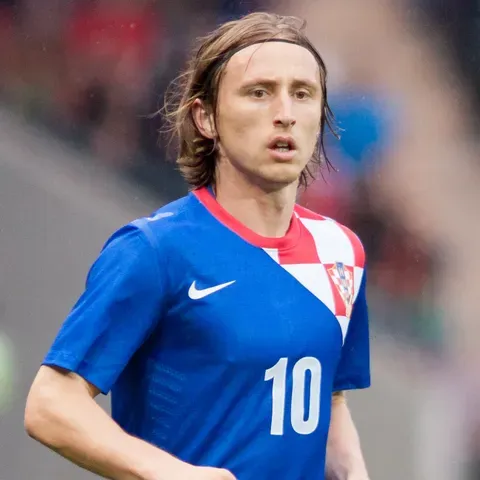
Zlatko Dalić's final 26-man Croatia squad for the 2026 FIFA World Cup is confirmed. Luka Modrić wears the captain's armband for his fourth — and almost certainly final — World Cup, at 40 the oldest outfield starter in the entire tournament. Mateo Kovačić now runs the midfield as the deep pivot the system depends on; Modrić has shifted to a right-side No. 8 with rotated minutes. Joško Gvardiol anchors a younger back four. Group L opens against England in Arlington on June 17 — a 2018 World Cup semi-final rematch and the most-watched matchday 1 fixture of the entire tournament.
- Captain: Luka Modrić (AC Milan, 40) — fourth and likely final World Cup
- Squad size: 26 — three goalkeepers, eight defenders, eight midfielders, seven forwards
- Tactical axis: Kovačić deep pivot, Modrić right 8, Gvardiol centre-back, Kramarić at No. 9
- Defining match: England vs Croatia, Wednesday June 17 at Dallas Stadium, Arlington (16:00 ET / 21:00 BST)
- Realistic ceiling: Quarter-final, with a credible deep-knockout path if the matchday 1 result goes Croatia's way
Is Modrić Playing in the 2026 World Cup?
Yes. Luka Modrić is captain of Croatia's 26-man squad for the 2026 World Cup — his fourth and almost certainly final senior FIFA tournament. The Real Madrid era ended in summer 2025 with the move to AC Milan, where Modrić has played as the central creator in Sergio Conceição's midfield across the 2025-26 Serie A season. The international captaincy has held continuously across the 2018 final cycle, the 2022 third-place run and the 2026 qualifying campaign — Modrić has not relinquished the armband at any point since 2016.
The structural shift across the Dalić cycle is how Modrić's minutes are managed. At 2018 and 2022 he was the 90-minute starter every Croatia match was built around. At 2026 he is the high-leverage closer Dalić rotates with the seven-match calendar in mind: starts every group fixture, gets minutes managed across the 60-70 minute window where appropriate, comes off when the match is settled, and is held back for the knockout closing minutes when his vertical line-breaking matters most. The captaincy is unchanged; the on-pitch authority has shifted toward the Kovačić–Gvardiol spine the squad will carry into the 2030 cycle.
For the broader tactical setup with the 4-3-3 base shape and the Kovačić pivot evolution, see our Croatia tactical preview.
Who's in Croatia's 26-Man World Cup Squad?
Dalić's projected first-choice spine and the cover names that round out the 26:
- Goalkeepers: Dominik Livaković (Girona, on loan from Fenerbahçe) is the first-choice — the same shootout specialist who saved three penalties from Japan in the Qatar 2022 Round of 16 and one from Brazil in the quarter-final. Ivica Ivušić (Pafos) and Nediljko Labrović (Rijeka) round out the goalkeeping group.
- Centre-backs: Joško Gvardiol (Manchester City, 24) is the long-term defensive anchor — three years into his Etihad spell and one of the most complete left-footed centre-backs in world football. His partner rotates through Josip Šutalo (Ajax) and Martin Erlić (Sassuolo) as Dalić tests the post-Domagoj Vida back four.
- Full-backs: Borna Sosa (Ajax) is the first-choice left-back. The right-back rotates between Josip Stanišić (Bayern Munich) and Josip Juranović (Union Berlin) — both bring different attacking profiles for fixture-specific selection.
- Deep pivot: Mateo Kovačić (Manchester City, 32) — three years into his City spell, the deep-lying playmaker the system now depends on. The role Marcelo Brozović held at Russia 2018 and Qatar 2022 is Kovačić's at 2026.
- Right No. 8: Luka Modrić (AC Milan, 40) — captain, creative licence, the on-field leader. Minutes managed across the rotation.
- Left No. 8: Lovro Majer (Wolfsburg) is the most likely starter, with Mario Pašalić (Atalanta) the rotation option. Marcelo Brozović remains in the squad as the experience-tier cover.
- Front three: Andrej Kramarić (Hoffenheim, 35) is the central reference No. 9 — Bundesliga finishing rates held up across the 2025-26 season. Ivan Perišić on one wing carries the squad's senior wide attacking experience. The other wing rotates through Bruno Petković, Dion Drena Beljo and Marco Pašalić depending on opposition profile.
The squad balance leans older. Eight of the projected first-choice starters are 32 or older — Livaković (31), Modrić (40), Kovačić (32), Perišić (37), Kramarić (35), Sosa (28), Šutalo (26), Gvardiol (24) is the youngest first-choice starter. The honest knock-on is that bench depth in the running-heavy positions becomes the cycle's central question across a seven-match path that defined the 2018 final loss to France.
What's Croatia's Starting XI Under Dalić?
The most likely starting XI for the matchday 1 fixture against England, in a 4-3-3 base shape that compresses to a 4-2-3-1 against possession-heavy opposition:
- Goalkeeper: Dominik Livaković (Girona)
- Back four: Josip Stanišić (Bayern Munich, RB) · Joško Gvardiol (Manchester City, CB) · Josip Šutalo (Ajax, CB) · Borna Sosa (Ajax, LB)
- Midfield three: Mateo Kovačić (Manchester City, deep pivot) · Luka Modrić (AC Milan, right 8, captain) · Lovro Majer (Wolfsburg, left 8)
- Front three: Ivan Perišić (right wing) · Andrej Kramarić (Hoffenheim, CF) · Mario Pašalić (Atalanta, left wing) — or Bruno Petković if Dalić wants a second target striker
The variant against England specifically: Modrić starts but with the 60-65 minute minute-management plan baked in; Brozović comes on for the closing minutes if Croatia are protecting a lead; Kovačić is the press-resistance shield that allows Modrić's creative licence ahead of him. Stanišić's selection at right-back is the cycle's quiet upgrade — Bayern Munich Premier-League-and-Bundesliga seasoning gives Croatia a defender who can cope with Bukayo Saka's right-side cutting runs without conceding the channel.
The 3-4-2-1 variant — possible against England's possession-dominant 4-2-3-1 — drops Erlić in as the third centre-back, pushes the full-backs to wing-back, and lets Kovačić and Modrić float higher behind Kramarić as a two-No. 10 axis. Dalić has used the variant against Pot 1 opposition in the 2026 cycle's friendly window and the matchday 1 selection is the most-watched tactical call of the group.
How Old Is Modrić at the 2026 World Cup?
40. Luka Modrić was born September 9, 1985, and is 40 throughout the entire 2026 World Cup. He turns 41 on September 9 — six weeks after the World Cup final on July 19. Modrić is the oldest outfield starter in the entire 2026 tournament; only goalkeepers in their late 30s and a small number of designated veteran rotations carry comparable age across the 48-team field.
Modrić's World Cup history:
- Germany 2006 (age 20) — Croatia's group-stage exit; Modrić's senior tournament debut alongside Niko Kovač's veteran squad.
- Brazil 2014 (age 28) — Group-stage exit again; the cycle's tactical foundation being built around Modrić and Rakitić's midfield partnership.
- Russia 2018 (age 32) — Final loss 2-4 to France. Modrić won the Golden Ball and the Croatia identity was established as a possession-and-extra-time midfield team that wears opponents down.
- Qatar 2022 (age 37) — Third-place finish. Modrić played 90 minutes in three matches and 120 minutes in two more; the Croatia ceiling held with the same generational midfield core.
- USA-Canada-Mexico 2026 (age 40) — Almost certainly his final World Cup. The bench-management rotation around him is the explicit Dalić plan.
The age-40 World Cup starter is genuinely rare in tournament history. Roger Milla at USA 1994 (age 42), Gigi Buffon at Russia 2018 (age 40, goalkeeper) and Dino Zoff at Spain 1982 (age 40, goalkeeper) are the closest references. Modrić as the only 40+ outfield starter across the 2026 field is the kind of statistical curiosity that travels well in pre-tournament coverage; the on-pitch question is whether Dalić's minute management produces the four extra-time appearances the deep-knockout path would demand.
Does Kovačić Now Run the Croatia Midfield Instead of Modrić?
Yes — meaningfully. The Dalić cycle's clearest tactical evolution is the handover of the midfield's structural authority from Modrić to Kovačić. The 2018 and 2022 midfield was a Modrić-led playmaker era: Modrić as the central creator, Brozović as the deep pivot, Rakitić (2018) or Marcelo Brozović (2022) carrying the secondary creative work. The 2026 midfield is a Kovačić-led pivot era: Kovačić as the deep playmaker the system runs through, Modrić as the high-leverage right-side No. 8 with rotation, Majer or Pašalić as the left-side No. 8.
What Kovačić brings to the role:
- Pep Guardiola coaching: Three Premier League seasons at Manchester City under Pep's positional system. Kovačić has become a complete deep-lying playmaker in a way the Chelsea years did not fully develop.
- Press resistance: The single most important tactical attribute for Croatia's matchday 1 fixture against England's high-press 4-2-3-1. Kovačić's ability to receive under pressure and play the line-breaking forward pass is what allows Modrić to operate higher up the pitch.
- Vertical line-breaking: The progressive carrying that connects Croatia's deep build to the front three. Brozović's role at 2018-2022; Kovačić's role at 2026.
The honest counter-question is whether the system loses creativity when Modrić is rotated off in the second half. Majer and Pašalić are competent creators, but neither carries Modrić's vertical line-breaking ceiling. The Dalić plan: Modrić plays 60-70 minutes against the Group L opposition, gets a full match against Panama in Toronto with rotation help, and is held back for the closing minutes of every knockout fixture where his minute-by-minute creative ceiling exceeds anyone else's on the squad.
When Does Croatia Play in Group L?
Three Group L matches across 11 days, split between three host cities. The matchday 1 fixture is the group's marquee — England at Dallas Stadium, the 2018 World Cup semi-final rematch — and the matchday 3 fixture in Philadelphia decides any best-third-placed seeding scenario.
- Matchday 1 — Wednesday June 17, 2026: England vs Croatia at Dallas Stadium (FIFA tournament name) / AT&T Stadium in Arlington, Texas. Kickoff 16:00 ET / 21:00 BST / 20:00 UTC. The group's defining fixture and Tuchel's first World Cup match.
- Matchday 2 — Tuesday June 23, 2026: Panama vs Croatia at Toronto Stadium (BMO Field) in Toronto. Kickoff 19:00 ET / 00:00 BST Wednesday / 23:00 UTC. The fixture Croatia are expected to win comfortably; rotation match for Modrić's minute management.
- Matchday 3 — Saturday June 27, 2026: Croatia vs Ghana at Philadelphia Stadium (Lincoln Financial Field). Kickoff 17:00 ET / 22:00 BST / 21:00 UTC. The group closer; if Croatia and England both arrive with six points, this fixture and the simultaneous Panama vs England decide top spot via goal difference.
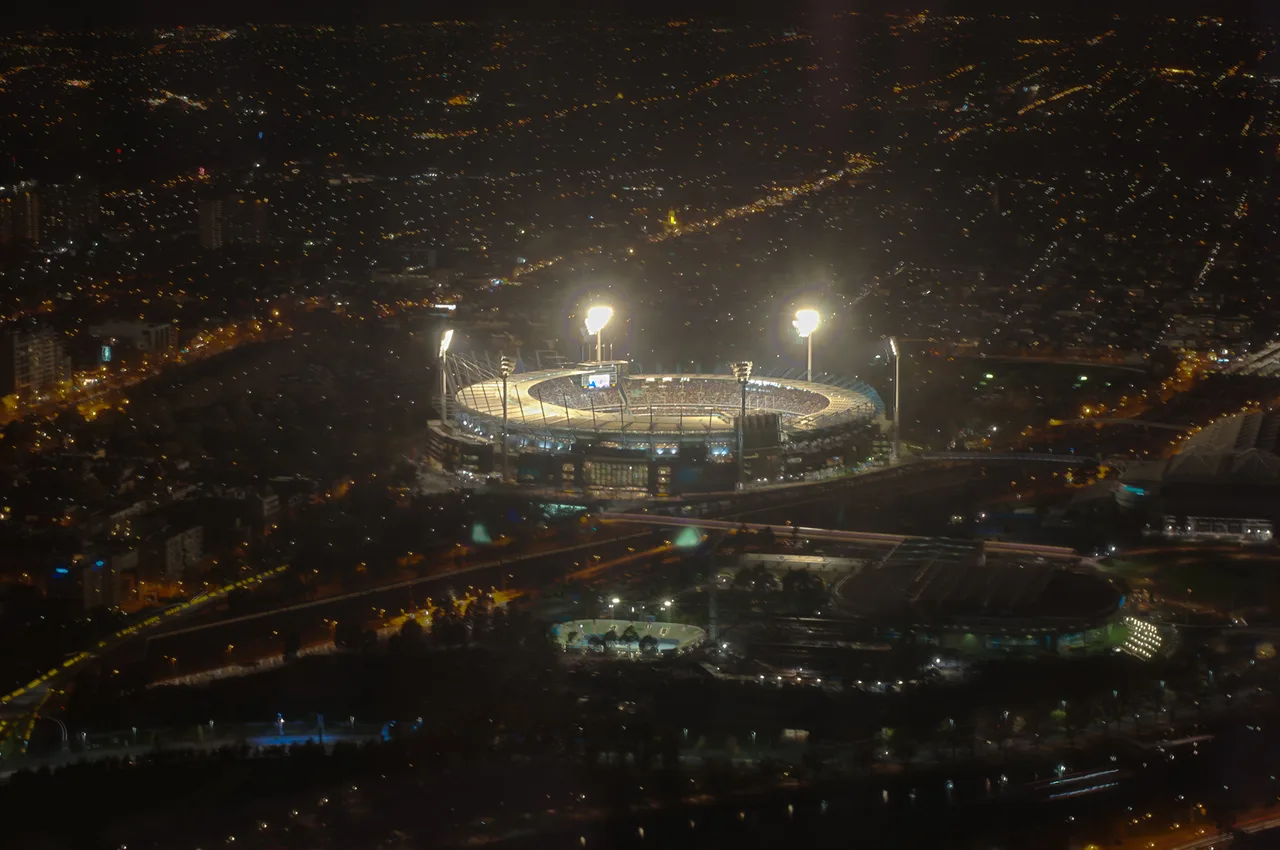
The Dallas Stadium opener doubles as the venue's group-stage marquee; the same venue hosts a 2026 World Cup semi-final on July 14. For the full venue write-up — retractable roof, MetroRail and DFW airport access — see our Arlington / AT&T Stadium guide. For the full Group L preview with all four teams, see our Group L preview.
Can Croatia Beat England on June 17?
Yes — meaningfully. Croatia at FIFA #11 are the strongest Pot 2 side in the entire Group L draw; England are favoured by squad depth and Pot 1 seeding but the matchday 1 fixture is genuinely live for both sides. The historical reference is the 2018 World Cup semi-final at Luzhniki Stadium in Moscow — Croatia 2-1 England after extra time, the result that put Modrić's generation into a World Cup final.
The matchday 1 read:
- England's plan: Tuchel's 4-2-3-1 with Rice and Mainoo screening, Bellingham as the No. 10, Saka and Gordon in the wide attacking positions, Kane at No. 9. The press tempo from kickoff sets England's structural advantage.
- Croatia's answer: Modrić deep in the right half-space until rotation, Kovačić anchoring the deep midfield, Gvardiol stepping into midfield in possession to break the press. The Croatia structure is to absorb 70 minutes and counter through Kramarić in the channels Stones vacates.
- The Modrić-Bellingham midfield zone: Real Madrid's two former and current No. 5s sharing the same midfield space — Modrić as Real's deep playmaker through 2011-2024, Bellingham as the right-side carrier across 2023-26. The generational matchup is the headline image of the entire opener.
The realistic projection: a draw is the model's centre — both sides ranked in the top 11 by FIFA April 2026 ranking, both with deep-knockout pedigree; an England win on 60-65% possession plus a Bellingham set-piece is the most-likely outcome if Tuchel's press tempo holds for 75 minutes; a Croatia win on a Modrić-led set-piece or a Gvardiol-Kramarić combination from a defensive turnover is genuinely live, particularly if Stanišić shuts Saka's right-side run-and-cross pattern down. For the full England starting XI and tactical setup see our England tactical preview.
What Happened to Croatia at Qatar 2022 — and Russia 2018?
Russia 2018: runners-up. Modrić won the Golden Ball; Croatia lost the final 2-4 to France in Moscow on a Mbappé masterclass. The path: group stage top with wins over Nigeria, Argentina and Iceland; Round of 16 win on penalties over Denmark; quarter-final win on penalties over hosts Russia; semi-final win in extra time over England; final loss to France. The cycle's defining message: the Croatia midfield core could win penalty shootouts under pressure and could outwear opponents in extra time. Two of three knockout wins came beyond 90 minutes.
Qatar 2022: third place. Croatia beat Morocco 2-1 in the third-place playoff after losing the semi-final 0-3 to Argentina. The path: group stage second behind Morocco with two draws and a win over Canada; Round of 16 win on penalties over Japan (Livaković saved three of four penalties); quarter-final win on penalties over Brazil (Livaković saved Marquinhos' shootout penalty after Croatia equalised in 117th minute through Bruno Petković); semi-final loss to Argentina on a Lionel Messi-led 3-0 result. The cycle's message: the penalty-shootout pedigree held, the midfield extra-time strength held, the structural ceiling was the Pot 1 squad-depth gap to Argentina.
Three takeaways the 2026 squad carries from those two cycles:
- Livaković in goal: Three penalty saves against Japan plus the Brazil saves are the cycle's most reliable defensive asset.
- The extra-time identity: Eight extra-time appearances across the 2018 and 2022 cycles. The leg-load is the squad's hardest physical test in 2026.
- The Pot 1 ceiling: The 2018 final and 2022 semi-final losses both came against Pot 1 opposition. The 2026 ceiling will be tested again at the same stage.
Is This Modrić's Last Major International Tournament?
Almost certainly. Modrić turns 41 on September 9, 2026 — six weeks after the World Cup final — and has publicly framed the tournament as the natural close to his international career. The Croatia coaching staff have built every selection across the 2025-26 international window around the assumption that 2026 is the final cycle; the Kovačić handover, the Gvardiol-Šutalo back-four investment, the Majer–Pašalić left-No. 8 rotation are all post-Modrić preparations dressed as 2026 cycle decisions.
The post-2026 Croatia midfield projection:
- Mateo Kovačić — continues as the captain and deep playmaker into the Euro 2028 cycle. The natural successor to Modrić's on-pitch authority.
- Lovro Majer — the long-term left-side No. 8.
- Petar Sučić (Dinamo Zagreb), Luka Sučić (Real Sociedad) and the next-generation midfielders — the projected 2030 World Cup spine.
The Euro 2028 cycle in Britain and Ireland is the obvious next opportunity, but Modrić's age 42-43 at that tournament would be unprecedented for a midfielder. The realistic frame is that 2026 is the closing chapter and Croatia's tactical pivot post-tournament becomes more pronounced. The on-pitch impact: every Modrić appearance at 2026 carries the "last time" weight in the broadcast coverage and the supporter atmosphere; the on-pitch tactical impact: Dalić's minute management is the only way to extract the full closing-chapter ceiling. For where that transition actually stands after the tournament, see is Modrić retiring from Croatia?
Will Croatia Make the Round of 16?
Yes — likely. The realistic Group L projection has Croatia in second place behind England, qualifying for the Round of 32 on six points (wins over Panama and Ghana) plus a competitive showing against England. A first-place finish is genuinely live if the matchday 1 fixture goes Croatia's way; a third-placed finish is the realistic downside if the matchday 1 loss is heavy and Ghana's matchday 3 fixture produces a draw.
The Group L competitive shape:
- 🏴 England — Pot 1, FIFA #4, head coach Thomas Tuchel. The group favourite on Pot 1 squad depth alone.
- 🇭🇷 Croatia — Pot 2, FIFA #11, head coach Zlatko Dalić, captain Luka Modrić. The realistic second-place finisher. Beating England flips the group's competitive shape.
- 🇵🇦 Panama — Pot 3, FIFA #33, head coach Thomas Christiansen. CONCACAF qualifying form makes them the best-placed Pot 3 side for a third-place tiebreaker.
- 🇬🇭 Ghana — Pot 4, FIFA #74, head coach Otto Addo. Kudus-Ayew counter-attack; the matchday 3 fixture against Croatia is the group's quiet decider.
The realistic Round of 32 path: as Group L second-placed, Croatia most likely face a Group K winner (Portugal or Colombia) or a best third-placed side. As Group L winners, the path is easier but the England draw is the harder fixture by some margin. The quarter-final ceiling is genuinely live if the bracket opens; the semi-final ceiling depends on whether Dalić can manage Modrić's minutes across an extra-time-heavy knockout run. For a same-template player deep-dive on Croatia's opening-night opponent, see our Is Bellingham playing in the 2026 World Cup?
Frequently Asked Questions
Is Modrić playing in the 2026 World Cup?
Yes. Luka Modrić is captain of Croatia's 26-man squad for the 2026 World Cup — his fourth and almost certainly final senior FIFA tournament. Modrić turns 41 on September 9, 2026 — six weeks after the World Cup final on July 19. Dalić has shifted his role from the 90-minute starter of the 2018 and 2022 cycles to a right-side No. 8 with rotated minutes, with Mateo Kovačić now the deep pivot the system runs through.
How old is Modrić at the 2026 World Cup?
40. Luka Modrić was born September 9, 1985, and is 40 throughout the entire 2026 World Cup. He turns 41 on September 9 — six weeks after the World Cup final on July 19. Modrić is the oldest outfield starter in the entire 2026 tournament. He has played in the 2006, 2014, 2018 (runners-up) and 2022 (third place) World Cups and 2026 is his fifth tournament — with the qualifying campaign for South Africa 2010 the only senior cycle in which Croatia did not qualify under his international tenure.
Who is in Croatia's 2026 World Cup squad?
The first-choice spine: Captain Luka Modrić (AC Milan, 40) at right-side No. 8, Mateo Kovačić (Manchester City, 32) as deep pivot, Joško Gvardiol (Manchester City, 24) at centre-back, Andrej Kramarić (Hoffenheim, 35) at centre-forward, Borna Sosa (Ajax) at left-back, Dominik Livaković (Girona via Fenerbahçe loan) in goal. The squad balance leans older — eight of the projected first-choice starters are 32 or older. Lovro Majer (Wolfsburg) or Mario Pašalić (Atalanta) takes the left-side No. 8; Marcelo Brozović remains in the rotation. The back four cover rotates through Josip Šutalo (Ajax), Martin Erlić (Sassuolo), Josip Stanišić (Bayern Munich) and Josip Juranović (Union Berlin).
When does Croatia play in the 2026 World Cup?
Three Group L matches across 11 days. Wednesday June 17 vs England at Dallas Stadium (FIFA tournament name) / AT&T Stadium in Arlington — kickoff 16:00 ET / 21:00 BST / 20:00 UTC. Tuesday June 23 vs Panama at Toronto Stadium (BMO Field) — kickoff 19:00 ET / 00:00 BST Wednesday / 23:00 UTC. Saturday June 27 vs Ghana at Philadelphia Stadium (Lincoln Financial Field) — kickoff 17:00 ET / 22:00 BST / 21:00 UTC. The England opener is the group's defining fixture and a 2018 World Cup semi-final rematch.
Will Croatia win the 2026 World Cup?
Unlikely. The realistic ceiling is a quarter-final or semi-final, with the Modrić-era closing window genuinely live if the bracket opens. Spain, France, Brazil, Argentina and England carry deeper squad-depth into seven-match knockout runs. Croatia's structural strength remains the midfield identity built across 2018 and 2022 — but eight of the first-choice spine are 32 or older and the leg-load across 33 days of tournament football is the central question Dalić has spent two years preparing for.
People Also Ask
Data sources
- Croatian Football Federation (HNS) — senior men's team news and squad
- FIFA World Cup 2026 — Group L fixtures and Croatia draw position
- AC Milan — Luka Modrić official profile
- Manchester City — Joško Gvardiol official profile
- UEFA — Croatia tournament records
Published: