England 2026 Preview: Tuchel, Bellingham at 10, Kane

England arrive at World Cup 2026 under a head coach who has won the Champions League, a captain chasing his first major trophy, and a system that finally asks the Three Lions to control games rather than endure them — but the same questions about late-game discipline and tournament fatigue follow them into Texas.
Tuchel's 4-2-3-1 Explained
The base shape is a 4-2-3-1 in possession that slides into a 4-4-1-1 out of it. Declan Rice and Elliot Anderson form the double pivot — Rice as the physical destroyer who covers the back four, Anderson as the ball-progressor who can break lines under pressure. Tuchel sees this partnership as the spine of the team and has built the rest around it.
Across the back, John Stones and Marc Guéhi are the first-choice centre-back pairing. The right-back spot was the squad's most active debate through 2026, and Tuchel resolved it by handing the role to Djed Spence (Tottenham) — leaving both the ageing Kyle Walker and Trent Alexander-Arnold, capless since summer 2025, out of the final 26. Jordan Pickford remains the first-choice goalkeeper, and Tuchel has publicly confirmed he is taking four goalkeepers to the tournament — the fourth as a specialist training and dressing-room role.
The front four is where Tuchel has made his clearest tactical statement: Jude Bellingham plays as a No. 10, not a box-crasher. Harry Kane is the centre-forward who drops to link, not a penalty-box poacher. The wide roles rotate between Bukayo Saka, Anthony Gordon, Noni Madueke and Marcus Rashford — a rotation Tuchel has used as much to manage minutes as to vary the attacking profile.
Bellingham as a True No. 10
Under Southgate, Bellingham was asked to be an all-action midfielder — press, carry, arrive in the box, recover shape, do it again. Tuchel has reframed the role. Bellingham now starts higher, closer to Kane, and is freed from the tracking-back duty that used to shred his game by the hour mark. For the full player deep-dive on Bellingham's Tuchel-era No. 10 brief, see Is Bellingham playing in the 2026 World Cup?
The tactical effect is immediate. Bellingham's touch map against good opposition sits in the attacking third; his defensive contribution drops roughly 15% on the heat-maps coaches care about, but his line-breaking passes into Kane and penalty-box arrivals rise materially. England have, at last, a player whose job description matches what he actually does best.
The cost is structure. To free Bellingham, someone else has to track back harder — and that someone is almost always Anderson. If Anderson goes off, England's midfield balance shifts immediately. This is why Tuchel has been publicly explicit about Anderson as a first-choice rather than a rotation name: the system does not survive without him. Bellingham's fatigue risk from the UCL run is the other question we dig into.
The Kane Question
Harry Kane is England's captain, record goalscorer and single most difficult player for Tuchel to plan around.
At Bayern, Kane is deployed as the focal point of an attack that brings width through Musiala, Gnabry and the full-backs. He scores, assists and drops to receive. At international level, the same template works — but only if the creative pocket behind him is filled. Bellingham now fills it. The question is whether both of them can be peak by June 17 after a full Champions League-interrupted club season.
Kane is the kind of player managers find very hard to rest. If he is available, he starts — even if 70% Kane is demonstrably less useful than a fresh alternative. If Bayern reach the Budapest final on May 30, Tuchel has a uniquely uncomfortable call to make ahead of Croatia on June 17. The 18-day window is the widest of any group-stage opener featuring a UCL-finalist star, but "widest" and "comfortable" are not the same thing.
The Pressing Shift: From 2018 to 2026
Southgate's England were a mid-block, counter-attacking side. Tuchel's England are not — or, at least, are not supposed to be. The instruction is to press the ball in the opposition half, force errors in build-up, and turn England's individual quality into a structural asset rather than just a decider of close games.
Through the March 2026 window against Uruguay and Japan at Wembley, that shift was visible but uneven. England pressed well in first halves; their intensity dropped noticeably after 65 minutes. This is not uncommon in a transitional phase — players need time to internalise new defensive triggers — but it is the single most important behaviour to track through the warm-up friendlies against New Zealand on Jun 6 and Costa Rica on Jun 10.
If England still can't press for 90 minutes by the Costa Rica game, expect Tuchel to revert to a hybrid mid-block against Croatia's more possession-heavy shape. If the press holds, England genuinely look like top-four semi-finalists.
England's Path Through Group L
Group L is the lightest draw of any top-six FIFA nation. The fixtures still matter tactically.
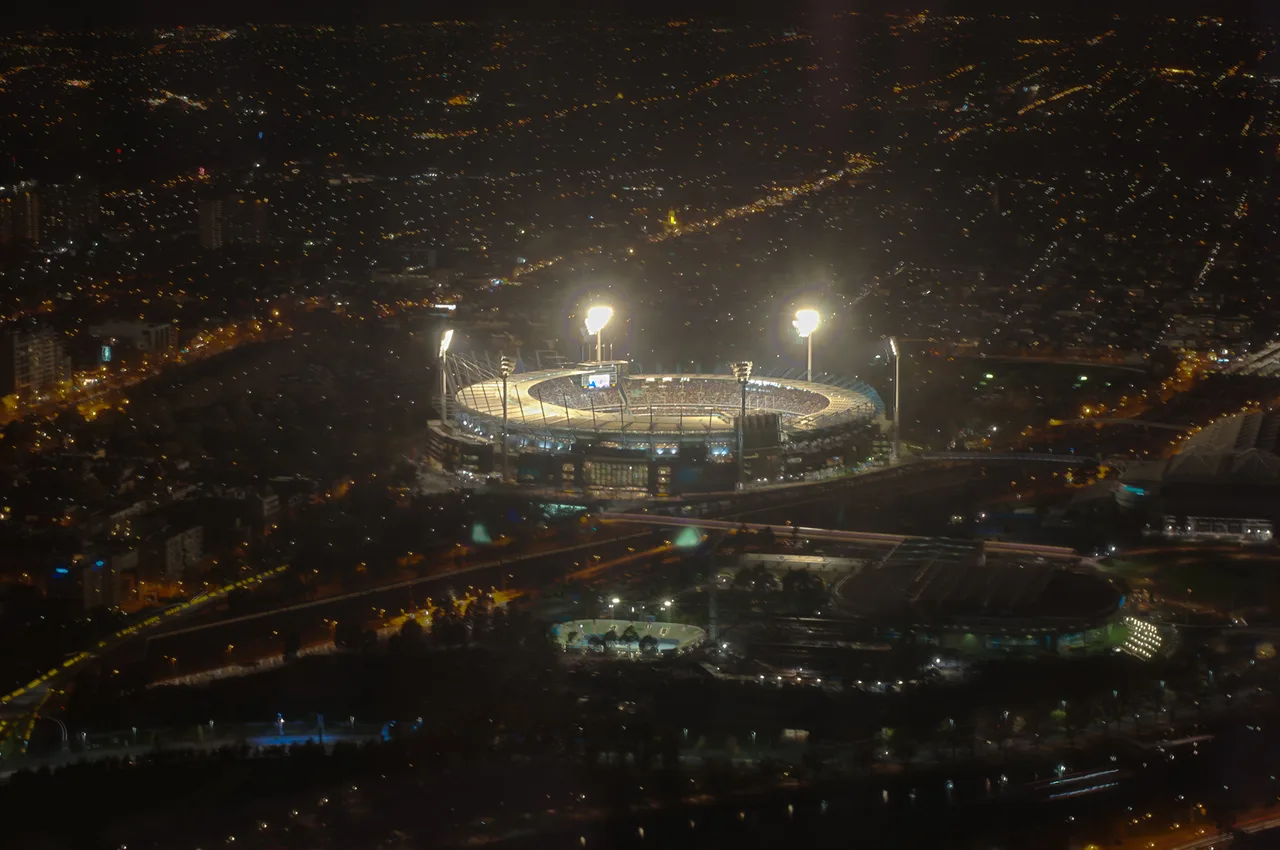
- Jun 17 vs Croatia — AT&T Stadium, Arlington. The group's defining match. Croatia's midfield — Kovačić, Modrić if fit, and a younger guard — will test whether Rice and Anderson can control the centre under real pressure. England won the 2018 semi-final rematch emotionally but never tactically; this is Tuchel's chance to finally outmatch a Modrić-era Croatia.
- Jun 23 vs Ghana — Gillette Stadium, Foxborough. Physical opponent with Premier League-grounded wide players. Rotation likely — Gordon or Madueke for Saka, minutes for the bench forwards. Set pieces will be where Ghana threaten most.
- Jun 27 vs Panama — MetLife Stadium, East Rutherford. Low-block game. The match that tests whether England can break down a packed defence without resorting to Kane-direct balls. A potentially valuable fixture for Bellingham to accumulate time on the ball in the final third.
Two venues in the Northeast sandwiching one in Texas — a moderate travel load, and Arlington's indoor air-conditioned stadium takes the weather out of the Croatia game. This is a schedule designed for a team that wants to peak across the knockout rounds.
Where Tuchel's England Is Still Brittle
The honest vulnerability checklist:
- Right-back. Unsettled for 18 months. Djed Spence gets the nod with Walker and Alexander-Arnold both left out, but he is unproven at tournament level. Against Saka-level right wingers from opposing nations — think Kvaratskhelia-type profiles in knockout draws — this is where England can be pulled apart.
- Late-game structure. The 2018 Croatia semi-final, the 2022 France quarter-final, the 2024 Spain Euro final — each lost in the final 20 minutes, each involving a concession of territory England could not recover. Tuchel's pressing identity is supposed to fix this. The jury is still out.
- Anderson's workload. If he goes off injured in a knockout match, England's double-pivot balance has no true replacement. Mainoo is the nominal fallback but his Manchester United season has been uneven. Rice carrying both jobs has historically been a step too far.
- Kane and Bellingham arriving fresh. Both in the top ten of the UCL-final fatigue table. If both Bayern and Real Madrid reach Budapest, England's two most important attacking players walk into a Croatia opener on tired legs.
The Tuchel Question: Enough Identity for a Knockout Run?
Tuchel's 2021 Champions League with Chelsea was won on a specific principle: out-organise a more talented opponent in one-off knockout games by absorbing pressure, pressing in triggers and scoring on transitions. That is roughly what England have been, minus the peak Chelsea midfield balance.
The case for England winning in 2026 is that this is the first time they combine elite individual quality with a coach who has actually won a knockout trophy at the highest level. The case against is that Tuchel has never had more than two years to install an identity at any club, and international football gives him less contact time than any club job ever did. Southgate's England had structure but no top gear; Tuchel's England have a top gear but the structure under pressure is still a question.
Favourites in Group L, Still a Layer Behind the Top Three
England should top Group L comfortably. The tactical question only sharpens from the Round of 32 onwards, where the bracket may deliver them Argentina, Germany or Brazil in the quarter-finals.
The floor is a quarter-final exit to a better-coached side — the pattern of every tournament since 2016. The ceiling is a first men's major trophy since 1966 if Tuchel's system survives contact with the top three, Bellingham arrives fresh and Kane's 30s body holds up through seven matches in 33 days.
Final Thoughts
England at 2026 are the most tactically interesting team they have been in a generation. A head coach with a Champions League medal. A No. 10 who can finally play as a No. 10. A double pivot with balance. A captain still scoring goals. A generational wide pool.
The honest question is whether those pieces have had enough time together to beat a prime France or Spain over 90 minutes — and whether the players most exposed to UCL fatigue arrive in Texas in June with the sharpness Tuchel's system needs. The tournament's answer begins on June 17, at AT&T Stadium, against a Croatia team that has owned England in every knockout meeting that mattered.
For more on the cycle, see Deschamps' transition template at France, Nagelsmann's Germany — where Tuchel was coaching Bayern before taking this job, how to watch the MetLife final on July 19, and the UCL-final-to-World-Cup compression that lands hardest on Kane and Bellingham.
Frequently Asked Questions
Who is England's head coach at World Cup 2026?
Thomas Tuchel, appointed by The FA in late 2024. This is his first international job after club spells at PSG, Chelsea (2021 Champions League winner) and Bayern Munich. He replaced Gareth Southgate and has steered England into the tournament as FIFA #4 in April 2026.
What formation will England use at World Cup 2026?
A 4-2-3-1, with Declan Rice and Elliot Anderson forming the double pivot and Jude Bellingham playing as a true No. 10 behind Harry Kane. The wide forwards rotate between Bukayo Saka, Anthony Gordon, Noni Madueke and Marcus Rashford.
Who are England's key players at World Cup 2026?
Harry Kane (captain, Bayern Munich) leads the line with Bellingham behind him. Declan Rice and Elliot Anderson anchor the midfield. Saka, Gordon and Madueke compete for the wide roles. John Stones and Marc Guéhi lead the back four with Jordan Pickford in goal.
Which group is England in at the 2026 World Cup?
Group L with Croatia, Ghana and Panama. England open against Croatia on Jun 17 at AT&T Stadium in Arlington, face Ghana on Jun 23 at Gillette Stadium in Foxborough, and finish with Panama on Jun 27 at MetLife Stadium in East Rutherford.
What is England's biggest tactical risk?
Game state discipline. Under Southgate, England often held 1-0 leads by dropping deep; Tuchel wants his sides to press the ball in the opposition half to control second halves. The shift in mid-match behaviour is unfamiliar to several senior players, and the transition moments are where England's 2018-2024 exits have typically happened.
How compressed is Harry Kane's and Jude Bellingham's schedule before the World Cup?
Both play for clubs still active in the Champions League late stages. If Bayern or Real Madrid reach the final on May 30, Kane or Bellingham would have 18 days before England's June 17 opener — the widest recovery buffer among the group-stage headline stars, but still inside the 'risk' window.
People Also Ask
Data sources
- The FA — Thomas Tuchel England squad announcement, March 2026 (Uruguay & Japan friendlies at Wembley)
- FIFA World Cup 2026 — Group L fixtures (England vs Croatia Jun 17, vs Ghana Jun 23, vs Panama Jun 27)
- England pre-tournament friendlies: New Zealand (Jun 6, Tampa Bay) and Costa Rica (Jun 10, Orlando) — The FA official programme
- Training base: Florida pre-tournament → Kansas City during the group stage — The FA
- Squad structure — Tuchel's four-goalkeeper plan, Bellingham as No. 10, Rice + Anderson as double pivot — Based on March 2026 35-man squad and camp briefings
Published: