World Cup 2026 Kits: 48 Jerseys, Adidas/Nike/Puma Split
If you only ever look at one wall of a World Cup, look at the wall of jerseys. Forty-eight teams, three dominant manufacturers, and a long list of stories stitched into the badges, the colours and the small print on the back of the shirt. The 2026 World Cup is also the last big tournament under the existing kit map — Germany leave Adidas for Nike from 2027, and the rest of the field has the kind of stability you only notice when it's about to break.
Who Makes the World Cup 2026 Jerseys?
The breakdown by major manufacturer, based on federation press releases through May 2026:
Adidas (10 teams)
- 🇦🇷 Argentina · 🇧🇪 Belgium · 🇩🇪 Germany · 🇯🇵 Japan · 🇲🇽 Mexico · 🇪🇸 Spain · 🇸🇪 Sweden · 🇩🇿 Algeria · 🇨🇴 Colombia · 🇿🇦 South Africa (signed late 2025, replacing Le Coq Sportif)
Nike (13 teams)
- 🇧🇷 Brazil · 🇨🇦 Canada · 🏴 England · 🇫🇷 France · 🇰🇷 Korea Republic · 🇳🇱 Netherlands · 🇳🇿 New Zealand · 🇳🇴 Norway · 🇶🇦 Qatar · 🇸🇦 Saudi Arabia · 🇹🇷 Türkiye · 🇺🇸 USA · 🇦🇺 Australia
Puma (11 teams)
- 🇦🇹 Austria · 🇨🇿 Czech Republic · 🇪🇬 Egypt · 🇬🇭 Ghana · 🇨🇮 Ivory Coast · 🇲🇦 Morocco · 🇵🇹 Portugal · 🇸🇳 Senegal · 🇨🇭 Switzerland · 🇹🇳 Tunisia · 🇺🇾 Uruguay
Smaller suppliers (the rest)
- Macron — 🇭🇷 Croatia (switched from Nike after 2022)
- New Balance — 🇵🇦 Panama
- Marathon — 🇪🇨 Ecuador (long-running Ecuadorian local supplier)
- Majid — 🇮🇷 Iran (Iranian domestic brand; some sources also list Uhlsport for limited supply)
- Kelme — 🇧🇦 Bosnia and Herzegovina
- Jako — 🇮🇶 Iraq
- Joma — 🇨🇻 Cape Verde (long-running federation partnership)
- Other / federation-direct — 🇨🇼 Curaçao, 🇨🇩 DR Congo, 🇭🇹 Haiti, 🇯🇴 Jordan, 🇵🇾 Paraguay, 🏴 Scotland, 🇺🇿 Uzbekistan
The big three combined cover 34 of 48 teams. All 12 Pot 1 nations — Mexico, USA, Canada, Argentina, Brazil, France, England, Spain, Germany, Belgium, Portugal, Netherlands — wear Adidas, Nike or Puma without exception. The smaller suppliers cluster among the Pot 3 and Pot 4 teams, which is where the more interesting design decisions tend to surface, because the brief is less constrained by mass-market commercial expectations.
What Are the Most Talked-About World Cup 2026 Kits?
Subjective, obviously. The picks below focus on kits where there's a verifiable change worth pointing out — a new badge, a new manufacturer, a heritage callback that's documented in the launch material.
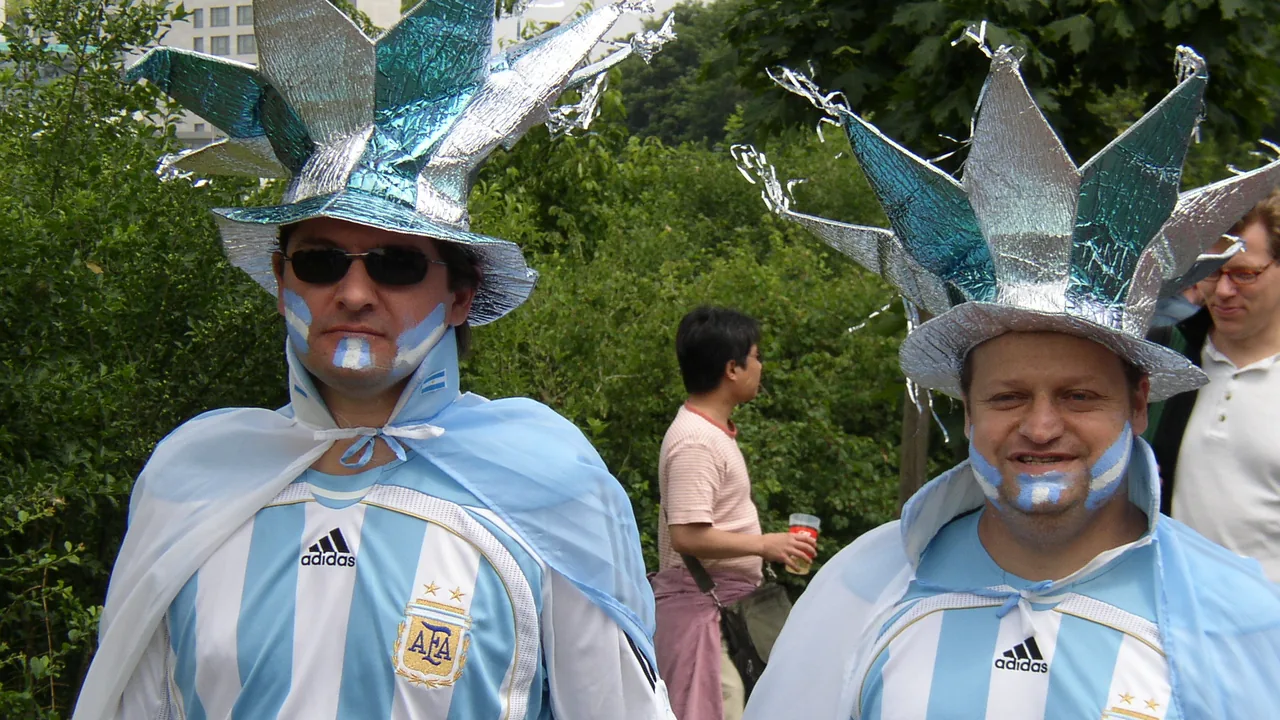
- 🇦🇷 Argentina (Adidas). The first full World Cup with the third star sewn in from matchday one, alongside the iconic light-blue and white stripes that have defined the kit since the 1908 Olympic team. The badge upgrade after 2022 is the rare kit change that earns its modification — most national-team redesigns add a visual gimmick; this one adds a trophy.
- 🇭🇷 Croatia (Macron). First Macron World Cup kit for Croatia after the switch from Nike following the 2022 cycle. The chequerboard pattern is preserved — federation rule rather than design choice — and the manufacturer change is the story rather than the silhouette. Macron's national-team experience runs deep at club level (Lazio, Sampdoria, Lens) but Croatia is its first World Cup-headlining federation.
- 🏴 England (Nike). The away kit is red — the colour England wore in the 1966 final — which has historically been the more interesting of the two England shirts. The home shirt sticks to the white-with-three-lions formula. The 2024 controversy over the rear-collar cross flag has not repeated for 2026.
- 🇩🇪 Germany (Adidas). The last Germany World Cup shirt under the 70-year Adidas partnership before Nike takes over from 2027. Whatever Adidas does with the design, the symbolism of the three stripes on the white base is the story.
- 🇲🇦 Morocco (Puma). Crimson red home shirt with the green Moroccan star and Puma's continued investment in the federation following the 2022 semi-final run. Puma's Africa portfolio (Morocco, Senegal, Egypt, Ghana, Ivory Coast, Tunisia) is one of the more design-coherent groups at the tournament.
What's the Story Behind the Argentina, Brazil and Germany Jerseys?
Argentina's three stars
Argentina wear three stars above the AFA crest at the 2026 World Cup. The first two are for the 1978 and 1986 titles. The third was added after the 2022 Qatar triumph — the first new star on an Argentina shirt since 1986. Lionel Messi's hand on the trophy in Lusail is the moment that earned the third star, and the AFA's decision to position the new star in line with the existing two (rather than below them, as some federations do) was deliberate. The shirt should read as continuity, not ranking. Argentina played the first half of the 2026 cycle in the tribute kit; the 2026 World Cup is the first tournament with the new badge stitched in from matchday one.
Brazil's canary-yellow shirt
Before 1953, Brazil played in white. The 1950 World Cup final at the Maracanã ended with Uruguay's Alcides Ghiggia silencing 200,000 Brazilians in the 79th minute, a defeat so culturally heavy it earned its own name in Portuguese — the Maracanazo. Within three years, the federation had retired the white kit. A national newspaper held a public competition to design the replacement, with the rule that all four colours of the flag (yellow, green, blue, white) had to feature. A teenage art student from Rio Grande do Sul, Aldyr Garcia Schlee, won. The canary-yellow shirt with green trim, blue shorts and white socks has been Brazil's home kit ever since. Nike has manufactured it since 1996, and the 2026 design keeps the formula intact.
Germany's white-with-three-stripes — the last cycle
The white-with-black-trim Germany shirt has been an Adidas product since the 1950s. The DFB announced in March 2024 that Nike would take over from 2027, and the 2026 World Cup is therefore the last tournament with the three stripes on the German national-team kit. The financial gap was the headline reason — Nike reportedly offered roughly double what Adidas was willing to renew at — but the decision drew political and emotional pushback in Germany. Adidas was founded in Herzogenaurach, less than ninety miles from the German FA's training base. For now, the 2026 shirt keeps the white base, the black trim, the four stars above the DFB crest, and the three stripes Adi Dassler put on a Germany shirt for the 1954 World Cup final.
When Were the World Cup 2026 Jerseys Released?
The launch calendar is staggered. Adidas led with Argentina in mid-March, alongside Mexico and Spain. Nike followed in early April with the Brazil and France campaigns, and rolled the rest of the line out across April and May. Puma anchored its campaign on Morocco and Portugal in late March. Most of the smaller-federation kits — Croatia (Macron), Panama (New Balance), Bosnia (Kelme) — landed in April or early May. The pattern is a coordinated wave per brand, with the flagship federation leading and the rest following within four to six weeks.
Released and on sale (most major federations)
Argentina, Brazil, England, France, Germany, Italy (not at the tournament, but launched anyway as a global commercial product), Japan, Mexico, Netherlands, Portugal, Spain. Available through manufacturer stores and the federation's own retail channels.
Released, partial availability
Some smaller-federation kits launched at the federation level (with a domestic press event) but have not yet hit the manufacturer's global online store at full inventory. Examples include Cape Verde, Curaçao, Iraq and Uzbekistan.
Leaked, not officially launched
Footy Headlines and similar kit-leak accounts publish unofficial photos weeks before official launch, sourced from retailer test pages and distribution-centre photos. As of mid-May 2026, the leaks still ahead of official launch tend to be away kits or training range pieces rather than headline home shirts.
Final reveal window
Pre-tournament friendlies through early June are the last reveal window for any kit not already in the public domain. The opening fixture on June 11 — Mexico vs South Africa at Estadio Azteca — is the absolute deadline. Anything not on a player's back by then is not a 2026 World Cup kit.
Where Can I Buy a World Cup 2026 Jersey?
Three legitimate channels:
- Manufacturer's official store. adidas.com, nike.com, puma.com all carry the full national-team line for their respective federations. Inventory typically widest within the first six weeks of launch; late-tournament restocks are possible but not guaranteed for less popular sizes.
- Federation's own store. shop.afa.com.ar for Argentina, shop.thefa.com for England, shop.cbf.com.br for Brazil. Federation stores often carry exclusive variants — federation-only colourways, signed editions, vintage reissues — that the manufacturer doesn't list.
- Major sports retailers. Fanatics, Pro Direct Soccer, World Soccer Shop. Convenient for cross-federation orders; pricing usually within $5-10 of the manufacturer direct price.
Authentic vs Replica vs Player Issue
Three versions of every national-team shirt exist, and the price gap between them is meaningful:
- Authentic / match version ($130–$170) — what the players actually wear. Lighter technical fabric with engineered ventilation panels, slimmer cut, heat-pressed badges. The shirts are produced in limited runs and sell out earliest. Sometimes labelled "Authentic", "Vapor Match" (Nike), "HEAT.RDY Authentic" (Adidas) or "Ultraweave" (Puma).
- Replica / fan version ($90–$110) — the supporter shirt. Same graphics, but heavier polyester, looser fit, woven badges instead of heat-pressed. Built for stand wear and everyday use rather than 90 minutes of play. This is what most fans buy and what most stadium retailers stock at scale.
- Player issue with name and number (add $30–$40 on top of either version) — adds custom or pre-printed player name and number to the back. The 2026 squad numbers are not finalised until the federation publishes the 26-man list (FIFA squad deadline is the night before the opening match), so anything printed before then is provisional.
Avoid Amazon and eBay marketplace listings unless the seller is a verified retailer — counterfeit volume on those platforms is high enough that even experienced buyers get caught out. The simplest authenticity check is the manufacturer hologram on the inside-back-neck label; counterfeits often miss this entirely or use a stuck-on sticker rather than the embedded foil.
For the broader 2026 World Cup viewing, ticketing and city-guide context, see our UK TV broadcast guide and US TV broadcast guide. For team-by-team tactical previews and Group profiles see the Group A through Group L hubs and individual team pages.
Adidas, Nike or Puma — Whose World Cup 2026 Kits Are Best?
Numbers don't decide this one. Nike has the largest list at thirteen teams, but the question worth asking is which brand's identity is most visible across its line.
Adidas wins on identity. The three stripes on Argentina's light blue, the four stars on Germany's white, the heritage red trim on Spain — these are the kits people draw from memory when they draw a World Cup. Adidas's ten-team list is the smallest of the three, but it owns the federations that defined the look of the tournament for the last forty years.
Nike wins on volume. Two of the three host countries (USA and Canada) sit in Nike's list, alongside England, France, Brazil and the Netherlands — the English-language Pot 1 spine. The Brazil canary, the white England home, the navy France with the cockerel: Nike's catalogue is broader and more globally retail-driven, and it shows in the safer template-led design language across most of its line.
Puma wins on audacity. The most distinctive design work in the tournament sits in the Puma list. Morocco's calligraphic crimson, Senegal's banded green and gold, Portugal's dark red with the green chevron — Puma gets fewer Pot 1 teams, so the brief is freer, and the federations it does have lean into the design space more than Nike's mass-market lines do.
The 2026 split is also the last with this shape. Germany's move to Nike from 2027 will pull a kit-defining federation away from Adidas for the next World Cup cycle. Other deals expiring before 2030 — Belgium, Croatia, Switzerland — could shift the picture again. For now, this is the map.
Frequently Asked Questions
Who makes the World Cup 2026 jerseys?
Three brands kit roughly 85% of the 48-team field. Adidas supplies Argentina, Belgium, Germany, Japan, Mexico, Spain, Sweden, Algeria, Colombia and — from a March 2026 contract — South Africa. Nike supplies Brazil, Canada, England, France, Korea Republic, Netherlands, New Zealand, Norway, Qatar, Saudi Arabia, Türkiye, USA and Australia. Puma supplies Austria, Czech Republic, Egypt, Ghana, Ivory Coast, Morocco, Portugal, Senegal, Switzerland, Tunisia and Uruguay. The remaining teams use smaller suppliers — Macron for Croatia, New Balance for Panama, Marathon for Ecuador, Majid for Iran, Kelme for Bosnia, Jako for Iraq, and federation-direct production for several Pot 4 federations.
How many stars are on the Argentina World Cup 2026 jersey?
Three. The third star, added above the AFA crest after the 2022 Qatar triumph, joins the existing 1978 and 1986 stars. The 2026 home shirt keeps the light-blue and white vertical stripes; Adidas manufactures it.
Why does Brazil wear a yellow jersey?
After losing the 1950 World Cup final to Uruguay in white, Brazil ran a public competition to redesign the kit using the four flag colours. Aldyr Garcia Schlee's canary-yellow design (yellow shirt, green trim, blue shorts, white socks) won and has been the home kit since 1953. Nike has manufactured it since 1996.
Why did Germany switch from Adidas to Nike?
Money. The DFB announced in March 2024 that Nike's offer (reportedly roughly double what Adidas would renew at) ended a 70-year Adidas partnership. The 2026 World Cup is the last Germany shirt with the three stripes; Nike takes over from 2027.
When were the World Cup 2026 jerseys released?
Most major federations released their 2026 home kits between March and May 2026, timed to coincide with international friendlies and tournament marketing windows. The big three (Adidas, Nike, Puma) typically launch their full national-team kit lines in coordinated waves. A handful of kits leaked weeks ahead of official launch through retailer accidents and supply-chain photos. A small number of teams have not yet officially unveiled their World Cup-specific design as of mid-May 2026 — those will appear during the final friendlies in early June or at the opening fixture itself.
Where can I buy a World Cup 2026 jersey?
Replica jerseys for all 48 teams are sold through the official manufacturer's online store (adidas.com, nike.com, puma.com), through the federation's own store (e.g. shop.afa.com.ar for Argentina, shop.thefa.com for England), and through major sports retailers (Fanatics, Pro Direct Soccer, World Soccer Shop). Authentic match-version shirts cost roughly $130–$170; replica fan shirts run $90–$110. Player-issue versions with names and numbers add $30–$40 more. Counterfeit risk is highest on Amazon and eBay marketplaces — buy through the manufacturer or federation store if authenticity matters.
Which teams are wearing new manufacturers at World Cup 2026?
Three notable changes since the 2022 World Cup. Croatia left Nike for Macron after the Qatar tournament, the first World Cup cycle under the new Italian supplier. South Africa signed with Adidas in late 2025 — the kit launched in March 2026, replacing Le Coq Sportif. Panama maintained their New Balance partnership through to 2026. Several smaller-federation deals also shifted in detail. But the headline manufacturer change is at the next World Cup cycle, not this one: Germany leaves Adidas for Nike from 2027, ending a partnership that runs back to the 1950s.
Are there any leaked World Cup 2026 jerseys that have not been officially released?
A small number of kits leaked through retailer test pages, distribution-centre photos, and unofficial Instagram accounts (Footy Headlines is the most active leak source). Leaks usually appear weeks ahead of the federation's official reveal. By mid-May 2026, the vast majority of major-federation home kits are official; the leaks remaining at this stage tend to be smaller-federation away kits or training-range pieces. Final on-pitch debuts during pre-tournament friendlies in early June are the last reveal window before the tournament opens June 11.
People Also Ask
Data sources
- DFB / Nike supplier announcement (21 March 2024) — Germany leaves Adidas after 70 years
- Adidas Newsroom — 2026 national-team kit launches
- Nike Newsroom — Football
- Puma — Football News
- Footy Headlines — kit-leak and launch tracker
- FIFA — Adidas FIFA World Cup partnership extended through 2030 — Editorial review by the WTK Sports desk. Manufacturer assignments verified against federation press releases as of May 2026; design notes drawn from official launch imagery and federation statements only — no retailer mock-ups.
Published: