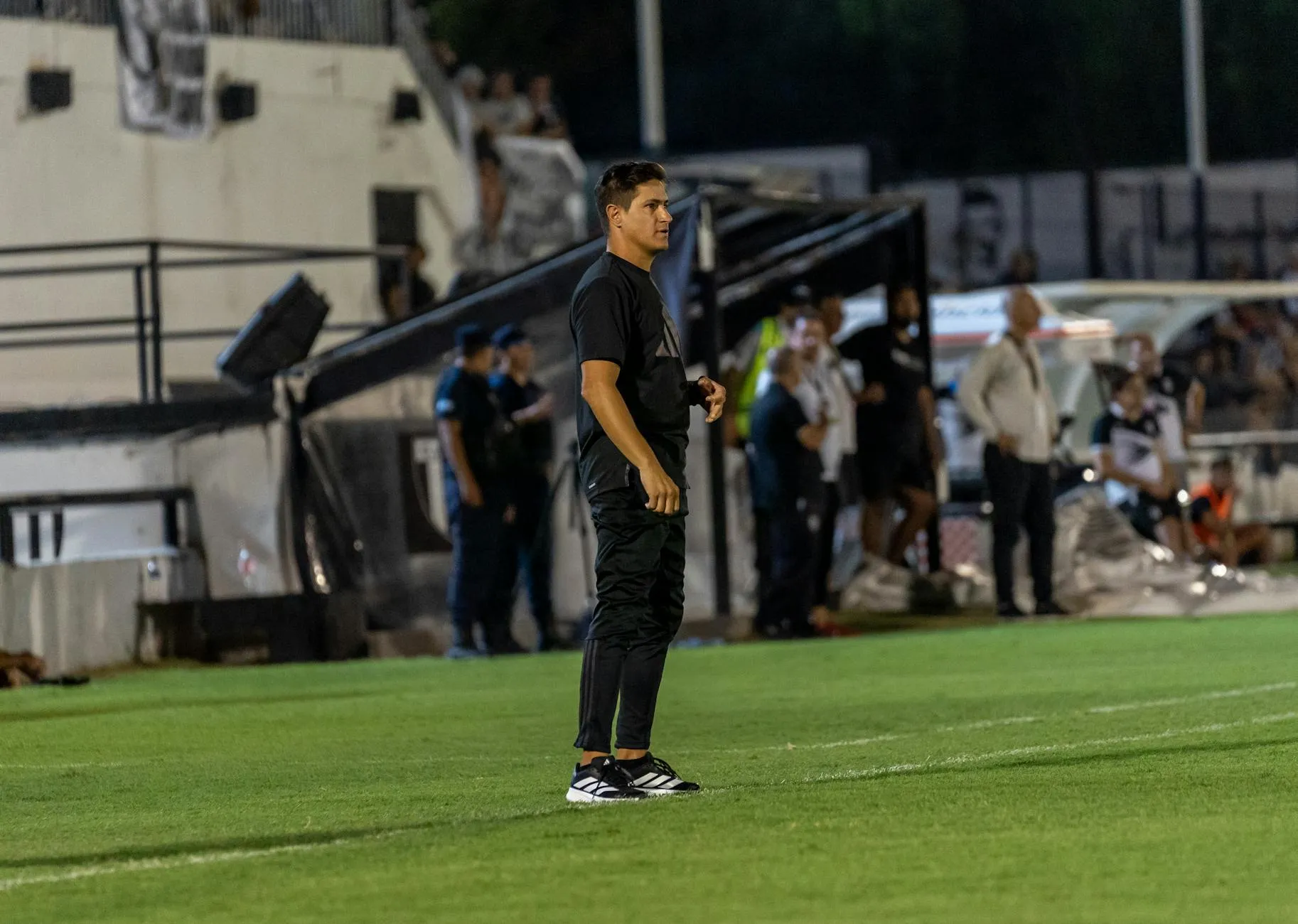
Mexico Tactical Preview 2026: Aguirre at the Azteca

Mexico opens the entire 2026 World Cup at home — first match, first stadium, first crowd, in the most iconic venue in the country's footballing history. The man on the bench has been here twice before.
Aguirre's Third Stint and What He Inherits
Javier "Vasco" Aguirre is the only coach in Mexican football history to lead El Tri to two World Cups (2002 in Korea/Japan, 2010 in South Africa) and now returns for a third in 2026. The Mexican Football Federation went back to him in July 2024 because of three things they wanted that no younger Mexican coach offered: tournament experience, a veteran's tolerance for federation politics, and a willingness to play pragmatic, defence-first football against superior opponents.
The squad Aguirre inherited has talent but also baggage. The 2018 Russia generation — Hirving "Chucky" Lozano, Raúl Jiménez, Edson Álvarez, Guillermo Ochoa — is now the senior leadership, with the next layer (Santiago Giménez, Luis Chávez, Jorge Sánchez) in their athletic peak. The bench is younger and faster: Diego Lainez, César Huerta, Marcel Ruiz. Aguirre's first six months were spent rebuilding the dressing room after Lozano's brief Copa América tenure ended in acrimony.
By the March 2026 Concacaf Nations League finals, El Tri had stabilised. Aguirre had a clear first-choice XI, a defined 4-3-3 build-up plan, and — for the first time in years — a settled goalkeeper situation with Luis Malagón ahead of veteran Guillermo Ochoa for the No. 1 shirt.
Mexico's 4-3-3 Formation Explained
Aguirre's Mexico plays a 4-3-3 on the team-sheet that morphs into a 4-2-3-1 / 4-4-2 mid-block out of possession. The base shape:
- Goalkeeper: Luis Malagón (Club América) — first choice as of the March 2026 cycle, with Guillermo Ochoa (Club AVS) the experienced backup at his sixth World Cup.
- Back four: Jorge Sánchez or Julián Araujo at right-back, César Montes and Johan Vásquez as the centre-back pair, Jesús Gallardo on the left.
- Midfield: Edson Álvarez as the deep pivot, with Luis Chávez and Erick Sánchez as the two No. 8s. Marcel Ruiz available as a more progressive substitute.
- Front three: Hirving Lozano on the right, the No. 9 (Jiménez or Giménez) through the middle, and César Huerta or Diego Lainez on the left, drifting in.
The defining detail of Aguirre's build-up: Álvarez drops between the centre-backs when Mexico face a high press. This forms a back-three in possession (Álvarez plus the two CBs), allowing the full-backs to push high and Lozano + the left forward to invert. Out of possession, the shape resets to a compact 4-4-2, with Lozano and the left forward as the front two pressers.
Edson Álvarez: The Pivot Mexico Builds Around
Edson Álvarez, 28 during the tournament, is the single most important player on this squad. The West Ham defensive midfielder is Mexico's captain, tackle leader, ball-progressor and on-field organiser. Aguirre's entire structure is built to maximise the things Álvarez does well: ball-winning in the central zone, screening the back four, and starting attacks with a vertical first pass.
Álvarez's profile is closer to a continental European No. 6 than the box-to-box midfielders Mexico has historically relied on. He doesn't get to the box. He doesn't score from open play. What he does is intercept, recover and recycle — three of the most valuable actions for a team that wants to absorb pressure and break in transition.
The single biggest pre-tournament risk: Álvarez missing minutes. Mexico's depth at the No. 6 position is thin. Erik Lira (Cruz Azul) is the most natural backup; Marcel Ruiz (Toluca) is more progressive but less of a defender. Aguirre will manage Álvarez's minutes through the May friendlies; expect him to play 60-75 minutes in send-off games rather than full 90s.
The No. 9 Question — Jiménez or Giménez?
Mexico's centre-forward call is the most-discussed tactical question of the tournament cycle. Raúl Jiménez turns 35 during the tournament. He is the experienced No. 9 — strong in the air, exceptional at hold-up play, comfortable as the focal point of a counter-attack. He scored seven times for Mexico in the 2025 calendar year, more than any other Aguirre-era striker. His Premier League minutes at Fulham give him the rhythm Mexico needs from a starter.
Santiago Giménez is 25, a different player and arguably the better fit for the front line Mexico now has. Giménez moved from Feyenoord to AC Milan in January 2025 and has continued his goal-per-90 record in Serie A. He is faster than Jiménez, sharper inside the six-yard box, and a more natural finisher off Lozano's right-sided crosses. He is also the player Mexico fans have been waiting for since the 2018 cycle when his father, Christian "Chaco" Giménez, was the assistant coach.
Aguirre's likely solution: start Jiménez against tougher opponents (Czech Republic, knockout rounds), Giménez against teams Mexico expects to dominate (South Africa, South Korea). Both will start at least one group match. Whoever scores first sets the depth chart going into the Round of 32.
The dark horse: Henry Martín (Club América), 33, who shared the Liga MX golden boot in 2024-25. Martín is unlikely to start but is the most likely impact substitute when Mexico needs a goal in the 70th minute.
Hirving Lozano and the Wide Threat
Hirving "Chucky" Lozano, 30, is the player opponents fear most when Mexico breaks. Now at PSV after his Napoli stint, Lozano is no longer the explosive teenage debutant who scored against Germany at Russia 2018 — but he is a smarter player than he was then. He cuts inside on his right foot, links with the No. 9, and stays wide enough to stretch the back line for the inverting left forward.
Lozano's importance is that he gives Mexico a vertical threat from a wide starting position. Aguirre's mid-block invites pressure into the central zone, then exits via the wings. Lozano is the primary outlet on the right; on the left, Aguirre rotates between César Huerta (Anderlecht, more direct) and Diego Lainez (Tigres, more technical).
The tactical question: how often can Lozano repeat his runs through 90 minutes at altitude? Mexico's home matches at the Azteca offer a hidden advantage — Lozano's match-fitness against opponents who fade in the second half is one of the structural edges Aguirre is counting on.
Group A: The Most Manageable Pot 1 Group
Mexico drew South Africa (Pot 4, FIFA #60), South Korea (Pot 2, FIFA #25) and Czech Republic (Pot 3, FIFA #41) in Group A. By any measure — average FIFA ranking of opponents, pot composition, recent tournament form — this is the most manageable group any Pot 1 nation drew.
The three Mexico fixtures:
- Match 1 — Mexico vs South Africa: Thursday, June 11 at Estadio Azteca / Banorte, 13:00 local (19:00 UTC). The tournament opener. South Africa qualified for their first World Cup since 2010; their first visit to Mexico City at altitude is a structural disadvantage Mexico must exploit. Anything less than a win here is a crisis.
- Match 2 — Mexico vs South Korea: Wednesday, June 17 at Estadio AKRON, Guadalajara, 20:00 local (01:00+1 UTC). The trickiest Group A test. South Korea under Hong Myung-bo are organised, technically secure and have Son Heung-min. The Guadalajara altitude (1,560m) is meaningful but less extreme than Mexico City. A draw is acceptable; a win likely seals top spot.
- Match 3 — Czech Republic vs Mexico: Tuesday, June 23 at Estadio Azteca / Banorte, 19:00 local (01:00+1 UTC). Back at the Azteca for the group decider. By matchday three Mexico should already be qualified; the question is whether they win the group (Round of 32 vs a third-placed team) or finish second (a tougher Round of 32 draw).
The realistic target: 9 points and group winner. 7 points (two wins, one draw) is acceptable. Anything less and Aguirre faces serious questions before the knockouts.
The Altitude and Azteca Advantage
Two of Mexico's three group games are at Estadio Azteca / Estadio Banorte — the legendary venue rebranded under the Banorte sponsorship deal announced in 2024, but kept under the FIFA tournament name "Mexico City Stadium" for the 2026 edition. The stadium sits at 2,240 metres above sea level (7,350 feet), making it the highest-altitude venue at the entire World Cup.
The altitude effect is well-documented: a 5-10% reduction in maximum sustained aerobic running output for unacclimatised athletes, with the gap widening after the 60th minute. Mexico's squad — domestic-based players from Liga MX teams in Mexico City, Guadalajara, Pachuca and Querétaro — trains at altitude year-round. European-based players (Álvarez, Jiménez, Lozano, Giménez, Lainez) acclimatise during the May camp.
Visiting Group A teams get one match at the Azteca (South Africa: opener; Czech Republic: matchday 3) with effectively no pre-tournament altitude camp. South Korea avoids Mexico City entirely thanks to the Guadalajara fixture. The structural edge is real but not decisive — Mexico still has to score goals against compact defences and not concede on the break.
The atmospheric edge is just as important. The Azteca holds 87,000 fans. The opener will be the loudest, most partisan crowd of the tournament's first round. Group-stage Mexico gets two of those nights; only Argentina's Buenos Aires equivalent comes close in Concacaf or South American football.
Realistic Ceiling: Can Mexico Finally Reach a Semi-Final?
Three honest scenarios for the Mexico tournament:
Floor scenario — Round of 16 exit. Mexico wins Group A but draws a strong Pot 1 side in the Round of 16 (the new Round of 32 format gives them an extra game). El Tri loses to a top-five favourite and goes home at the same stage as 1994, 1998, 2002, 2006, 2010, 2014 and 2018 — the longest streak of Round-of-16 exits by any modern World Cup nation. Aguirre's job survives but the post-mortem starts immediately.
The Round-of-16 ceiling is sometimes called el quinto partido in Mexican press — the "fifth match" Mexico has never won. A 2026 fifth match win, finally, would be the country's first quarter-final since 1986 (when Mexico last hosted).
Realistic scenario — Quarter-final. Mexico wins Group A, beats a Pot 3 third-placed team in the new Round of 32, finds a way past a Pot 1 side in the Round of 16 (the bracket math could send Mexico against Portugal, Germany or Netherlands rather than the absolute top tier). Mexico then meets one of the title favourites in the QF and is taken out. This is what most realistic Mexico-watchers expect — and what would equal the country's all-time men's World Cup best.
Ceiling scenario — Semi-final. Álvarez plays seven matches without injury. Lozano produces a Russia-2018 level of performance. Jiménez or Giménez delivers a goal-per-game tournament. The Azteca crowd carries Mexico through one knockout match where they are the underdog. This would be the deepest Mexico tournament in the men's World Cup ever — and almost certainly the loudest celebration the country has thrown since 1986.
For the wider picture, see our top-five title favourites piece, the dark-horse contenders, and our preview of the opening match against South Africa.
What to Watch in the May Send-Off Friendlies
Mexico plays its final pre-tournament friendlies in late May 2026, with at least one fixture confirmed at the Azteca to give the European-based contingent altitude time. Three things to track:
- Álvarez's minutes load. Aguirre needs him fit for seven knockout matches. If he plays 90 minutes in both send-off games, that's the tell that El Tri is going in healthy.
- The No. 9 depth chart. Whichever of Jiménez or Giménez starts the second send-off friendly is almost certainly Aguirre's pick for the opener against South Africa.
- The third midfielder. Luis Chávez was the established No. 8 through 2024-25. Erick Sánchez (Pumas) and Marcel Ruiz (Toluca) have closed the gap. Whichever two start alongside Álvarez in May tells us who Aguirre trusts in the high-altitude rondo Mexico's build-up depends on.
For the Group A picture, see our Group A preview. For tournament context, the title favourites piece sets the bracket Mexico is trying to navigate. And for the full Mexico City travel guide, including transit to the Azteca on match day, see our host-city deep dive.
Frequently Asked Questions
Who is the Mexico coach for the 2026 World Cup?
Javier 'Vasco' Aguirre — his third stint in charge of El Tri, after the 2002 and 2010 World Cups. The Mexican Football Federation appointed him in July 2024 after Jaime Lozano was dismissed following Copa América 2024. Aguirre is the only Mexico coach to lead the team to two prior World Cups.
What formation does Mexico use under Aguirre at World Cup 2026?
A 4-3-3 in build-up that compresses into a 4-2-3-1 mid-block out of possession. Edson Álvarez sits as the deepest midfielder, with Luis Chávez and Erick Sánchez as the No. 8 pair. Hirving Lozano stays wide on the right, with the No. 9 (Raúl Jiménez or Santiago Giménez) leading the line and a left-sided forward — César Huerta or Diego Lainez — drifting inside.
Who is Mexico's captain at the 2026 World Cup?
Edson Álvarez. The West Ham defensive midfielder has been El Tri's captain since 2023 and is the on-field organiser of Aguirre's mid-block. He is fit, in form, and the single most important player on the squad after the Concacaf Nations League finals in March 2026.
Which group is Mexico in at the 2026 World Cup?
Group A with South Africa, South Korea and the Czech Republic. Mexico open the entire tournament against South Africa on June 11 at Estadio Azteca / Estadio Banorte (Mexico City Stadium for FIFA's purposes), face South Korea in Guadalajara on June 17 (local), and finish the group against Czechia back at the Azteca on June 23 (local).
Who plays Mexico in the World Cup 2026 opener?
South Africa, on Thursday June 11, 2026 at 13:00 Mexico City time (19:00 UTC) at Estadio Azteca / Estadio Banorte. It is the first match of the entire 2026 FIFA World Cup, the official tournament opener, and Mexico's first World Cup opener at home since 1986.
Who is Mexico's first-choice striker — Raúl Jiménez or Santiago Giménez?
Aguirre has rotated between the two through the 2025 cycle. Raúl Jiménez (Fulham, 35) brings physicality, hold-up play and big-game pedigree. Santiago Giménez (AC Milan, 25) is the more dynamic, in-the-box finisher with the better current club form. The May 2026 send-off friendlies will tell us who starts the opener; expect both to play meaningful minutes across the three group games.
Can Mexico win the World Cup 2026 as host?
Winning is unrealistic — Mexico is FIFA #17 and would have to beat at least two of the Argentina–Brazil–France–Spain tier in knockout football. But a semi-final run, which Mexico has never achieved in the men's World Cup, is genuinely on the table given the home draw at altitude, an extremely manageable Group A and the new Round-of-32 format that adds an extra knockout round.
Has Mexico ever reached a World Cup semi-final?
No. Mexico's best men's World Cup finish is a quarter-final, reached twice — at Mexico 1970 and Mexico 1986, both as the host nation. A 2026 quarter-final would equal the record; a semi-final would set a new high in the country's 18-tournament history.
How does altitude affect Mexico City World Cup matches?
Estadio Azteca / Banorte sits at 2,240 metres (7,350 ft). The thin air reduces aerobic capacity for visiting teams that don't acclimatise — typically a 5-10% drop in maximum sustained running output, more pronounced after the 60th minute. Mexico's squad trains at altitude in Mexico City year-round; visiting teams in Group A get one match (and minimal preparation) at the Azteca.
People Also Ask
- When is the Mexico vs South Africa World Cup 2026 match?
- What was the score in Mexico vs Czechia at World Cup 2026?
- What was the score in South Africa vs South Korea at World Cup 2026?
- What was the score in Mexico vs South Korea at World Cup 2026?
- What was the score in Mexico vs South Africa at World Cup 2026?
Data sources
- FIFA World Cup 2026 — official Group A fixtures and venue assignments
- Federación Mexicana de Fútbol — Aguirre appointment, July 2024
- Concacaf Nations League 2025-26 — Mexico match reports and lineups — Editorial review by the WTK Sports desk
Published: