Is Haaland Playing in the World Cup? Norway's 28-Year Wait
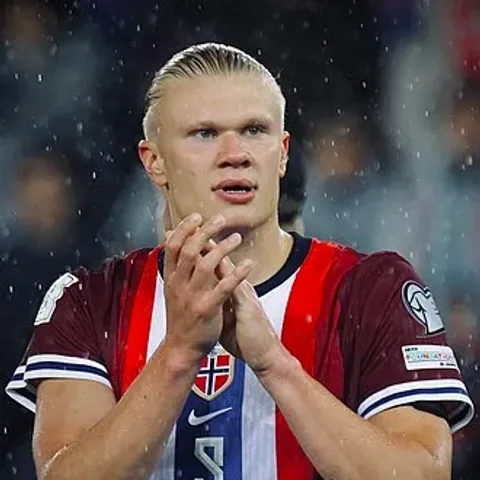
Yes. Erling Haaland is playing in the 2026 World Cup — his first — with Norway in Group I alongside France, Senegal and Iraq. The last time Norway played at a World Cup was Egil Olsen's France 1998 squad. Twenty-eight years of qualification near-misses ended in March 2026 via the UEFA play-off route. Haaland turns 26 on July 21, two weeks after the final. The 25-year-old starts his first World Cup at the physical peak the Premier League's all-time single-season goal record was set at — and he starts it in Foxborough, Massachusetts.
- Is Haaland playing? Yes — first World Cup, Group I with Norway
- Norway's last World Cup: France 1998 (Round of 16, 28 years ago)
- Defining match: Norway vs France, Friday June 26 at Gillette Stadium, Foxborough (15:00 ET)
- Tactical axis: Haaland (Manchester City, 25) at No. 9 + Ødegaard (Arsenal, 27) at No. 10
- Realistic ceiling: Group survival with a best-third-placed path live to the Round of 32
Is Haaland Playing in the 2026 World Cup?
Yes. Erling Braut Haaland is on Norway's senior World Cup squad for the first time in his career. He was 17 when Norway last attempted serious World Cup qualification, 19 when he made his senior international debut in 2019, and 22 when Norway missed out on Qatar 2022. The 2026 tournament is the first that arrives with Norway qualified and Haaland in the squad at the same time. He is the cover-image arrival of the entire Norwegian campaign — the No. 9 the team's tactical pattern bends around, the player every Group I opponent rebuilds their defensive shape to contain.
Is Norway in the 2026 World Cup? Also yes — and that question is doing a lot of work, because Norway has been out of a World Cup for so long that an entire generation of Premier League viewers has watched Haaland score 36 Premier League goals in a single season without ever seeing him at a tournament. Norway's previous appearances came in 1938, 1994 and 1998 — four total, all separated by long gaps. The 2026 campaign is the squad's fourth World Cup and Haaland's first.
The squad's central truth: Norway are not a deep tournament side. They are an attacking front-six side, with one of the best No. 9s in the world, one of the best No. 10s in the Premier League, a Bundesliga-pace left forward in Nusa, and a backline that is competitive without being elite. Solbakken's plan is to make every Group I opponent play against Haaland in the box. Iraq, Senegal and France all have to solve that problem in turn.
Did Norway Qualify for the World Cup — and How?
Yes. Norway qualified for the 2026 World Cup through the UEFA play-off route in March 2026. The qualifying path:
- European group stage: Norway finished second in their UEFA qualifying group behind a higher-ranked European side, securing a play-off place rather than direct entry. Solbakken's 4-2-3-1 produced the squad's most consistent goal-scoring run since the 2022 cycle, with Haaland-Ødegaard combining for the majority of open-play chances.
- UEFA play-off semi-final and final (March 2026): Two single-leg knockout matches in the FIFA international window. Norway came through both fixtures to claim one of the last European spots at the expanded 48-team tournament. The play-off route is the same path Italy used at Qatar 2022 and exited at — Norway took it the other way.
- Confirmation: The final 48-team World Cup field locked in March 2026 ahead of the FIFA Congress meeting. Norway's place was confirmed as Pot 2 in Group I when the December 5, 2025 Las Vegas draw assigned them alongside France (Pot 1), Senegal (Pot 2 fellow) and Iraq (Pot 4).
How does Norway qualify for a World Cup, structurally? Through UEFA. The 16 expanded European qualifying slots at 2026 include direct group winners and play-off entrants — Norway used the second route, which is historically where the squad has lost out (most recently failing to qualify for Qatar 2022 in this same play-off bracket). The March 2026 play-off win is what ends the 28-year drought. Without it, the Haaland-Ødegaard generation goes another four-year cycle without a tournament, the same way the Tore André Flo and John Carew generations did before them.
What Group Is Norway In at the 2026 World Cup?
Norway are in Group I alongside France, Senegal and Iraq — one of the four-team groups in the expanded 48-team / 12-group format. By FIFA April 2026 ranking:
- 🇫🇷 France — Pot 1, FIFA #1, head coach Didier Deschamps' last tournament, captain Kylian Mbappé. 2018 World Cup champions, 2022 finalists.
- 🇸🇳 Senegal — Pot 2, FIFA #14, head coach Pape Thiaw. 2022 AFCON champions and a Round of 16 side at Qatar 2022.
- 🇳🇴 Norway — Pot 2, FIFA #31, head coach Ståle Solbakken, captain Martin Ødegaard. Returning after 28 years.
- 🇮🇶 Iraq — Pot 4, FIFA #57, head coach Graham Arnold. Returning after 40 years; their second-ever World Cup.
The two-Pot-2 quirk means Norway and Senegal both enter as second-tier seeds, and they meet at MetLife on matchday 2 in what is functionally Senegal's hardest non-France group fixture. France should win Group I on Pot 1 squad depth alone. Norway's argument for second place — and a best-third path — runs through that matchday 2 fixture in East Rutherford and the matchday 3 closer in Foxborough. For the full four-team tactical read see our Group I preview and the live standings on the Group I hub.
When Does Norway Play in the World Cup?
Three group matches across 10 days, all on the US East Coast. The matchday 1 fixture is one of the earliest in the entire group stage; the matchday 3 closer is the group's defining fixture.
- Matchday 1 — Tuesday June 16, 2026: Iraq vs Norway at Gillette Stadium (FIFA tournament name: Boston Stadium) in Foxborough, Massachusetts. Kickoff 18:00 ET / 23:00 BST / 22:00 UTC. Norway's first World Cup match in 28 years.
- Matchday 2 — Saturday-night June 21 → Sunday June 22, 2026: Norway vs Senegal at MetLife Stadium (FIFA name: New York New Jersey Stadium) in East Rutherford, New Jersey. Kickoff 20:00 ET Saturday / 01:00 BST Sunday / 00:00 UTC Sunday. The late-evening US prime-time window — a UK overnight slot.
- Matchday 3 — Friday June 26, 2026: Norway vs France at Gillette Stadium in Foxborough. Kickoff 15:00 ET / 20:00 BST / 19:00 UTC. The group decider if both sides arrive with six points — and the Haaland vs Mbappé matchup the December draw promised.
Two of Norway's three group matches are at Gillette in Foxborough. The Boston / Foxborough stadium guide covers ticket allocations, drive-in and MBTA access from downtown Boston, and the seven total matches at the venue across the group stage and Round of 32. For UK and US TV: Norway's group matches are on FOX and Telemundo in the US; on BBC and ITV across the UK matchdays under the BBC-ITV rotation; on NRK and TV 2 in Norway. See our UK TV broadcast guide and US TV broadcast guide.
Norway vs France — Will the Group Decider Define Haaland's Debut?
The matchday 3 fixture at Gillette Stadium on Friday June 26 is the Group I decider. France should arrive on six points after a likely Senegal win in the opener and an Iraq sweep on matchday 2. Norway can match that if they beat Iraq comfortably in Foxborough and take points off Senegal at MetLife. That puts both on six and turns Foxborough into a top-spot final — Mbappé versus Haaland, Saliba-Upamecano versus Norway's set-piece patterns, Tchouaméni-Camavinga versus Berge-Ødegaard.
The Haaland vs Mbappé matchup is the cross-search the December draw produced. Mbappé at 27 is France's tactical focal point in the 4-2-3-1 — the cutting-in left-sided forward who drifts into the half-space, with Dembélé attacking the right. Haaland at 25 is Norway's cutting-in centre — the No. 9 every long-ball, every Ødegaard half-space pass, every Nusa cut-back is built to find. Real Madrid's 2025-26 season has been mixed for Mbappé; Manchester City's has been an enabling year for Haaland under Pep Guardiola's late-season rotation, which has kept the No. 9's minutes manageable through the Champions League campaign.
Norway's realistic plan against France: deep block out of possession with Berge shielding Saliba's vertical balls into Mbappé's channel, wide overloads on Nusa's side to pull France's right-back into recovery runs, and direct service into Haaland from second-phase transitions. For the full France tactical read — first-choice 11, Deschamps' transition setup, and the Real Madrid-PSG club spine — see our France tactical preview.
Norway vs Senegal — What's the Matchday 2 Test at MetLife?
Saturday-night June 21 at MetLife Stadium is the fixture that decides whether Norway's Group I ceiling is genuinely "top two" or "best third-placed watch". Senegal under Pape Thiaw have moved on from the Aliou Cissé era — Koulibaly at Al-Hilal is still the defensive anchor, Sadio Mané at Al-Nassr is still the senior leader, Idrissa Gueye at Everton still organises the deep midfield, and Nicolas Jackson at Chelsea has emerged as the No. 9 the system runs through.
Norway's argument here is tempo and Haaland-Ødegaard combination play. Senegal's 4-3-3 leaves space behind their full-backs on counter-pressing transitions — exactly the geometry Norway's right-side pattern of Ødegaard drifting wide and Haaland running the channel exploits. The matchday 2 timing — Saturday US prime-time, Sunday UK overnight — is squad-rotation friendly for France but physically demanding for both Norway and Senegal. Whoever wins the second-phase tempo battle in the first 30 minutes likely takes the three points. A draw is the realistic baseline; a Norway win flips the group on its head heading to Foxborough on matchday 3.
Will Ødegaard Play Alongside Haaland — and How Does the Axis Work?
Yes. Martin Ødegaard at 27 is captain of both Arsenal and Norway, and the tactical hinge between Solbakken's deep midfield and Haaland's penalty-area presence. Arsenal's 2025-26 Premier League season has been built around Ødegaard as the central creative axis; the international role compresses his touches but raises the leverage of every pass he plays. The Haaland-Ødegaard combinations the European qualifying group produced — the half-space cutbacks, the diagonal balls into Haaland's near-post channel, the second-phase set-piece patterns — are the highest-pedigree attacking partnership any Pot 2 squad brings to the tournament.
The 4-2-3-1 supporting cast:
- Sander Berge (Fulham, 28) — the press-resistance pivot. Less heralded than Haaland or Ødegaard but the organiser who lets the front three play higher against France and Senegal's mid-blocks.
- Antonio Nusa (RB Leipzig, 21) — the breakout left-side forward, the squad's tactical wildcard. Nusa's progressive carrying gives Norway a second transition outlet beyond the Haaland-Ødegaard axis and is the player Iraq and Senegal will struggle to compress.
- Alexander Sørloth (Atlético Madrid, 30) — the second-striker / Haaland deputy. The 2025-26 La Liga season at Atlético has kept Sørloth in tournament-ready form; he is the rotation option when Solbakken needs to rest Haaland in matchday 2.
Will Ødegaard play if Norway need to chase late in the France match? Absolutely — he is the only player on the squad who carries both the captain's armband and the consistent creative output to design a winning equaliser at this level.
What's Norway's Last World Cup Story — and How Long Has It Been?
Norway's last World Cup was France 1998, 28 years ago. Egil Olsen's side reached the Round of 16 and went out 1-0 to Italy on a Christian Vieri header. The squad that made it through was a generational Premier League and Bundesliga concentration of its own time — Tore André Flo at Chelsea, Henning Berg and Ole Gunnar Solskjær at Manchester United, John Carew on his rise. Norway beat Brazil 2-1 in the group stage at Marseille on Kjetil Rekdal's late penalty — still one of the best results in the country's footballing history.
When did Norway last play in the World Cup? June 27, 1998 — Round of 16 against Italy at the Stade Vélodrome in Marseille. Twenty-eight years and one day before the matchday 3 fixture against France at Gillette on June 26, 2026 — a near-perfect symmetrical date for the return to a World Cup, against the host of the last tournament Norway attended.
Norway's full World Cup history: 1938 (debut, lost to Italy in the Round of 16), 1994 USA (group stage exit under Egil Olsen's first cycle), 1998 France (Round of 16, the squad's best modern showing), then 28 years of European qualifying near-misses — 2002, 2006, 2010, 2014, 2018, 2022 all ended before the play-off final or in the play-off final itself. The 2026 cycle is the first since 1998 to end with Norway qualified. Erling Haaland's father Alf-Inge Håland — a Norway senior international from the mid-1990s into the early 2000s — was part of the same Egil Olsen-era squad pool that built France 1998's qualification cycle. Twenty-eight years on, Erling at 25 ends the wait his father's generation was the last to break.
How Does Haaland's Club Form Translate to Norway?
Manchester City and Norway are different propositions. At City, Haaland plays as the focal No. 9 in a possession-dominant 4-3-3 with Pep Guardiola's overload patterns feeding the box from every angle — Premier League opposition mostly drop into mid-blocks, the supply line is built around De Bruyne (in seasons past) and Rodri's positional control, and Haaland's job is to convert the half-chances the system manufactures at scale. The 2022-23 season produced 36 Premier League goals — still the all-time single-season Premier League record. The 2023-24 and 2024-25 seasons stayed at elite output, with Champions League scoring rates among the highest in the tournament's history for a player his age.
Norway's profile is the inverse. Solbakken's 4-2-3-1 plays against opponents who do not drop into deep blocks — Norway are not feared as Manchester City are — and the supply line runs through Ødegaard's half-space creation and Berge's vertical progression rather than wide overloads. Haaland gets fewer touches but each touch carries a higher conversion expectation. In Norway colours he plays more on the move, more in transitions, more as a finisher of long-ball second balls than as the focal point of a slow build-up.
How many World Cup goals has Haaland scored? Zero — his first World Cup hasn't started yet. The over-under on his Group I goal output is a live debate: Iraq and Senegal are both plausible targets for a multi-goal afternoon if Solbakken can manufacture the channel space, while France's centre-back pairing of Saliba and Upamecano is among the few partnerships in world football capable of containing Haaland for 90 minutes. A realistic group-stage projection: three goals against Iraq and Senegal combined, plus the Mbappé-Haaland duel headlining the matchday 3 set-piece patterns.
Will Norway Win the 2026 World Cup?
Almost certainly not. The squad ceiling is Round of 16, with a best third-placed path into the expanded 48-team Round of 32 as the realistic floor. The reasoning runs through three constraints:
- Defensive depth. Norway's back four is Premier-League-competent without being elite — the gap between Norway's centre-backs and France's Saliba-Upamecano, Spain's Le Normand-Cubarsí, England's Stones-Konsa axis is the structural reason Norway's tournament ceiling sits below the Pot 1 favourites.
- Squad rotation. Three group matches in 10 days plus a Round of 32 fixture stretches a squad with one truly elite striker and one truly elite midfield creator. Solbakken's bench depth — Sørloth, Aursnes, Strand Larsen — is good without being deep enough to manage four-match tournament runs against Pot 1 opposition.
- Knockout path. Even as group winners, Norway draw a Pot 1 or Pot 2 side in the Round of 32. As a best third-placed, the seeding gets worse. The path to a quarter-final requires beating a Brazil, Argentina, Spain or England-level side in 90 minutes plus extra time — not Norway's structural strength.
The realistic Norway ceiling: Round of 16 elimination by a Pot 1 nation, with Haaland scoring three to five tournament goals and entering the conversation for the Golden Boot best-supporting-cast nominee alongside Mbappé, Vinícius Júnior, Harry Kane and Lautaro Martínez. The realistic Norway floor: group stage exit with a credible point against Senegal and the Foxborough France closer competitive into the 80th minute. Either outcome marks a successful tournament — the 28-year drought ends regardless of the matchday 1 result.
Where Will Haaland Play in the USA — and What Are the Venues?
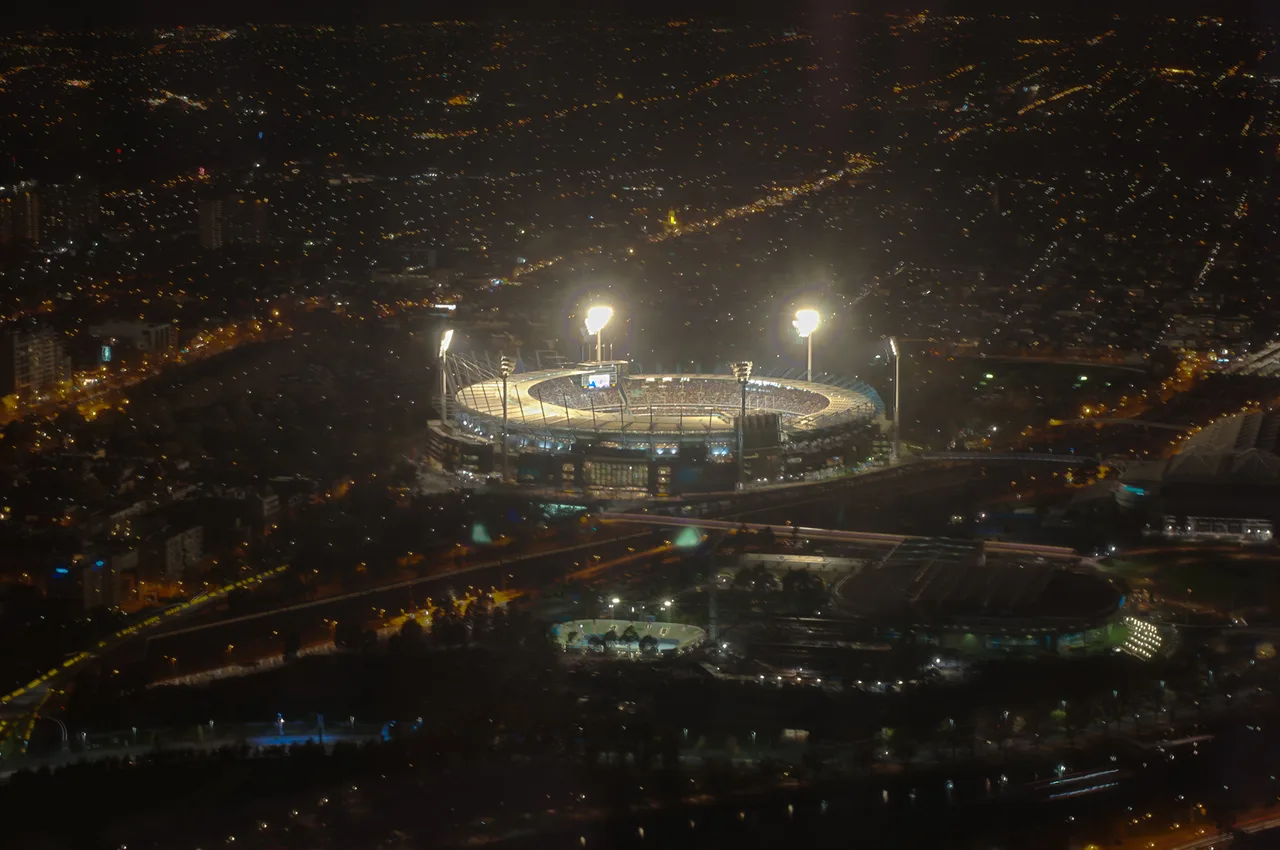
Two of Norway's three group fixtures are at Gillette Stadium in Foxborough, Massachusetts — the New England Patriots home ground, a 65,878-capacity venue 30 miles south of downtown Boston. Gillette hosts seven matches across the 2026 group stage and Round of 32, with Norway's matchday 1 vs Iraq (June 16) and matchday 3 vs France (June 26) the marquee fixtures for the venue. The matchday 2 fixture vs Senegal is at MetLife Stadium in East Rutherford, New Jersey — the East Rutherford venue that also hosts the Group I opener (France vs Senegal on June 16) and the World Cup final on July 19.
Haaland's physical profile against these venues:
- Age: 25 throughout the group stage; turns 26 on July 21 — two days after the World Cup final. The 2026 tournament arrives at the physical peak of his career.
- Height: 1.94m / 6 ft 4 in. The headed-goal threat against Iraq's deep block in Foxborough and Senegal's set-piece organisation at MetLife is the squad's most reliable chance-conversion route after open-play transitions.
- Foxborough conditions: Late-June average daytime temperatures in the Foxborough area sit in the high 70s°F / mid-20s°C, with afternoon humidity a recurring summer factor. The 15:00 ET kickoff against France is the warmest of Norway's three fixtures — a physical test for Haaland's chase-and-press running pattern.
- MetLife conditions: The Saturday 20:00 ET kickoff against Senegal at MetLife runs into the cooler late-evening temperature window. The artificial-surface conversion to grass for World Cup matches is the standing storyline at MetLife for every Group I and Group J fixture there.
For the full Foxborough fixture list and Boston travel guide see our Boston ticket and access guide. For the broader US tournament map and venue list, the 16 host cities are split eight in the US, three in Mexico and two in Canada — Norway's full group stage is entirely on US soil, in two of the country's most established stadium markets.
This Haaland profile is part of WTK Sports's ongoing 2026 FIFA World Cup coverage — Norway squad tracker, Group I live fixtures, daily pre-match guides and editorial analysis updated daily at wtksports.com.
Frequently Asked Questions
Is Haaland playing in the 2026 World Cup?
Yes. Erling Haaland leads Norway in Group I at the 2026 World Cup — his first appearance at a senior FIFA World Cup after Norway's 28-year absence from the tournament since France 1998. Haaland is 25 going into the group stage and turns 26 on July 21, two weeks after the final. Norway play Iraq on June 16 in Foxborough, Senegal on June 21 night at MetLife and France on June 26 back in Foxborough. Ståle Solbakken's 4-2-3-1 builds the attacking pattern around Haaland at No. 9 and Arsenal captain Martin Ødegaard at the No. 10.
Did Norway qualify for the 2026 World Cup?
Yes. Norway qualified via the UEFA play-off route in March 2026 after finishing second in their European qualifying group. They came through the play-off semi-final and final to take one of the last European spots at the expanded 48-team tournament — ending a 28-year absence from a World Cup since France 1998.
Will Ødegaard play alongside Haaland at the World Cup?
Yes. Arsenal captain Martin Ødegaard wears the Norway armband and partners Haaland as the team's creative axis. The 4-2-3-1 sets up specifically to feed Haaland through Ødegaard's half-space combinations — the international captaincy weight has matured Ødegaard's on-pitch leadership in a way the 2022 cycle had not yet revealed.
When does Norway play in the 2026 World Cup?
Three Group I matches. Tuesday June 16 vs Iraq at Gillette Stadium (FIFA name: Boston Stadium) in Foxborough — kickoff 18:00 ET / 23:00 BST / 22:00 UTC. Saturday-night June 21 vs Senegal at MetLife Stadium (FIFA name: New York New Jersey Stadium) in East Rutherford — kickoff 20:00 ET Saturday / 01:00 BST Sunday June 22 / 00:00 UTC Sunday June 22. Friday June 26 vs France at Gillette in Foxborough — kickoff 15:00 ET / 20:00 BST / 19:00 UTC.
Will Norway win the World Cup?
Unlikely. Group survival is realistic with one credible win route and one credible draw route. A deep knockout run would require Norway either to win Group I outright by beating France in Foxborough on June 26, or to advance as the best third-placed team and draw a navigable Round of 32 fixture. The Haaland-Ødegaard ceiling makes the third-place tiebreaker genuinely live, but the squad depth gap to Brazil, Argentina, France, Spain and England rules out a final.
People Also Ask
Data sources
- FIFA World Cup 2026 — Group I fixtures and Norway draw position
- Norwegian Football Federation (NFF) — senior men's team news
- UEFA — March 2026 European play-off results
- Manchester City — Erling Haaland official profile
- Arsenal — Martin Ødegaard captain profile
Published: