Germany World Cup 2026 Squad: Neuer Returns at 40
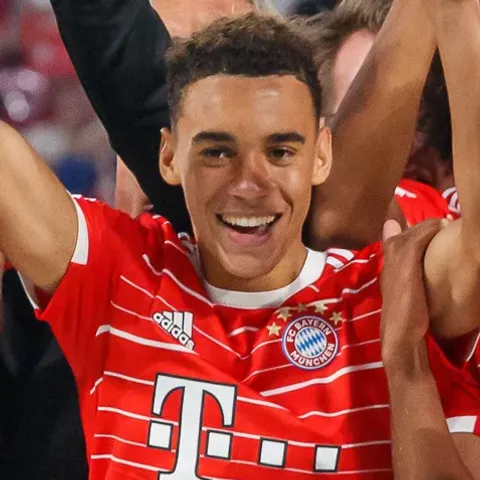
Julian Nagelsmann's final 26-man Germany squad for the 2026 FIFA World Cup is confirmed, and the headline is the goalkeeper. Manuel Neuer returns at 40 as Nagelsmann's first-choice — the most striking single selection of the entire German pre-tournament cycle. Joshua Kimmich captains; Marc-André ter Stegen is out; Niclas Füllkrug and Karim Adeyemi are also left out. The Wirtz–Musiala creative axis built across the 2025-26 international window remains the squad's tactical centrepiece. Group E opens against Curaçao at Houston Stadium on June 14.
- Captain: Joshua Kimmich (Bayern Munich, 31)
- Goalkeeper: Manuel Neuer (Bayern Munich, 40) — returned from August 2024 retirement
- Out: Marc-André ter Stegen (Barcelona) · Niclas Füllkrug (West Ham) · Karim Adeyemi (Dortmund)
- Tactical axis: Wirtz (Liverpool, 23) + Musiala (Bayern, 23) — the under-25 creative pair Nagelsmann's 4-2-3-1 bends around
- Opener: Germany vs Curaçao, Sunday June 14 at Houston Stadium (13:00 ET / 18:00 BST)
Is Neuer in Germany's 2026 World Cup Squad?
Yes — and as the first-choice goalkeeper. Manuel Neuer at 40 is Julian Nagelsmann's No. 1 goalkeeper for the 2026 FIFA World Cup, confirmed at the DFB press conference on May 21 in Frankfurt. The selection is the most striking single decision of Germany's entire pre-tournament cycle: Neuer announced his retirement from international football in August 2024 after the home Euro 2024 tournament, retired by the DFB at the end of that summer's transition, and was assumed gone from the World Cup picture for the better part of 18 months.
The reversal happened across the second half of the 2025-26 season. Marc-André ter Stegen's recovery from his September 2024 patellar tendon injury did not produce the uninterrupted first-choice run the DFB needed; the back-up options — Oliver Baumann at Hoffenheim, Alexander Nübel at Stuttgart, the next-generation goalkeepers — did not settle into the senior international rhythm Nagelsmann was looking for. Through the March 2026 international window Neuer was the topic of speculation; through early May the conversation moved from speculation to negotiation; on May 21 the formal squad announcement made it official.
Neuer's age-40 first-choice selection is the kind of decision that travels well in pre-tournament coverage. Across the entire 2026 field he is the oldest goalkeeper named to any squad, and only one of two outfield-or-goalkeeper players over 35 in the German 26. The honest counter-question — whether 40-year-old reflexes hold across a knockout path that could run seven matches in 33 days — is the cycle's most-watched ongoing storyline. Nagelsmann's read is that the Bayern Munich 2025-26 season, which has Neuer playing close to his pre-2022 ankle-injury form, makes the age question less load-bearing than the Ter Stegen fitness question on the alternative side.
Why Did Neuer Come Back at 40?
Three factors aligned. The first was Ter Stegen's recovery: the patellar tendon tear cost Barcelona's No. 1 most of the 2024-25 La Liga season and produced a 2025-26 return that was competent but not first-choice for international duty. The second was Bayern's 2025-26 season under Neuer's continuing captaincy — the 40-year-old has played more minutes than the 2024-25 season did, with shot-stopping and distribution metrics closer to his 2018-2022 prime than to his post-injury 2022-24 dip. The third was the lack of a clear next-generation option: Nübel and Baumann are competent professionals without the elite tournament pedigree the senior shirt requires.
The DFB's published reasoning is that Neuer's experience across four World Cups (2014 winner, 2018 group exit, 2022 group exit) plus his command of the back four — Rüdiger, Tah, Mittelstädt all played with him at club or international level previously — was the deciding factor over Ter Stegen's club form. The unspoken element is the senior leadership weight: Kimmich captains the team on the pitch, but Neuer's dressing-room authority is the kind of institutional ballast that 23-year-olds Wirtz and Musiala cannot yet provide.
The cost is the next-generation goalkeeper development. Nübel and Baumann travel as back-up; their World Cup minutes will be limited to dead-rubber group stages at best. The cycle's quietest casualty is the long-term goalkeeping succession the DFB had been building since 2022 — Neuer's age-40 return delays the handover by another two years to Euro 2028. The Manuel Neuer retirement of August 2024 is now formally rescinded, but the long-term goalkeeping question is unsolved rather than resolved.
Who Captains Germany at the 2026 World Cup?
Joshua Kimmich. The 31-year-old Bayern Munich midfielder wears the captain's armband — formally confirmed when the May 21 squad was announced, but the on-pitch designation has held continuously across the Euro 2024 cycle and through the 2025-26 international windows. Kimmich is Germany's most consistent senior international of the last decade and the natural successor to the Toni Kroos / Thomas Müller / Manuel Neuer era of captaincy.
The captaincy detail in context:
- 2018-2022 cycle: Manuel Neuer was the named captain through both World Cups (Russia 2018, Qatar 2022) and the 2020 Euros. Kimmich began deputising for the armband during Neuer's tibia injury in 2022-23.
- Euro 2024: Kimmich captained Germany at the home Euros — Neuer's selection at goalkeeper but Kimmich's on-pitch leadership. The quarter-final loss to Spain ended both the tournament and Neuer's international retirement.
- 2025-26 cycle: Kimmich confirmed as the senior captain across the qualifying campaign. The May 21 squad announcement formalised what the cycle had already decided.
- On-pitch role: Kimmich's positional flexibility is the most aggressive tactical lever Nagelsmann uses — Kimmich at right-back when the team needs an extra creative midfielder, Kimmich at deep midfield (with a defensive right-back behind) when opponents demand a more conservative spine.
Kimmich's Bayern 2025-26 Bundesliga and Champions League workload has been the heaviest of his career. The honest counter-question — whether the club minutes leave him physically exposed across seven World Cup fixtures in 33 days — is real but less acute than the equivalent Liverpool concern around Wataru Endo or the Real Madrid concern around Bellingham. The full Group E tactical setup with Kimmich's flexibility as the central lever is covered in our Germany tactical preview.
Why Was Ter Stegen Left Out of Germany's Squad?
Two reasons. The fitness recovery from his September 2024 patellar tendon tear did not produce the uninterrupted first-choice run the DFB needed; and Manuel Neuer's age-40 return at peak Bayern form gave Nagelsmann a safer alternative for a tournament whose knockout path could run seven matches across 33 days. The Ter Stegen call was not a confidence vote against the Barcelona goalkeeper — it was a structural decision about the senior international shirt that the recovery timeline did not support.
The Ter Stegen sequence:
- September 2024: Tore the patellar tendon during Barcelona's La Liga match against Villarreal. Underwent surgery and ruled out for most of the 2024-25 season.
- March 2025: Returned to Barcelona's senior matchday squad in stages; first start back in April.
- 2025-26 club season: Held the Barcelona No. 1 shirt for the full season but the shot-stopping metrics did not return to the pre-injury 2023-24 level. The kicking accuracy and distribution profile returned faster than the saves-per-90.
- March 2026 international window: Started Germany's two friendlies but the senior shirt was effectively a Ter Stegen-Nübel rotation rather than a settled selection.
- May 21 squad announcement: Ter Stegen left out of the 26. The DFB statement framed the decision as "preserving the goalkeeping competition for next cycle" — the diplomatic version of "Neuer is the safer call".
The Manuel Neuer retirement in August 2024 was the door that closed; the Manuel Neuer return in May 2026 is the door that reopened. Ter Stegen's career as a Germany senior international is not over — he is 34 now, and the Euro 2028 cycle remains structurally open — but the 2026 World Cup is not part of his tournament record. The structural takeaway: Germany's goalkeeping room is now a one-deep Neuer setup for the tournament, with Nübel and Baumann travelling as competition-tier back-ups rather than potential starters.
What Is Germany's Starting XI Under Nagelsmann?
The most likely matchday 1 starting XI against Curaçao at Houston Stadium, in a 4-2-3-1 base shape that can rotate into a 4-3-3 in possession:
- Goalkeeper: Manuel Neuer (Bayern Munich, 40)
- Back four: Joshua Kimmich (Bayern, RB, captain) · Antonio Rüdiger (Real Madrid, CB) · Jonathan Tah (Bayern, CB) · Maximilian Mittelstädt (Stuttgart, LB)
- Double pivot: Aleksandar Pavlović (Bayern, 22) · Robert Andrich (Bayer Leverkusen)
- Front four: Leroy Sané (Al-Nassr, RW) · Florian Wirtz (Liverpool, No. 10) · Jamal Musiala (Bayern, LW) · Kai Havertz (Arsenal, CF)
The variant against transition-heavy opposition — most acutely Ecuador on matchday 3 — drops Kimmich into the deep midfield as a third pivot, pushes Andrich to a more conservative covering role, and uses Benjamin Henrichs (RB Leipzig) or Antonio Rüdiger covering at right-back. Pavlović's emergence across 2025-26 Bayern is the cycle's quietest upgrade — he is the long-term Kroos heir Germany have been searching for since 2024.
The structural identity: Wirtz and Musiala are the most talented under-25 attacking pair at the entire 2026 tournament, with a combined Real Madrid 2023-24 Bellingham-equivalent goal contribution rate across the 2025-26 club and international windows. The Germany 4-2-3-1 sets up specifically to feed them in central and half-space positions, with Mittelstädt's left-back overlap providing chalk-line width below Musiala. The full tactical breakdown is in our Germany tactical preview.
How Do Wirtz and Musiala Fit Together Under Nagelsmann?
The Wirtz–Musiala creative axis is the squad's tactical centrepiece. Both players are 23, both want the ball in the half-spaces, both finish, both press-resist in tight areas, and both arrived at the 2026 cycle as the under-25 creators every other Pot 1 squad has been trying to develop without success. Nagelsmann's tactical job has been to make their overlap a feature rather than a clash.
The pattern across the 2025-26 international windows:
- Wirtz starts central as the No. 10 in the 4-2-3-1. The Liverpool 2025-26 Premier League season has consolidated his half-space receiver role and given him Champions League-deep tactical reps under the Arne Slot system.
- Musiala starts as a left-sided forward who rotates inside whenever Wirtz pulls wide. The two effectively share the No. 10 zone with built-in rotation patterns — Wirtz drops to receive, Musiala arrives in the box; Wirtz drifts right to combine with Kimmich, Musiala fills the central pocket.
- Mittelstädt at left-back provides the chalk-line width below Musiala. The full-back's overlap is the reason Musiala can stay narrow without sacrificing the team's stretching of the opponent's defensive shape.
- Kai Havertz at No. 9 drops to combine with both 10s, vacating the central space they attack rather than blocking it. Havertz's Arsenal 2025-26 season — adjusted to a deeper false-nine role under Mikel Arteta — translates directly to this Germany role.
The honest knock-on is that this attacking shape leaves Pavlović and Andrich (or Andrich and Kimmich, in the deep variant) as the only structural defenders ahead of the back four. Against teams that turn the ball over quickly — Ecuador's profile in Group E matchday 3, France or Spain in a knockout — the double pivot has to do work the system was not really designed for. Nagelsmann's solution: rotate Kimmich into the pivot for the highest-pressure fixtures, with Henrichs or Schlotterbeck-as-third-CB providing the right-back cover.
For the comparison to the equivalent under-25 attacking pair across other Pot 1 squads — Bellingham at England, Vinícius Jr. at Brazil, Lamine Yamal at Spain — see our Bellingham deep-dive. Wirtz–Musiala is the cycle's tactical statement; the comparison frames how Germany's ceiling stacks against the favourites.
When Does Germany Play in Group E 2026?
Three Group E matches across 11 days. Germany play in three different host cities — Houston, Toronto, East Rutherford — covering the southern US, eastern Canada and the New York metro. The full Germany World Cup schedule and fixtures:
- Matchday 1 — Sunday June 14, 2026: Germany vs Curaçao at Houston Stadium (NRG Stadium) in Houston, Texas. Kickoff 13:00 ET / 17:00 UTC / 18:00 BST / 19:00 CET. Germany's tournament opener; the kindest opening fixture any Pot 1 side draws. Curaçao are the lowest-ranked side at the tournament and are at their first ever World Cup.
- Matchday 2 — Saturday June 20, 2026: Germany vs Ivory Coast at Toronto Stadium (BMO Field) in Toronto. Kickoff 16:00 ET / 20:00 UTC / 21:00 BST / 22:00 CET. Ivory Coast under Emerse Faé are 2024 AFCON champions and the most credible Pot 2 side in Group E; the matchday that tests Germany's back four against pace.
- Matchday 3 — Thursday June 25, 2026: Ecuador vs Germany at MetLife Stadium (New York New Jersey Stadium) in East Rutherford, New Jersey. Kickoff 16:00 ET / 20:00 UTC / 21:00 BST / 22:00 CET. The Group E decider. Ecuador's 4-3-3 with Moisés Caicedo at the deep pivot is the strongest defensive structure in the group and the matchday whose result determines whether Germany top Group E or fight for second.
Germany's three group venues map cleanly to the country's tournament logistics. Houston is the warm-weather opener (indoor stadium, climate-controlled). Toronto is the cooler middle fixture at one of the smaller venues. MetLife is the East Coast prime-time closer at the same venue that hosts the World Cup final on July 19 — a useful pre-tournament familiarity for any Germany player who would return to that pitch in the final's nine-team window. For the venue-specific Houston guide see our Houston / NRG Stadium guide. For the BMO Field Toronto guide see our Toronto venue guide.
Can Germany Beat Ecuador on Matchday 3?
Yes — and likely. Ecuador at FIFA #23 carry the strongest defensive structure in Group E but lack the attacking depth to consistently break a Pot 1 side. Germany's structural advantage runs through the Wirtz–Musiala creative axis and the Bayern–Liverpool–Arsenal Premier League spine; Ecuador's structural advantage is Moisés Caicedo at the deep pivot, the Chelsea midfielder whose press-resistance technique is the closest comparison to Kovačić's Manchester City role.
The matchday 3 read:
- Germany's plan: Possession-dominant 4-2-3-1 with the Wirtz–Musiala combinations central. Kimmich at right-back if Ecuador starts cautiously; Kimmich rotated into the pivot if Ecuador presses high. Havertz's central drop to combine with both 10s is the cycle's most reliable chance-creation pattern.
- Ecuador's plan: Deep 4-5-1 block out of possession, with Caicedo screening centrally and the wide forwards tracking Germany's full-back overlaps. Counter through Enner Valencia in the channels Mittelstädt vacates; set-piece reliance for goal-scoring.
- The Caicedo–Pavlović midfield duel: Two of the best under-25 deep midfielders in the world sharing the same central zone. The press-resistance battle determines whether Germany's build-up gets through or stalls.
The realistic projection: Germany favoured to win by one to two goals, but a Caicedo-shielded Ecuador draw is genuinely live if the matchday 3 fixture rotation leaves Wirtz or Musiala on the bench at kickoff. The structural counter-question — whether Germany's back four can contain Ecuador's Enner Valencia–Kendry Páez attacking line late in the match if Germany are chasing the result — is the Euro 2024 quarter-final question Nagelsmann has spent two years addressing.
Were Füllkrug and Adeyemi Left Out of the Squad?
Yes — both. The two most-discussed omissions outside the Ter Stegen call:
- Niclas Füllkrug (West Ham United, 33): The 2022 World Cup target striker and Euro 2024 group-stage starter is out of the 26. The Premier League 2025-26 season at West Ham produced inconsistent minutes and a goal-scoring rate well below his Borussia Dortmund peak. Nagelsmann's decision: Havertz at No. 9 plus Nick Woltemade (Stuttgart) as the alternative target-forward profile makes Füllkrug's specialist box presence redundant in a 26 that needs more versatility.
- Karim Adeyemi (Borussia Dortmund, 24): The Dortmund left-winger has been on the senior selection radar since 2022 but never settled into a starter-tier international role. The 2025-26 Bundesliga season was solid but not exceptional. Adeyemi's omission is structural: Musiala at left wing plus Sané at right wing leaves the wide forward rotation slot for a less-positional-overlap option, with Serge Gnabry (Bayern, 30) and Florian Wirtz (capable of wide drift) covering the right wing in rotation.
The Füllkrug call is the more discussed of the two — his 2022 cycle status and the lack of a senior tournament veteran at No. 9 is the squad's quietest structural concern. The Adeyemi call is the less contested — the player has not yet established the international rhythm that the senior shirt requires. Both decisions are reversible across the 2026-28 Euro cycle if either kicks on at club level next season.
The squad-balance picture: Germany's 26 leans heavily on the under-25 generation (Wirtz, Musiala, Pavlović, Tah, Mittelstädt, Henrichs, Woltemade) with senior leadership concentrated at Neuer (40), Kimmich (31), Rüdiger (33), Andrich (31), Havertz (27) and a small number of others. The age-distribution shape is the most under-25-heavy of any Pot 1 squad at the tournament — a Nagelsmann generational bet that gets tested across the seven-match knockout path.
What's Germany's World Cup History — and Where Does 2026 Fit?
Germany are four-time World Cup champions: 1954 (Switzerland), 1974 (West Germany, hosts), 1990 (Italy), 2014 (Brazil). The most recent title is the 7-1 semi-final demolition of Brazil and the Götze-extra-time winner against Argentina in the final — the cycle that defined the modern German football identity under Joachim Löw. The post-2014 record is the structural concern Nagelsmann inherited:
- 2018 Russia: Group-stage exit. Defending champions eliminated by South Korea on the final group matchday — the worst Germany result in a World Cup since 1938.
- 2022 Qatar: Group-stage exit. Germany lost 1-2 to Japan in the opener (Asano late winner), drew with Spain 1-1, beat Costa Rica 4-2 in the final group game but went out on goal difference. The Japan vs Germany World Cup 2022 result remains the structural reference point — the loss that ended Hansi Flick's tournament and accelerated the Nagelsmann appointment.
- Euro 2024: Quarter-final exit on home soil. Lost 1-2 in extra time to Spain on a Mikel Merino header at the death — the closest Germany came to a major tournament semi-final since the 2016 Euro semi-final.
- 2026 Cycle: The Nagelsmann full reset around the under-25 generation. The structural ceiling is genuinely semi-final or final; the structural risk is the late-game discipline that lost Euro 2024.
Did Germany qualify for the 2026 World Cup? Yes — automatically through the UEFA qualifying campaign, which Germany won as group leaders without significant difficulty. The path forward is the seven-match knockout calendar starting from a comfortable Group E top-finish. For the Germany 2014 squad's golden era reference, the Götze winner is still the most-watched single goal in German tournament history; the 2026 cycle's ambition is to add the second post-2014 trophy run.
For the broader tournament favourites picture and the probability-model placement of Germany, see our Top 5 favourites breakdown. For the same-template player and squad deep-dives across other Pot 1 sides at the tournament — Portugal's Ronaldo squad, France's Mbappé squad, Brazil's Neymar squad, England's Bellingham era — those linked guides build the comparison set for where Germany's 26 sits in the broader Pot 1 hierarchy.
Will Germany Win the World Cup With Neuer Back?
Possible but not the model favourite. Germany's realistic ceiling is semi-final or final, with the under-25 Wirtz–Musiala attacking pair and the Neuer-led defensive spine giving the squad a top-six tournament floor. The structural ceiling is decided by three constraints:
- The Euro 2024 late-game discipline question: Germany's 2024 quarter-final loss to Spain ended on a 119th-minute Merino header from an unmarked position. The defensive set-piece organisation, the late-game concentration, the conservative-game-state management — the same questions that lost the home Euros remain the questions a 2026 knockout run will test.
- The under-25 tournament inexperience: Wirtz, Musiala, Pavlović and the next-generation core have one Euro tournament between them — and an early exit. The 2026 World Cup is the first major tournament where this cycle's senior creative axis is asked to carry the team into a deep knockout run.
- The Pot 1 ceiling: Spain, France, Brazil, Argentina and England carry deeper Pot 1 squad-depth into the same bracket. Germany's path to a quarter-final is plausible; the path to a semi-final or final requires beating two of those Pot 1 sides in single 90-minute fixtures.
The realistic 2026 Germany projection — a Group E top finish (or a strong second), a Round of 32 fixture against a Pot 3 / Pot 4 best-third side, a Round of 16 fixture against a Pot 2 European side, a quarter-final against a Pot 1 nation. Beyond that, a semi-final ceiling that depends on the bracket draw and the late-game discipline question. The Group E table projection: Germany 7-9 pts (top), Ecuador 5-6 pts (second), Ivory Coast 3-4 pts (third), Curaçao 0-3 pts. For a same-template projection on the squad-depth comparison, see our England probability model — the model's German placement runs through similar variables.
Neuer at 40 is the cycle's safety-net selection rather than the cycle's tournament-ceiling lever. The lever is Wirtz–Musiala. The structural counter — whether the next-generation creative axis can carry seven knockout matches in 33 days — is the question the entire 2026 cycle has been built to answer.
Frequently Asked Questions
Is Neuer in Germany's 2026 World Cup squad?
Yes. Manuel Neuer returns at 40 as Julian Nagelsmann's first-choice goalkeeper for the 2026 FIFA World Cup. Neuer announced his Germany retirement in August 2024 after the home Euro 2024 but reversed the decision after Marc-André ter Stegen's persistent fitness questions through 2024-25 and the next-generation goalkeepers failing to settle. Bayern Munich's 40-year-old captain is the oldest goalkeeper named to any 2026 squad to date and one of only two players over 35 in the German 26.
Who is Germany's captain at the 2026 World Cup?
Joshua Kimmich. The 31-year-old Bayern Munich midfielder wears the captain's armband for Germany at the 2026 World Cup — formally confirmed when the May 21 squad was announced. Kimmich has been the squad's most consistent senior international across the 2024-26 cycle and inherits the armband following Manuel Neuer's August 2024 retirement (now reversed but with the captaincy unchanged) and the post-Euro 2024 transition out of the Toni Kroos and Thomas Müller era.
Is ter Stegen in Germany's 2026 World Cup squad?
No. Marc-André ter Stegen is out of Germany's 26-man squad for the 2026 World Cup. The Barcelona goalkeeper missed most of the 2024-25 season with a patellar tendon injury and did not regain his pre-injury form across 2025-26 despite returning to club football. Nagelsmann's call: Manuel Neuer's 40-year-old presence at peak Bayern form is the safer first-choice for a tournament whose knockout path could run seven matches. Oliver Baumann (Hoffenheim) and Alexander Nübel (Stuttgart) round out the goalkeeping group.
What is Germany's starting XI under Nagelsmann?
Projected XI: Manuel Neuer (GK, Bayern, 40); Joshua Kimmich (RB, Bayern, captain), Antonio Rüdiger (CB, Real Madrid), Jonathan Tah (CB, Bayern), Maximilian Mittelstädt (LB, Stuttgart); Aleksandar Pavlović (Bayern) and Robert Andrich (Leverkusen) as the double pivot; Florian Wirtz (Liverpool) at No. 10, Jamal Musiala (Bayern) drifting in from the left, Leroy Sané (Al-Nassr) on the right; Kai Havertz (Arsenal) at No. 9. Nagelsmann can rotate Kimmich into the deep midfield against transition-heavy opponents and push a defensive specialist into right-back.
When does Germany play in the 2026 World Cup?
Three Group E matches across 11 days. Sunday June 14 vs Curaçao at Houston Stadium (NRG Stadium) in Houston, Texas — kickoff 13:00 ET / 18:00 BST / 17:00 UTC. Saturday June 20 vs Ivory Coast at Toronto Stadium (BMO Field) in Toronto — kickoff 16:00 ET / 21:00 BST / 20:00 UTC. Thursday June 25 vs Ecuador at MetLife Stadium (New York New Jersey Stadium) in East Rutherford, New Jersey — kickoff 16:00 ET / 21:00 BST / 20:00 UTC. The Ecuador closer is the group's defining fixture.
People Also Ask
Data sources
- DFB — Germany squad announcement press conference, May 21, 2026
- FIFA World Cup 2026 — Group E fixtures and Germany draw position
- Bayern Munich — Manuel Neuer official profile
- UEFA — Germany Euro 2024 quarter-final records
- Liverpool FC — Florian Wirtz official profile
Published: