Canada 2026 Preview: Marsch, Davies, Host-Nation Press
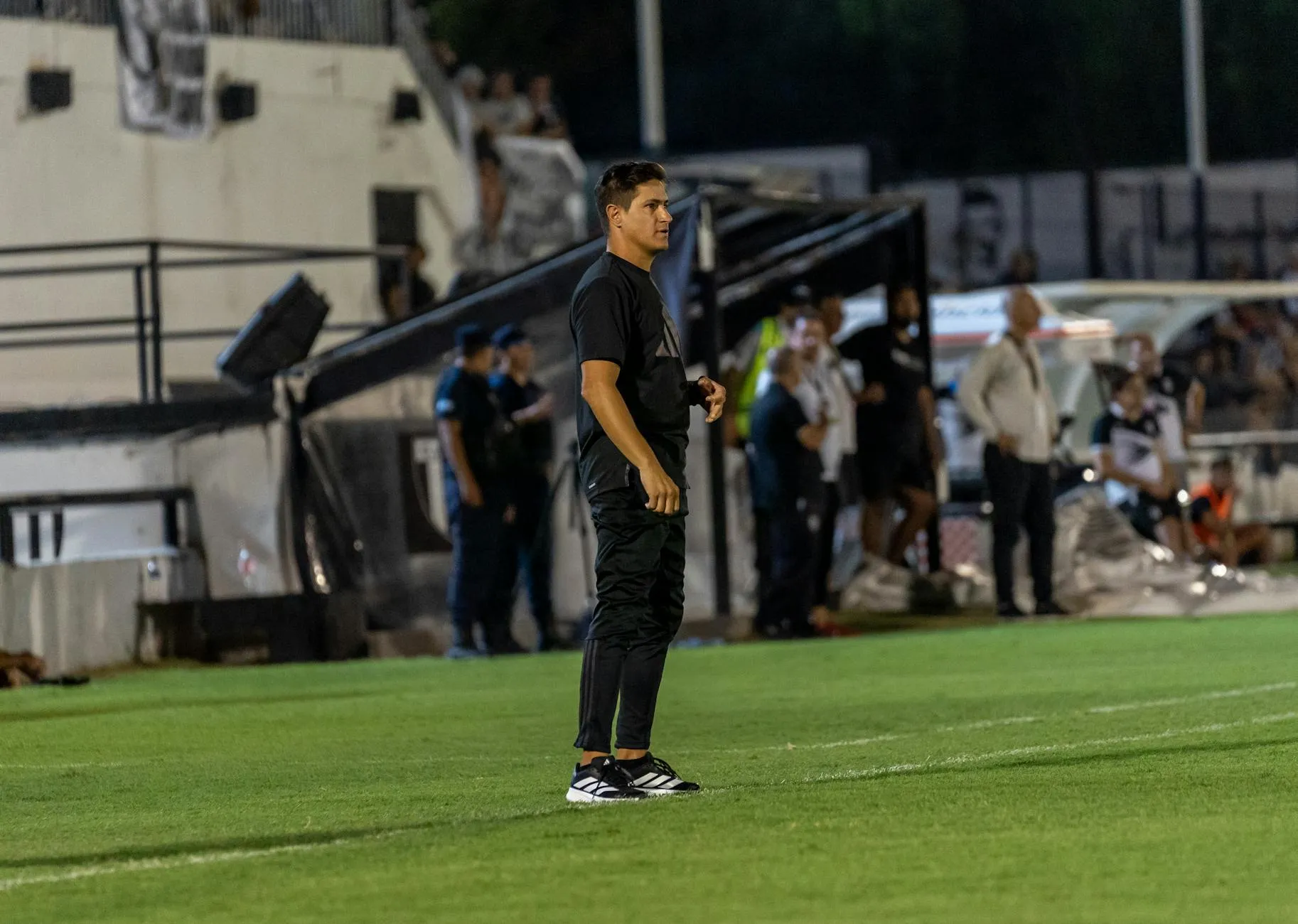
Canada arrive at World Cup 2026 as one of three host nations, with an American coach who fixed the press, a left-back the system is designed around, and the most realistic Round-of-16 path any host has had since 1994 — including their own 1986 disaster.
Jesse Marsch's Canada Tactics: The High-Press 4-3-3
The base shape with the ball is a 4-3-3. Without it, Canada's left-back pushes to half-way and the team becomes a 3-4-3 in pressing phases, with Alphonso Davies functioning as a left wing-back and the right centre-back stepping into a back-three role. Marsch's coaching identity is the same press he used at Salzburg, Leipzig and Leeds: aggressive triggers in the first 25 minutes, a willingness to concede possession to a deep block, and counter-attacking pace through the wide channels.
Across the back, Maxime Crépeau (Portland Timbers, 31) starts in goal — the squad's most consistent shot-stopper after the Milan Borjan retirement. Steven Vitória (Chaves) and Derek Cornelius (Marseille) form the centre-back pair, with Moïse Bombito (Nice) as the rotation option after his 2024 breakthrough. The right-back has rotated through Alistair Johnston (Celtic) and Sam Adekugbe (Vancouver Whitecaps); Davies on the left is non-negotiable.
The midfield three is the system's tactical hinge. Stephen Eustáquio (Porto, 29) is the No. 6 — the Champions League–experienced ball-winner who arrived from Pacoş in 2022 and has anchored Porto's midfield through their last three Liga Portugal cycles. Ismaël Koné (Marseille, 24) plays the box-to-box No. 8 with vertical line-breaking runs. The other No. 8 has rotated between Atiba Hutchinson's replacement candidates: Stephen Eustáquio drops back when Canada need an extra defensive midfielder, and Liam Fraser or Mathieu Choinière step into the more attacking role.
The front three runs around Jonathan David (Juventus, 26) at No. 9, Tajon Buchanan (Inter Milan, 27) on the right, and Jacob Shaffelburg (Nashville SC, 26) or Cyle Larin (Mallorca via Real Valladolid) on the left when Davies is operating as a left-back rather than a left wing-back.
Alphonso Davies: The Left Side Is The Plan
Canada do not have a Davies backup. They have a Davies-shaped position the team is built around.
The pattern: when Canada have the ball, Davies pushes higher than any left-back at the tournament except possibly Hakimi (Morocco). Shaffelburg or Larin tucks inside to take the No. 10 space, the left centre-back covers Davies' vacated channel, and the press-trigger sits on whichever opponent tries to play out wide on Canada's left. When the ball is lost, Davies recovers — and the time it takes him to get back is the single biggest defensive variable Marsch manages every match.
The complication for 2026 is the UCL semi-final load. Davies played 90 minutes of Bayern Munich's April 28 first leg against PSG (5-4 loss); a Bayern UCL final on May 30 is the worst-case calendar for Canada — Davies would arrive in camp on May 31 with 12 days before the June 12 opener vs Bosnia. The realistic best case is a Bayern semi-final exit on May 6, giving Davies five weeks of recovery and friendly minutes before Canada's tournament begins.
Marsch's contingency plan is honest: if Davies is fitness-flagged in May, the system rebuilds around a more compact 4-3-3 with Larin or Shaffelburg as a true left winger and a more conservative left-back (Bombito moved to LB or Alphonso Davies' younger brother Bradley Davies's contract registration not yet at international tempo). The drop-off is a tactical tier; against any of Group B's opponents it is workable, but against a Round-of-16 opponent at the level of the Group F or Group G winner, it changes the ceiling.
Jonathan David: The Juventus Move That Transformed the No. 9
The summer 2025 Lille-to-Juventus transfer was the most consequential squad event of Canada's 2026 cycle outside the Marsch hire. David's six seasons at Lille produced consistent goal output (90+ Ligue 1 goals from 2020 onward) but a tactically fixed profile: a finishing forward who started passes off the front line.
The Juventus 2025-26 season under Igor Tudor changed that. David has played as both a true No. 9 (when Vlahović is on the bench) and as a deeper-dropping creator (alongside Vlahović in a 4-2-3-1) — the second role being exactly what Marsch's Canada system needs. David's pressing volume per 90 has gone up; his shot-creating actions have doubled; his expected-goals output remains in the same tier as his Lille peak.
For Canada, the structural payoff is clear. The 2022 squad needed Cyle Larin to do too many things: hold up the ball, finish chances, drop off as a creator. David at 2026 can do all three at international tempo, and the Marsch system gives him the No. 8 support behind that the 2022 setup lacked. The realistic 2026 group-game line: David scores once vs Bosnia, holds up against Qatar, and is involved in the Switzerland decider's biggest sequences. A 3-or-4-goal tournament for David is the median outcome.
The squad option behind him is Cyle Larin (Mallorca, 30), who provides a more orthodox No. 9 profile when Marsch wants more central reference. Theo Bair (St. Johnstone) and Promise David (Union SG) are the youth alternatives that have entered the squad but not yet started competitive matches.
The Eustáquio Mid-Block: Why Canada Don't Get Overrun
The hidden upgrade since 2022 is at No. 6. The Qatar squad used Atiba Hutchinson at 39 in a midfield role he no longer had the legs for; the four years since have produced a clear successor in Stephen Eustáquio.
Eustáquio at 29 is now a top-tier Liga Portugal No. 6 — Porto's deep-lying midfielder who has anchored their backline pressing structure through Sérgio Conceição's tenure and into the post-2024 reset. His tactical profile is conservative — short passes, low-risk distribution, high defensive duel volume — exactly the role Marsch's high-press system needs to hold up against quality opposition that bypasses the first line of pressure.
The squad option behind him is Mark-Anthony Kaye (Toronto FC) or, in a more attacking shape, dropping Jonathan Osorio (Toronto FC) deep. Both alternatives downgrade the position. Marsch's whole rotation plan depends on Eustáquio finishing the tournament fit.
The Switzerland match is where this matters most. Murat Yakin's 4-2-3-1 runs through Granit Xhaka pushing into Switzerland's half-spaces — exactly the zone Eustáquio is responsible for. A 90-minute showdown between Eustáquio and Xhaka will decide field position for the entire match.
Group B: The Path Through Bosnia, Qatar and Switzerland
Canada's Group B draw is a 6/12 host-nation opener vs Bosnia at Toronto Stadium, then Qatar in Vancouver on 6/18, then Switzerland at Vancouver on 6/24. For the full group context, see our Group B preview.
Bosnia and Herzegovina arrive via the FIFA play-off route after losing the head-to-head with Wales. Edin Džeko (Fenerbahçe) at 39 is still their captain and No. 9 reference. Their structure under Sergej Barbarez is a 4-2-3-1 that compresses tightly — exactly the kind of deep block Marsch's high press is designed to break. A 2-0 Canada win at Toronto with full Davies fitness is the median outcome.
Qatar is the matchday 2 rotation match. Their qualification through the AFC third round was a redemption arc after the 2022 home embarrassment (zero points in three matches as host); their squad has reset around Akram Afif (Al-Sadd) and Almoez Ali (Al-Duhail) but the structural ceiling has not changed much. A 2-0 or 3-0 Canada win is the realistic line.
Switzerland is the genuine top-spot fight. Murat Yakin's 4-2-3-1 runs through Granit Xhaka, Manuel Akanji, Breel Embolo — a Premier League–experienced spine that has historically held up against tournament pressure. Switzerland reached the Round of 16 at three consecutive World Cups (2014, 2018, 2022). The Vancouver fixture on 6/24 is the genuine measuring-stick match for Marsch's Canada — win it and the group is won; lose it and Canada finish second with a Round-of-32 path against the toughest possible group runner-up.
The Host Nation Pressure
Canada are co-hosting the 2026 World Cup with the United States and Mexico. The two Canadian host cities — Toronto and Vancouver — together host all three of Canada's group matches. The host-nation media pressure is unprecedented in Canadian sport: the country has never simultaneously co-hosted a World Cup and qualified for it.
Marsch's public posture has been calibrated. He has talked publicly about the press structure, the Davies role and the realistic Round-of-16 ceiling, but he has not promised a quarter-final or further. The 1986 Canada team — the country's only previous World Cup appearance before 2022 — finished the group with three losses and zero goals. The 2022 Canada team also finished with three losses, but with one goal. The 2026 host-nation expectation is now genuinely a Round-of-16 appearance, with anything more being a measurable historical achievement.
Internally, the squad have used the Copa América 2024 fourth-place finish as the calibration anchor. That tournament produced wins over Peru, Venezuela and Uruguay (in the third-place play-off they lost to Uruguay on penalties). The 2026 ceiling reads identically: hold the line vs lower-ranked opponents, contend in the Round of 16, and hope the bracket math gives Marsch a winnable quarter-final.
The 2026 Realistic Ceiling
The base case for Canada at the 2026 World Cup is a Round-of-32 win and a Round-of-16 exit to a Group A or Group D winner. The realistic ceiling is the quarter-final — a result that would be the deepest run by any host nation outside the United States since 2002. The squad has the structural tools (Davies' overlap, Eustáquio's discipline, David's improved Juventus-era profile) and the bracket math gives Marsch a real path.
The downside risks are also clear. Davies' fitness across seven possible matches is the single biggest variable. The squad's depth at left-back, centre-back and No. 9 backup is a real ceiling on the tournament's later stages. And Marsch's high-press identity is calorie-expensive — the cumulative fatigue load by the round of 16 is the kind of variable that decides 1-1 matches.
For wider context, see our top-five title favourites, the dark-horse contenders, and our USMNT tactical preview covering Canada's host-nation peer. For sister-group context, see Group A, Group C, Group D and Group E.
Frequently Asked Questions
Who is Canada's head coach at World Cup 2026?
Jesse Marsch, in charge since May 2024 after the John Herdman departure that followed Copa América 2024. The American coach (RB Leipzig, Salzburg, Leeds United) reset Canada's structure around a high-press 4-3-3 and steered the team to a Copa América 2024 fourth-place finish in his first months — a result that reframed expectations for the host nation's 2026 ceiling.
What formation will Canada use at World Cup 2026?
A base 4-3-3 with a high-pressing trigger system, flexing to 3-4-3 when Marsch wants more wide-channel coverage. Stephen Eustáquio sits as the No. 6, Alphonso Davies pushes high from left-back as a second winger, and Jonathan David starts at No. 9 with rotating support from Tajon Buchanan and Jacob Shaffelburg on the wings.
Who are Canada's key players at World Cup 2026?
Alphonso Davies (Bayern Munich) at left-back / left wing-back, Jonathan David (Juventus) at No. 9, Stephen Eustáquio (Porto) as the deep pivot, Tajon Buchanan (Inter Milan) as the right-side creator, Maxime Crépeau (Portland Timbers) in goal, and Atiba Hutchinson (retired post-2022 but returned as assistant coach for the 2026 cycle, an important locker-room touchstone).
Which group is Canada in at the 2026 World Cup?
Group B with Bosnia and Herzegovina, Qatar and Switzerland. Canada open the host-nation tournament against Bosnia on June 12 at Toronto Stadium, face Qatar on June 18 at Vancouver Stadium, and finish against Switzerland on June 24 at Vancouver Stadium. The Switzerland match is the group's likely top-spot decider.
What is Canada's biggest tactical risk?
Davies-load. The Bayern Munich left-back has logged a deep 2025-26 Champions League run on top of his domestic minutes, and Marsch's system asks him to play essentially as a left wing-back with full attacking duties. Backup options at left-back drop two tiers; a fitness flag in May friendlies or in the Bosnia opener is the single biggest swing factor for Canada's tournament path.
How will Jonathan David fit into Canada's system at the 2026 World Cup?
David moved from Lille to Juventus in summer 2025 and the Serie A season has produced his most complete tactical profile yet — pressing forward who can also drop off the line as a creator, exactly the No. 9 role Marsch's high-press 4-3-3 needs. His 2025-26 club output (15+ Serie A goals plus Champions League minutes) is the highest single season of his career.
Can Canada advance from Group B at the 2026 World Cup?
Yes — top-two is a realistic median outcome. Canada open as host with a winnable Bosnia fixture; Qatar are the rotation opportunity in matchday 2; Switzerland in matchday 3 is the genuine top-spot fight. The 48-team format also means a third-placed Canada finish is still likely to qualify for the Round of 32 via the best-third tiebreaker.
What is the Canada World Cup 2026 squad?
Jesse Marsch has not finalised the 26-man Canada World Cup 2026 squad as of late April 2026. The spine is settled — Crépeau in goal, Vitória and Cornelius at centre-back, Davies on the left, Eustáquio at No. 6, Koné and Hoilett (or Ahmed) in midfield, David at No. 9, Buchanan on the right. The third-CB, backup-No. 9 and right-back roles remain under rotation through May 2026 friendlies.
What are Canada's World Cup 2026 fixtures?
Canada's World Cup 2026 fixtures in Group B: Jun 12 vs Bosnia and Herzegovina at Toronto Stadium; Jun 18 vs Qatar at Vancouver Stadium; Jun 24 vs Switzerland at Vancouver Stadium. The opener vs Bosnia is the host-nation matchday 1 statement; Switzerland in matchday 3 is the top-spot decider.
People Also Ask
Data sources
- Canada Soccer — Jesse Marsch appointed head coach (May 2024)
- Copa América 2024 — Canada fourth place
- FIFA World Cup 2026 — Group B fixtures
- April 2026 FIFA Men's Ranking — Canada #30
- Squad reference — Marsch's March 2026 international window call-ups — Editorial research by the WTK Sports desk
Published: