Brazil 2026 Tactical Preview: Ancelotti's New Era
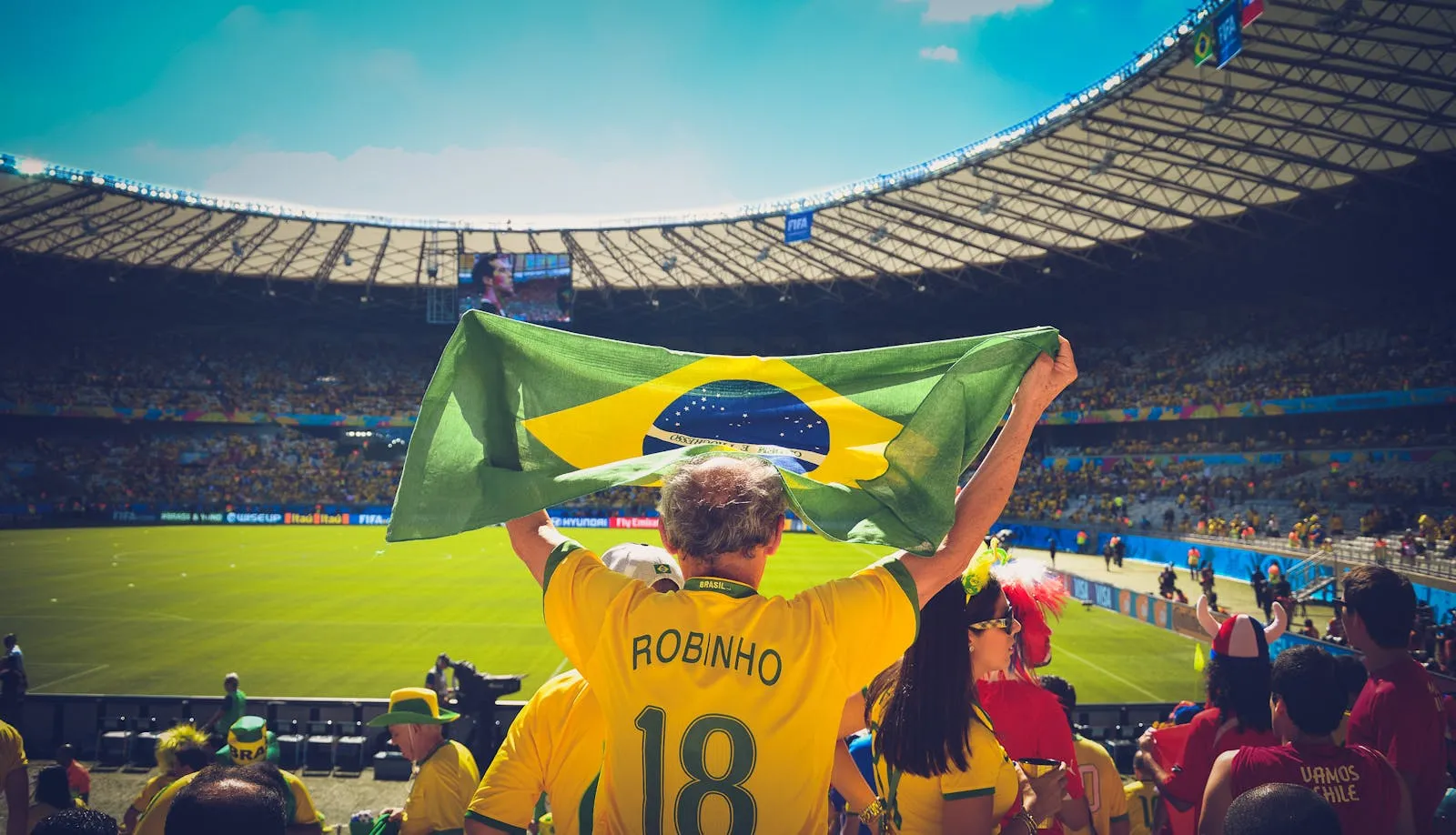
Brazil arrive at World Cup 2026 with a first-time international head coach, a missing No. 10 legacy and a Group C opener against the side that eliminated the tournament's biggest names in 2022 — a Seleção reset more dramatic than any in the modern era.
Ancelotti's Brazil: The System Explained
The base shape is a 4-2-3-1 in possession that compresses to a 4-4-2 without the ball. Bruno Guimarães and a partner — most often Gerson or Lucas Paquetá when deployed deep — form the double pivot. Ahead of them, Ancelotti wants a true No. 10 who connects the wingers to a penalty-box striker.
Across the back, Marquinhos is the captain and organiser, with Gabriel Magalhães alongside him. Danilo or Éder Militão rotates at right-back depending on opponent profile; Guilherme Arana and Abner share the left side. Alisson remains one of the world's top three goalkeepers.
The front four is where Ancelotti has made the sharpest break from previous Brazil regimes: Vinícius Jr. off the left is untouchable, Raphinha has earned the right side through his 2025-26 form at Barcelona, the No. 10 slot has lost its first-choice option after Rodrygo's season-ending ACL injury at Real Madrid — Paquetá is now the most likely No. 10 with John when Ancelotti pushes the midfield higher, and the No. 9 rotates between Endrick, Richarlison and Igor Jesus. Neymar does not feature in the baseline plan. Estêvão, originally expected to compete for a wide-attack rotation slot, was dropped from the preliminary squad after his April hamstring injury.
Why Vinícius Jr. Is the Entire Plan
Ancelotti coached Vinícius for four seasons at Real Madrid. He knows exactly what the player needs — space, a diagonal runner ahead of him, and a left-back who overlaps to pin the opposing winger deep. Brazil's 2026 attacking template is essentially the Real Madrid 2022-24 template transposed onto yellow shirts.
Vinícius plays a physically expensive game — sprint, stop, contact, restart, repeat for 90 minutes. Brazil can rotate around him in theory. In practice, when he is fit, he is one of the first attacking names on the sheet, and the national team's fatigue risk travels with him. If Real Madrid reach the UCL final in Budapest on May 30, Vinícius will have 14 days between that match and Brazil's Group C opener — the tightest recovery window of any 2026 star. We break down exactly who that 12-day squeeze hurts most.
The tactical knock-on: every opponent shades their shape toward Brazil's left. That opens space for Raphinha on the right, overlaps for the right-back and underlaps for whoever plays the 10 role. Stopping Vinícius and stopping Brazil are two related but separable problems — and Ancelotti has designed the rest of the attack to punish the fact that most coaches still conflate them.
The Midfield Without Casemiro
This is where the honest worries live. Brazil's midfield has lost Casemiro as a first-choice destroyer, Fred as box-to-box insurance and a generation's worth of Premier League minutes. Bruno Guimarães is a top-class No. 8 but not a natural single pivot — he is best when a destroyer sits behind him.
Ancelotti's half-solution has been to use the double pivot as a genuine shared workload: Guimarães and a partner split ball-winning and ball-progression duties game-to-game. The problem is that against quick transitions — exactly the profile Morocco bring — a double pivot without a true No. 6 can be pulled out of shape.
João Gomes has emerged as a candidate for the defensive midfield anchor, but his ceiling at international level remains unclear. André, whose 2024 move to Wolves was supposed to crystallise him into Brazil's next Casemiro, has had a mixed first Premier League season. There is no obvious answer — there is just rotation and hope.
The No. 9 Problem
Three months before the opener, Brazil's starting centre-forward is undecided.
Endrick is the future and, at Real Madrid, has learned the movement patterns Ancelotti wants — runs across the centre-back, penalty-spot presence, second-post finishes. He is also 19, minutes-limited at club level, and unproven across a seven-match tournament run.
Richarlison has the international pedigree — three goals at Qatar 2022, including the tournament's best individual strike — but has struggled with fitness at Tottenham through 2025. Igor Jesus, the Brasileirão-era physical option, earns his call-ups through pressing work rate rather than finishing.
The honest read: Ancelotti has not decided. He will go into the opener with Endrick if Real Madrid's schedule allows and if the 19-year-old arrives sharp; if not, Richarlison starts. The No. 9 question is the single most active internal debate in the Brazilian camp.
Brazil's Path Through Group C
Group C is navigable on paper, but the fixtures carry real tactical teeth.
- Jun 13 vs Morocco — MetLife Stadium, East Rutherford. The fixture of the tournament's first week. Morocco reached the 2022 semi-finals on the back of exactly the transition-heavy football that can expose Brazil's rebuilt midfield. Achraf Hakimi against Vinícius Jr. is the tournament's most anticipated duel. Whoever wins this flank wins the group's top seed.
- Jun 19 vs Haiti — Lincoln Financial Field, Philadelphia. Rotation opportunity and a likely low-block game. Brazil should rotate Vinícius or Raphinha if either came through a hard Morocco match. Endrick's chance to start if he is not already the No. 9.
- Jun 24 vs Scotland — Hard Rock Stadium, Miami Gardens. The group's dark horse. Scotland under their physical, mid-block structure will make this harder than the seeding suggests. Set pieces will matter disproportionately.
Three venues spanning the Atlantic seaboard, with a short hop to Miami in the heat. The travel schedule is kind relative to some tournament brackets, but the climate gradient is real — MetLife in mid-June will feel nothing like South Florida a fortnight later.
Before any of that, Brazil have one last calibration window: the June 6 friendly against Egypt in Cleveland — Salah on Brazil's left flank is a deliberate stress test for exactly the transition shape opening night will demand.
Where Ancelotti's Brazil Is Still Vulnerable
The honest checklist of things opposition coaches will target:
- Transition defence. Vinícius and Raphinha commit high. The right-back position is unsettled. Teams that turn the ball over quickly and run at space — Morocco, Portugal, France in a knockout — can exploit this before the double pivot resets.
- Full-back depth. Danilo is 34. Militão returns from injury. Guilherme Arana's club form is uneven. This is the position group that could collapse if injuries stack up through a long tournament run.
- Set pieces. Brazil's defensive set-piece record through the qualifying cycle was mediocre. Against Scotland, Haiti, Morocco — all teams with physical aerial threats — this matters.
- The centre-forward. If Endrick's first World Cup minutes come in a knockout match, Ancelotti is asking an unproven 19-year-old to finish a tournament under pressure. If Richarlison starts at less than full fitness, Brazil's attack runs through two wingers and a half-idea in the middle.
The Ancelotti Question: Can a European Coach Reset Brazil?
The honest question hanging over this Seleção is whether a first-time national-team coach can install a coherent identity in the space of one tournament.
Ancelotti's historical strength is adaptation rather than imposition. He did not make Real Madrid play a specific way; he made Real Madrid's best players do their jobs with less friction. That approach has translated into Brazil in patches — Vinícius looks more like his club self, Raphinha has found his best national-team form in years — but the midfield re-engineering is the part that cannot be copy-pasted. Brazil don't have a Kroos and a Modrić to stabilise everything. They have a double pivot that is still a compromise.
If Ancelotti finds the right midfield configuration by June, the ceiling is a fifth-place final four minimum — this is still Brazil, still the best wide pair at the tournament, still Alisson in goal. If he doesn't, the quarter-finals are a plausible ceiling, and the 2018-2022 run of early exits extends.
Title Contenders, but the System Is Still Settling
Brazil's floor is lower than France's or Spain's. Their attacking ceiling is as high as anyone's. The distance between those two lives in the midfield compromise and the No. 9 debate.
Ancelotti has done what he could in 13 months — assessed his players, moved on from a legacy No. 10 era, and built a plan around the two wingers he trusts most. The 2026 World Cup is the exam. The answer arrives first on June 13, across the MetLife pitch, against the only team in Group C that has already beaten the tournament's biggest names once.
Final Thoughts
Brazil at 2026 are the tournament's most interesting title candidate. The system is new, the coach is new, and the opener is the fixture that will tell the world whether the reset has landed.
Watch Vinícius's fitness on May 31 — the day after a possible UCL final. Watch whether Ancelotti names a starting No. 9 before the opener or rotates through the group stage. Watch the midfield against Morocco's press. Those three threads decide whether the Seleção spend July playing the semi-final they have not reached since 2014, or spend it explaining another quarter-final exit.
For more on the cycle, see Scaloni's defending-champions Argentina, Deschamps' transition-built France, how to watch the MetLife final on July 19, and the May 30 UCL final to June 13 opener squeeze that lands hardest on Vinícius.
Frequently Asked Questions
Who is Brazil's head coach at World Cup 2026?
Carlo Ancelotti, officially appointed by the CBF on May 12, 2025. It is his first national-team role after a career built on five UEFA Champions League titles with AC Milan and Real Madrid. His contract runs through the 2026 World Cup with talks of an extension to 2030.
What formation will Brazil use at World Cup 2026?
A flexible 4-2-3-1 that rotates into 4-3-3 with the ball. Ancelotti leans on a double pivot in midfield, uses Vinícius Jr. off the left and prefers a single-striker shape that keeps the attacking midfield band high and narrow.
Who are Brazil's key players at World Cup 2026?
Vinícius Jr. leads the attack, with Raphinha on the opposite flank, Bruno Guimarães anchoring midfield, Marquinhos and Gabriel Magalhães in defence, and Alisson in goal. The No. 9 role remains fluid between Endrick, Richarlison and Igor Jesus.
Which group is Brazil in at the 2026 World Cup?
Group C with Morocco, Haiti and Scotland. Brazil open against Morocco on Jun 13 at MetLife Stadium — a rematch of the 2022 semi-final mindset that knocked out favourites — then face Haiti on Jun 19 in Philadelphia and Scotland on Jun 24 in Miami Gardens.
What is Brazil's biggest tactical risk?
The same vulnerability that defined the last cycle: transition defence. Brazil concede space behind the full-backs when Vinícius and Raphinha commit high, and their double pivot does not always have the legs to cover both flanks. Against quick, direct opponents — Morocco in the opener — this is where games turn.
Can Brazil win the 2026 World Cup without Neymar?
Update: Neymar is in. Ancelotti recalled the 34-year-old Santos forward in the final 26-name squad announced May 18, 2026 at the Museu do Amanhã — his fourth World Cup after a near three-year Seleção absence following the October 2023 ACL injury. The 2026 plan treats Neymar as a high-leverage starter or late substitute rather than a 90-minute lock, with Vinícius Jr.'s direct running still the squad's primary attacking outlet. Rodrygo (Real Madrid, ACL), Éder Militão and Estêvão all ruled out injured. See our Brazil squad announcement for the full 26-name list and the Endrick / Rayan calls.
People Also Ask
Data sources
- CBF — Carlo Ancelotti appointment announced May 12, 2025
- FIFA World Cup 2026 — Group C fixtures (Brazil vs Morocco Jun 13, vs Haiti Jun 19, vs Scotland Jun 24)
- Brazil pre-tournament friendly: Egypt (Jun 7, Ohio) — CBF official warm-up programme
- Seleção squad composition — based on Ancelotti's March 2026 call-ups (no Neymar, Vinícius Jr. as captain of the attack)
- Historical context — 2022 quarter-final exit vs Croatia, 2018 quarter-final exit vs Belgium — Editorial research by the WTK Sports desk
Published: