Belgium 2026 Tactical: Tedesco's Last Golden Window
Belgium arrive at World Cup 2026 with the last window for the golden generation that never won the trophy — Kevin De Bruyne at 35, Romelu Lukaku at 33, Thibaut Courtois back from his retirement reversal — and the most favourable Pot 1-led group draw in the tournament.
Domenico Tedesco's Belgium Tactics: The 4-3-3 Explained
The base shape is a 4-3-3 in possession that compresses to 3-4-2-1 against deep blocks. Amadou Onana (Aston Villa, 25) is the single pivot — a 6'4" ball-winner whose rangy frame allows Belgium to play with one true No. 6 instead of the double pivot Martínez used in 2022. Kevin De Bruyne (35) plays as the right-side No. 8 with creative licence to drift into the No. 10 pocket; Youri Tielemans (Aston Villa) takes the more disciplined left No. 8 role. The structural logic: free De Bruyne from defensive responsibility, ask Tielemans to cover laterally for him.
Across the back, Thibaut Courtois (Real Madrid, 34) returned to the squad in early 2025 after a public falling-out with Tedesco that produced a 19-month international absence. The reconciliation was driven by both sides — Courtois's Euro 2024 absence cost Belgium in the France knockout match, Tedesco's first major-tournament defeat. Wout Faes (Leicester, 28) and Zeno Debast (Sporting CP, 22) form the centre-back pair, with Arthur Theate (Eintracht Frankfurt) as the rotation option. The full-backs are Timothy Castagne (Fulham) on the right and Maxim De Cuyper (Brighton via Club Brugge) or Arthur Vermeeren (RB Leipzig) on the left.
The front three is the system's load-bearing wall. Jérémy Doku (Manchester City, 24) plays the inverted left winger — Belgium's most explosive carrier and the player who replaces what Eden Hazard was at his peak. Romelu Lukaku (Napoli, 33) starts at No. 9 with the back-to-goal hold-up play Tedesco's structure depends on. The right wing is rotated through Yannick Carrasco (Al-Shabab) and Charles De Ketelaere (Atalanta) when Tedesco needs more creative drop-off and through Dodi Lukebakio (Sevilla) when he wants more direct pace.
Kevin De Bruyne: The System Around the Star
This is the one tactical question that defines Belgium's tournament.
De Bruyne at 35 is still the best progressive passer in the squad and one of the three best in any 2026 squad. He is also, demonstrably, no longer a 90-minute presser. Run him in the same midfield three as Tielemans and Onana and Belgium's first line of defensive pressure is effectively two midfielders deep. Tedesco's compromise: De Bruyne starts every match Belgium expect to dominate the ball, the right-side No. 8 role is built around his decision-making, and the press triggers come from Doku, Onana and the back-line line-stepping rather than from the central trio.
What that buys Belgium is a creative ceiling no other Pot 1 outsider has at 2026. De Bruyne's set-piece delivery alone is worth one goal per group game in expected-goals models — the 2024-25 Manchester City season was his most efficient set-piece return since 2018-19. His through-ball volume into Lukaku and Doku is the operational pattern Belgium build around. Without him, the team is a structurally different — and meaningfully worse — operation.
The downside is the rotation question. De Bruyne played 26 Premier League starts in 2025-26 — his most since 2021-22, but with the older-body fitness profile that means the deep-tournament 7-match path is the load Belgium have not stress-tested. Tedesco's likely plan: De Bruyne starts and plays 70-75 minutes in group games, plays the full 90 in must-win knockouts, and the substitution pattern routes him out before injury risk peaks.
That this is almost certainly De Bruyne's last World Cup raises the stakes on every minute. The narrative weight pulls toward starts; the body's evidence pulls toward managed minutes. The Pochettino / Martínez tension between coach and superstar that defined past Belgium tournaments is no longer on the table — Tedesco and De Bruyne have, by all internal accounts, reached an agreement on the calendar.
The Onana Pivot: Belgium's Structural Upgrade
The clearest squad upgrade since 2022 is at No. 6. Belgium's Qatar setup used a Witsel + Tielemans double-pivot that bled second balls and slowed the team's defensive transition; the post-2022 reset moved to a single-pivot 4-3-3 with Amadou Onana in the role.
Onana at 25 is now a top-tier Premier League No. 6 — Aston Villa's deep-lying midfielder who logged the second-most defensive duels won by any midfielder in the 2025-26 season. His 6'4" frame solves the problem Belgium had in Qatar: aerial duels in midfield. His distribution profile is more conservative than Witsel's was at peak — short, low-risk passes rather than the line-breaking diagonals Witsel still attempted in 2022 — but the structural trade is worth it.
The squad option behind Onana is Orel Mangala (Lyon) or, in a more attacking shape, dropping Tielemans deep. Both alternatives downgrade the position. Tedesco's whole rotation plan depends on Onana finishing the tournament fit.
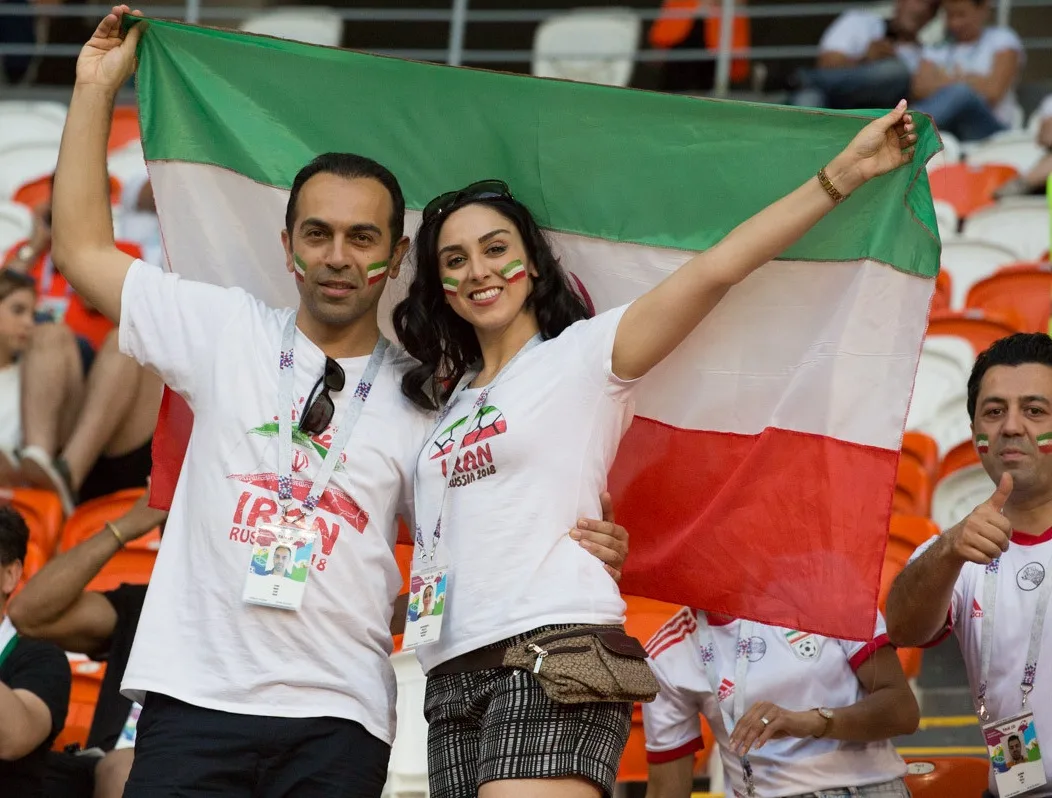
The Iran match is where this matters most. Iran's 4-3-3 under Amir Ghalenoei runs through their No. 8s pushing into Belgium's half-spaces — exactly the zone Onana is responsible for. A 90-minute showdown between Onana and Iran's Saman Ghoddos or Sardar Azmoun drop-off will decide field position for the entire match.
The Lukaku Question: Captain or Closer?
Belgium's No. 9 selection is settled in form but not in function. Romelu Lukaku at 33 — fresh off a Napoli season that produced the Scudetto — remains the squad's most reliable penalty-box reference and the player Tedesco's hold-up structure depends on. The numbers favour him: highest goal conversion of any squad forward in 2025-26 club minutes, highest aerial duel win rate, highest expected-goals return per 90.
The structural question is rotation. Loïs Openda (RB Leipzig, 26) offers a faster running profile and presses harder than Lukaku does. Charles De Ketelaere (Atalanta, 25) gives Tedesco a No. 9 who drops off the line and creates rather than finishes. The selection pattern across 2025-26 friendlies has settled into: Lukaku starts the openable group games, Openda or De Ketelaere come on at 60-70 minutes when the match opens up. In the matches Belgium expect to dominate the ball (Egypt, New Zealand) Lukaku gets a 70-minute window. In the matches Belgium expect to defend more (Iran, knockouts vs Pot 1 opponents) the No. 9 rotation gets shuffled by opponent profile.
The honest read for 2026: Lukaku starts every group game, the Round of 32 and the Round of 16. The first match where Tedesco might genuinely consider starting Openda over Lukaku is a quarter-final against a high-block possession heavyweight — exactly the kind of match Lukaku's 2018 World Cup form (4 goals on the way to a third-place finish) would suggest is his preferred environment.
Group G: The Most Manageable Pot 1-Led Path
Belgium's Group G draw is a 6/15 opener vs Egypt at Seattle, then Iran at Los Angeles on 6/21, then New Zealand at Vancouver on 6/26. The path avoids any European or CONMEBOL danger seed — the only Pot 1-led group at 2026 with that property. FIFA-rank-wise, Belgium (#9) face Iran (#21), Egypt (#29) and New Zealand (#85) — a 76-place spread that's bigger than any top-half group except Group C.
Iran is the genuinely hard match. Amir Ghalenoei's 4-3-3 is built around Mehdi Taremi (Inter Milan) and Sardar Azmoun (Al-Wakrah, returning to the squad after a 2024 dispute). The set-piece delivery is high-volume; the press is aggressive in the first 30 minutes; the defensive structure tightens after the hour mark. Iran beat Belgium 2-0 in their last competitive meeting (2014 World Cup group stage was their last fixture, but a 2024 friendly produced a 1-1 draw). The matchday 2 fixture is realistically Group G's top-spot decider.
Egypt is the matchday 1 mismatch on paper. Mohamed Salah (Liverpool, 34) is the obvious threat but Egypt's structure under Hossam Hassan compresses to a 4-4-1-1 with Salah dropping deep — a setup that wastes their best player and is exactly the profile Belgium's 4-3-3 is designed to dismantle. A 2-0 or 3-0 Belgium win is the median outcome.
New Zealand at Vancouver is the rotation match. If Belgium have qualified by matchday 3, Tedesco will rest De Bruyne, Lukaku and Onana ahead of the Round of 32. Doku may be rested too. New Zealand's game plan under Darren Bazeley is a 5-4-1 deep block with Chris Wood as the only forward — winnable on paper, capable of forcing Belgium to grind, and the most likely match for an unexpectedly close scoreline.
The Courtois Return: Goalkeeper as Leadership Solution
The 2023 falling-out between Thibaut Courtois and Tedesco produced 19 months of national-team absence, including all of Euro 2024. The ACL injury that ended Courtois's 2023-24 club season at Real Madrid added a separate layer of uncertainty about whether he would return at all. The reconciliation came in early 2025 — a quiet handshake, an informal call-up that became an official one, and a starting place that has been undisputed since.
Tactically Courtois at 34 is still the best goalkeeper Belgium can field, the equal of any 2026 World Cup peer at penalty saves and second-tier in the squad's command of high crosses. Koen Casteels (Al-Qadsiah) and Matz Sels (Nottingham Forest) are the backups, but neither plays at Courtois's level on the moments that decide knockout matches.
What the return changes: Belgium's leadership structure goes from a vacuum to a triangle — De Bruyne as on-ball leader, Lukaku as dressing-room senior, Courtois as the goalkeeper-captain whose voice the back four respond to first. The 2022 squad had two of those three; the 2026 squad has all three plus a head coach who has finally settled the room. That alone is meaningful in tournament football.
The 2026 Realistic Ceiling
The base case for Belgium at the 2026 World Cup is a Round-of-16 win and a quarter-final exit. The realistic ceiling is the semi-final the 2018 squad reached — a competitive five-match knockout run. The structural reasons: the squad is finally settled at every position, the bracket draw is the most favourable any Pot 1 outsider got, and the De Bruyne–Doku–Lukaku axis is the kind of attacking spine that produces three goals against any opponent on its day.
The downside risks are also real. De Bruyne's fitness across seven possible matches is the squad's biggest single variable. Onana's tournament workload is the second. The third — and the one Tedesco talks about least publicly — is whether Lukaku at 33 can produce the same finishing volume across consecutive knockout matches that he did at 25 in 2018.
For wider context, see our top-five title favourites, the dark-horse contenders, and the Iran data preview covering Belgium's matchday 2 opponent. For sister-group context, see Group A, Group B, Group C, Group D and Group E.
Frequently Asked Questions
Who is Belgium's head coach at World Cup 2026?
Domenico Tedesco, in charge since February 2023 after the Roberto Martínez era ended at Qatar 2022. Tedesco's first major tournament was Euro 2024 (round of 16 exit to France); the 2026 World Cup is the bigger judgement window for the German-Italian coach who arrived with a Bundesliga and Serie A CV but no senior international experience.
What formation will Belgium use at World Cup 2026?
A base 4-3-3 that flexes to 3-4-2-1 against deep blocks. Amadou Onana sits as the No. 6, Kevin De Bruyne plays the right-side No. 8 with creative licence, Jérémy Doku stretches the left wing, and Romelu Lukaku starts as central reference with rotation through Loïs Openda and Charles De Ketelaere.
Who are Belgium's key players at World Cup 2026?
Kevin De Bruyne (captain, 35) at right-side No. 8 / No. 10, Jérémy Doku (Manchester City) on the left wing, Amadou Onana (Aston Villa) at No. 6, Romelu Lukaku (Napoli) at No. 9, Thibaut Courtois (Real Madrid) in goal after his 2024 retirement reversal, and Wout Faes (Leicester) anchoring centre-back alongside Zeno Debast (Sporting CP).
Which group is Belgium in at the 2026 World Cup?
Group G with Iran, Egypt and New Zealand. Belgium open against Egypt on June 15 at Seattle Stadium, face Iran on June 21 at Los Angeles Stadium (Inglewood), and finish against New Zealand on June 26 at Vancouver Stadium. Group G is the only Pot 1-led group at 2026 with no European, no CONMEBOL and no Concacaf opposition.
Is this Kevin De Bruyne's last World Cup?
Almost certainly. De Bruyne turns 35 in June 2026 and his post-Manchester City move (announced for summer 2025) and the absence of a 2027 international tournament window for Belgium make 2026 the natural close to his international career. Tedesco's whole tactical setup has been built around that calendar — a structure that gets the most from De Bruyne while planning the post-De Bruyne midfield in parallel.
What is Belgium's biggest tactical risk?
The transition from De Bruyne to whoever takes the No. 10 / right-No. 8 load when he is rested. Belgium have not yet identified a clear successor; Charles De Ketelaere has been the most-trialled internal option but has not consistently dominated international tempo. Against a top-tier knockout opponent who isolates De Bruyne defensively, Belgium need a Plan B the qualifying cycle has not produced.
Will Romelu Lukaku start at the 2026 World Cup?
Yes, in opening matches. Lukaku at 33 remains Belgium's most reliable penalty-box reference and the No. 9 Tedesco's structure is designed around. The selection question is closer to who replaces him in cameos — Loïs Openda's faster running profile, Charles De Ketelaere's drop-off-the-line role, or Michy Batshuayi's box-only finishing — than whether Lukaku starts.
What is the Belgium World Cup 2026 squad?
Domenico Tedesco has not finalised the 26-man Belgium World Cup 2026 squad as of late April 2026. The spine is settled — Courtois in goal, Faes and Debast at centre-back, Onana at No. 6, De Bruyne and Tielemans in midfield, Doku and Carrasco wide, Lukaku at No. 9. The right-back, third-CB and No. 9 backup roles remain under rotation through May 2026.
What are Belgium's World Cup 2026 fixtures?
Belgium's World Cup 2026 fixtures in Group G: Jun 15 vs Egypt at Seattle Stadium; Jun 21 vs Iran at Los Angeles Stadium (Inglewood); Jun 26 vs New Zealand at Vancouver Stadium. The Iran match in matchday 2 is realistically the group's decisive fixture for top spot.
People Also Ask
Data sources
- RBFA — Domenico Tedesco appointed Belgium head coach (Feb 2023)
- Euro 2024 — Belgium round of 16 exit to France
- FIFA World Cup 2026 — Group G fixtures
- April 2026 FIFA Men's Ranking — Belgium #9
- Squad reference — Tedesco's March 2026 international window call-ups — Editorial research by the WTK Sports desk
Published: