World Cup 2026 Visa Issues: Who's Being Turned Away
The 2026 World Cup kicked off on June 11, the first to span three countries and field 48 teams. But in the week before the opening whistle, the story that kept moving had nothing to do with form or fixtures. It was about who could get past the airport.
What are the World Cup 2026 visa issues?
The tournament is split across the United States, Canada and Mexico, but the US carries most of the load: the bulk of the 104 matches, and every knockout tie from the quarter-finals on. So for most of the World Cup, the door is held by US Customs and Border Protection, not by FIFA. In the final stretch before kickoff, that door closed on several people who were carrying every document they were supposed to have.
Three cases are confirmed:
- Omar Abdulkadir Artan, a referee chosen for the tournament, turned back at Miami even with valid US visas and a diplomatic passport.
- Aymen Hussein, Iraq's forward, held for hours at Chicago O'Hare before he was let through.
- Iran's support staff, several of them refused entry, which pushed the squad to set up in Mexico and cross the border only to play.
None of it is about football. All of it is now part of the tournament.
Who is Omar Artan and why was he turned away?
Artan got the call in April. Appointing a Somali referee to a World Cup had never happened before, and on June 6 he flew from Istanbul to Miami for the seminar FIFA requires every match official to attend. He never made it out of the airport.
He was travelling on a diplomatic passport and more than one valid three-month US visa, according to CBS News and Time. CBP held him for what he says was an 11-hour interview, ruled him inadmissible over "vetting concerns" it did not spell out, and sent him back to Istanbul.
FIFA kept its answer short. Artan would not be officiating, and the call on visas and entry, it said, sits with the host government. The appointment stood. The man did not get in.
Is this a one-off or a pattern?
One refusal you can put down to a bad shift at a desk. By the third, that gets harder to argue.
Iraq's Aymen Hussein was pulled aside at Chicago O'Hare and questioned for several hours before they waved him through. Iran's players got their visas; several of their support staff did not. So the team based itself in Mexico and only came into the US to play — a visa problem that quietly turned into a travel itinerary.
Iran had already been a flashpoint earlier in the year, when a proposal to replace the team surfaced and FIFA rejected it. We went into that in Iran's Group G status and the politics around it. Line up Artan, Hussein and the Iran staff next to each other and it reads less like three bad-luck stories and more like one recurring problem.
Why does the host government decide who gets in?
FIFA runs the World Cup. It does not run anyone's border, and it said as much when Artan was turned back. A US visa lets you show up at the airport and ask to be let in. It does not promise you will be. The officer at the desk makes that call, and they can say no even when the paperwork is clean.
That part is just how immigration has always worked. What is different this time is who it is catching, and when. A tournament that only works if the world turns up is running straight into a stretch of hard US immigration enforcement, and the people getting stopped are referees, players and fans rather than the usual travelers. You do not have to call any single decision right or wrong to see the bind: an event whose whole point is letting everyone in, routed through borders designed to keep some people out.
What does it mean if you already have a ticket?
If you have got a seat booked and a flight to match it, here is what actually matters:
- Your ticket is not a visa. Whatever FIFA sent you has nothing to do with whether the country lets you in.
- Sort the paperwork early. Get the ESTA or visa done well ahead, and bring the backup: hotel bookings, a return flight, the ticket itself.
- Leave yourself room. Refundable bookings survive a delay or a refusal far better than locked-in ones, and it is worth checking whether your travel insurance covers being turned away at the border.
- Treat each border on its own. Games in Mexico and Canada run on their own entry rules, and coming back into the US means clearing CBP all over again.
- Keep a plan B. If the trip falls apart, you can still catch every match — our guide to watching the World Cup 2026 by country has the channels.
Once you are in, our ticket prices and categories explainer, the Fan Festival guide for all 16 host cities and the host-city weather guide cover the rest.
Can the 2026 World Cup still feel like the world's?
A World Cup is supposed to mean the door is open: for one month, everyone is invited to the same place. Artan on a return flight, the detentions, the team that had to sleep in another country — that is the promise being tested in real time, right as the tournament tries to live up to its own name.
Making it bigger was never going to be the hard part. Forty-eight teams, three countries, 104 matches — that is already done. The question 2026 still has to answer is whether it earns the word "world."
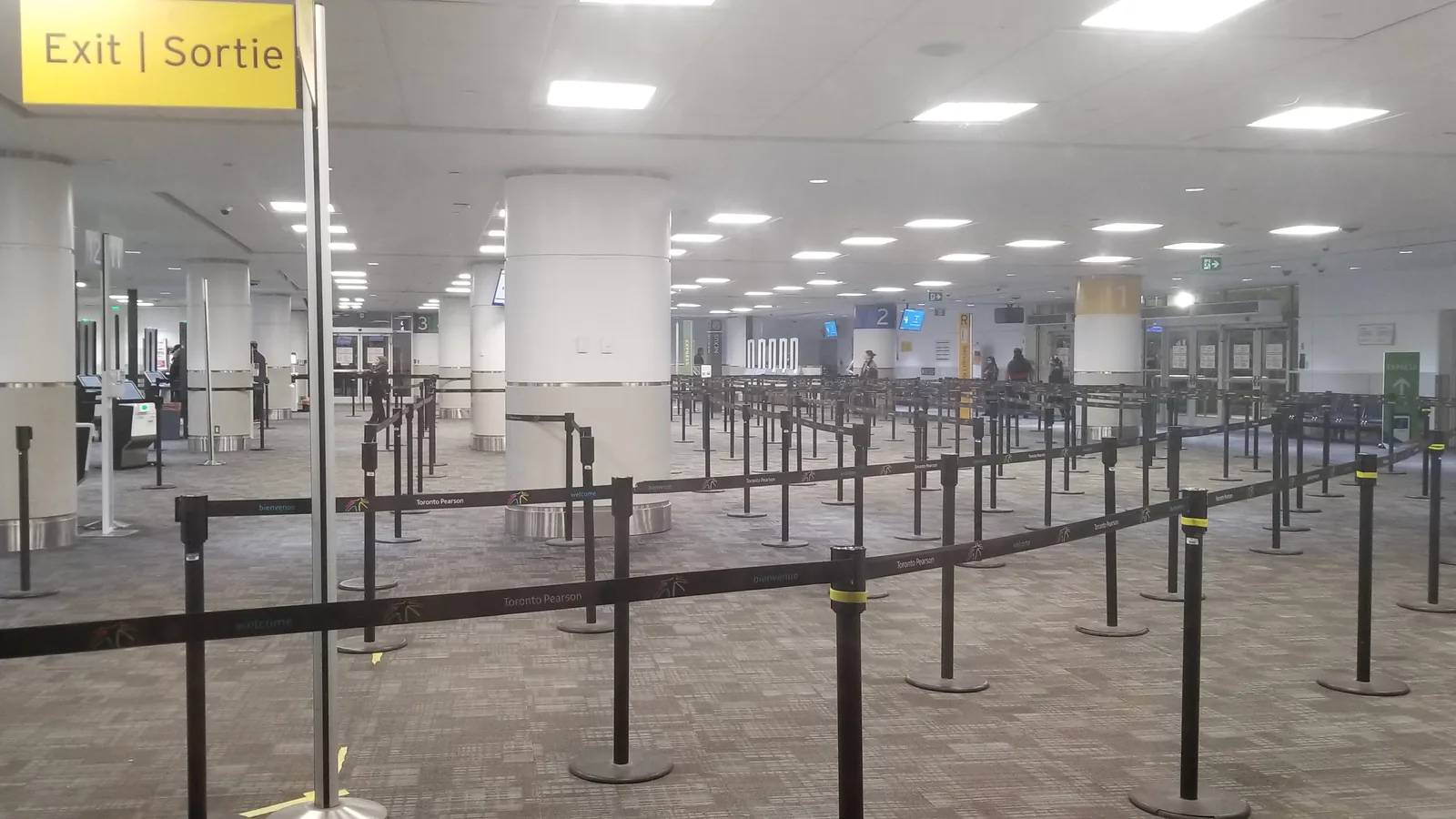
Cover image: Customs and immigration arrivals hall at Toronto Pearson (YYZ), by Silver Dovelet, Wikimedia Commons, CC BY-SA 4.0.
Frequently Asked Questions
Do you need a visa to attend the World Cup 2026?
It depends on your nationality and which country you are entering. Visitors to the United States from Visa Waiver Program countries need an approved ESTA; others need a B-1/B-2 visitor visa. A FIFA match ticket does not grant entry — it is separate from your immigration status. Mexico and Canada set their own entry rules for matches played there.
What is an ESTA and is it enough for the World Cup 2026?
ESTA is the US Electronic System for Travel Authorization, required for short visits by Visa Waiver Program nationals. It authorizes you to travel to a US port of entry, but final admission is decided there by Customs and Border Protection. An approved ESTA or visa is necessary but not a guarantee of entry.
Can fans travel between the US, Mexico and Canada for matches?
Yes, but each border crossing is a separate immigration event under that country's rules. A US visa or ESTA does not cover Canada or Mexico, and re-entering the US after a match abroad means clearing CBP again. Plan documentation and timing for every crossing.
What happens if I'm denied entry after buying a ticket?
A denied entry does not refund your match ticket, flights or hotels automatically. Travelers turned back at a US port of entry are generally returned to their last departure point. Build flexibility into bookings and consider travel insurance that covers entry refusal.
Why was the Somali referee denied entry?
Customs and Border Protection found Omar Abdulkadir Artan inadmissible at Miami on June 6, citing unspecified 'vetting concerns,' despite his valid US visas and diplomatic passport. After an 11-hour interview he was returned to Istanbul. FIFA confirmed he can no longer officiate at the tournament.
Are World Cup 2026 fans cancelling their tickets?
Reporting in the build-up describes some international fans weighing or cancelling trips over entry uncertainty, alongside teams and officials facing detention or refusal. There is no single official figure, but the concern is widespread enough to shape travel planning.
Is there a travel ban affecting the World Cup 2026?
There is no ban on ticket-holders attending the tournament. However, US admission is at CBP's discretion even with valid documents, and some travelers face heightened vetting. Check the US State Department and FIFA's official travel guidance for your nationality before booking.
People Also Ask
Data sources
- CBS News — US bars entry of FIFA World Cup referee from Somalia, citing 'vetting concerns'
- Time — Somali Referee Denied Entry to U.S. for World Cup
- Washington Post — World Cup players and officials are being detained or barred entry into the US
- Front Office Sports — Travel, Visa Issues Hang Over World Cup
- Wikipedia — List of 2026 FIFA World Cup controversies — Editorial research by the WTK Sports desk
Published: