How the World Cup Works: Format, Rounds & Rules
The World Cup looks complicated from the outside — dozens of teams, a maze of groups, a bracket that narrows week by week — but the shape of it is simple. Every team starts in a mini-league, the best of them survive into a straight knockout, and the last two standing meet in a single final. The 2026 tournament in the United States, Canada and Mexico changed some of the numbers, adding teams and a brand-new round, without changing that basic idea. Here is how the whole thing fits together.
How many teams play at the World Cup?
Forty-eight, as of the 2026 tournament — the biggest field in the competition’s history. For every World Cup from 1998 to 2022 the number was 32; before that it was 24, and further back 16. The jump to 48 was the largest single expansion the tournament has ever made, bringing in 16 extra nations and giving more countries — several of them first-timers — a place at the finals.
More teams meant a longer tournament. The 2026 edition ran to 104 matches, up from 64 under the old format, and stretched across 16 host cities in three countries. It is the reason the group stage looks different now, and the reason there is an extra knockout round that older fans will not recognise.
How does the World Cup group stage work?
The 48 teams are drawn into 12 groups of four, labelled A to L. Inside each group every team plays the other three once — three games each — and picks up three points for a win, one for a draw and none for a defeat. Group matches are allowed to end level; a draw simply means a point apiece.
Once all three rounds are played, the groups are ranked on points. The top two teams in each of the 12 groups go through automatically — that is 24 teams. They are joined by the eight best third-placed teams across all the groups, ranked by points, then goal difference, then goals scored. That last cut is where the drama lives: a third-place finish is no longer an automatic exit, and the race to be one of the best eight can go to the final round of games.
What is the new Round of 32?
The Round of 32 is the stage that did not exist before 2026. With 32 teams surviving the groups instead of 16, the knockout bracket needed an extra opening round to whittle them down — so the tournament now begins its knockout phase one step earlier than any World Cup in the past.
From this point the format is pure elimination: win and you go through, lose and you go home. The Round of 32 feeds into the Round of 16, then the quarter-finals, the semi-finals and finally the final. It is the one structural change that most affects the champion, because it adds a game to the road to the trophy.
How does the World Cup knockout stage work?
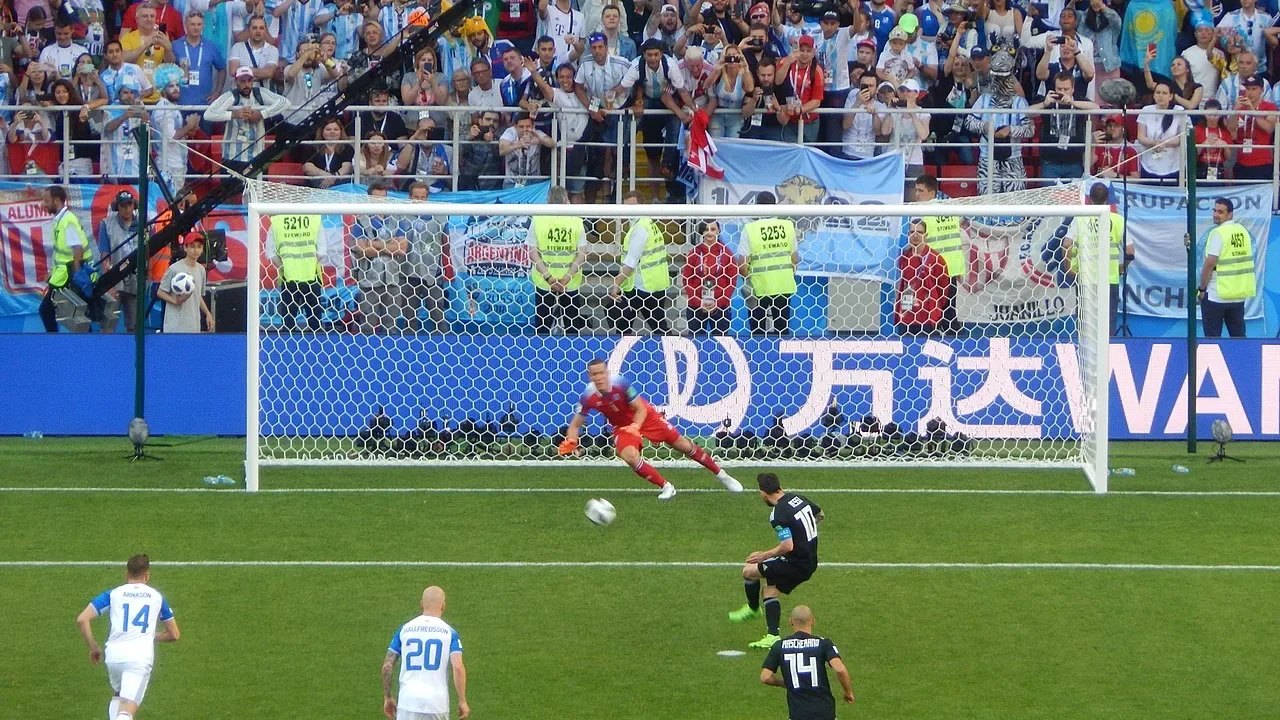
Once the Round of 32 begins, the tournament becomes a single-elimination bracket. Each tie is one match, and there are no second chances — every game must produce a winner. If the score is level after 90 minutes, the match goes to two 15-minute periods of extra time, and if it is still tied after 120 minutes it is decided by a penalty shootout.
The bracket narrows in the familiar way: 32 teams become 16, then eight quarter-finalists, then four semi-finalists, then two finalists. There is also a third-place playoff, contested by the two beaten semi-finalists, before the final itself. For a full walk-through of the 2026 bracket, see our knockout guide.
How many matches does the World Cup winner play?
Eight — one more than under the old system. To lift the trophy in 2026 a team had to come through three group games and then five straight knockout ties: the Round of 32, the Round of 16, the quarter-final, the semi-final and the final. Under the 32-team format that used to run through 2022, the champion played seven games, because there was no Round of 32.
That extra fixture matters. It means a longer, more physically demanding path to the trophy, and it rewards squad depth as much as a strong first eleven — one of the quiet ways the new format has changed how contenders are built.
What are the key World Cup rules to know?
A few essentials cover most of what happens on the pitch. Each team names a squad — 26 players at the 2026 tournament — and can make up to five substitutions in a match, with a sixth allowed if a knockout tie goes to extra time. Video review, VAR, is used to check goals, penalties, red cards and cases of mistaken identity. Two yellow cards across the group stage and Round of 16 bring a one-match suspension, though yellows are wiped before the quarter-finals so no one misses a final on a soft booking picked up weeks earlier.
The offside law, handball and the rest of the Laws of the Game are the same ones used across professional football — the World Cup does not run a different rulebook. What makes it distinct is the format around those rules: the group mini-leagues, the sudden-death knockouts and the single final that decides everything.
Who won the 2026 World Cup?
Spain. They beat Argentina 1-0 after extra time in the final at MetLife Stadium, a late Ferran Torres goal settling it, to claim their second world title. It was the payoff to exactly the journey described above — three group games, five knockout rounds and eight matches in all to be crowned champions of a 48-team tournament.
For the full roll of honour going back to 1930, see our guide to every World Cup winner, and for the players who have scored the most across all those tournaments, the all-time World Cup top scorers. For the complete set of tournament records — goals, titles, appearances and more — see our guide to the all-time World Cup records.
Frequently Asked Questions
How does the World Cup work?
Teams are drawn into groups and play a mini-league; the best teams advance to a straight knockout bracket that ends in a single final. At the 2026 tournament, 48 teams were split into 12 groups of four, and 32 progressed to the knockout rounds — Round of 32, Round of 16, quarter-finals, semi-finals and final.
How many teams are in the World Cup?
Forty-eight from 2026 onwards, up from 32 at every tournament between 1998 and 2022. The expansion added 16 teams and a whole extra knockout round, taking the tournament from 64 matches to 104.
How many games does the World Cup winner play?
Eight. Under the 48-team format the champion plays three group games and then five knockout ties — Round of 32, Round of 16, quarter-final, semi-final and final. That is one more than the seven games it took to win under the old 32-team format.
What happens if a World Cup knockout match is a draw?
It goes to two 15-minute periods of extra time. If the sides are still level after 120 minutes, the tie is settled by a penalty shootout. Group-stage matches, by contrast, are allowed to end in a draw, with a point for each team.
People Also Ask
Data sources
- FIFA — How the FIFA World Cup 26 will work with 48 teams
- Al Jazeera — What to expect from the 48-team format at the World Cup 2026
- MyFootballFacts — 2026 World Cup format explained
Published: